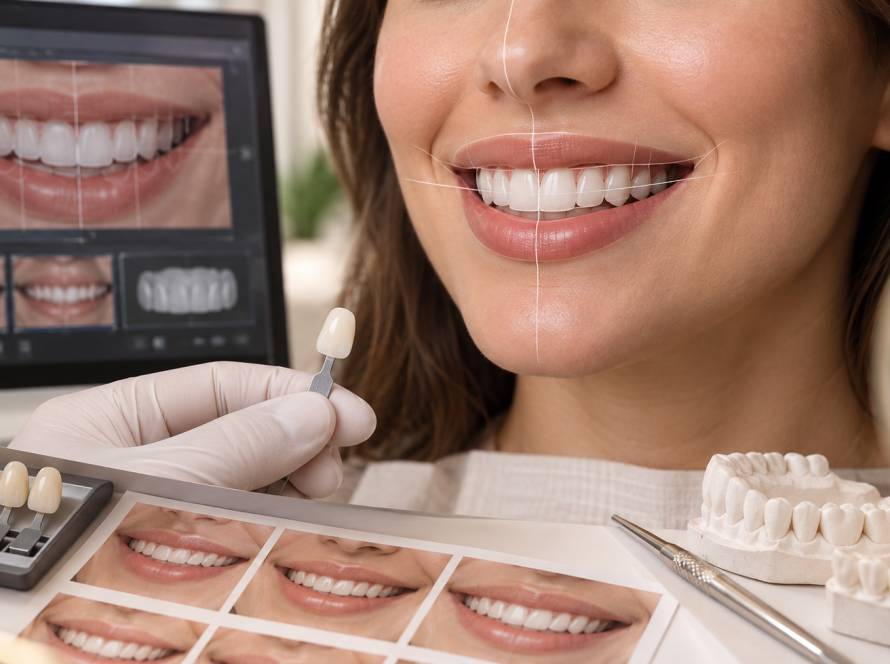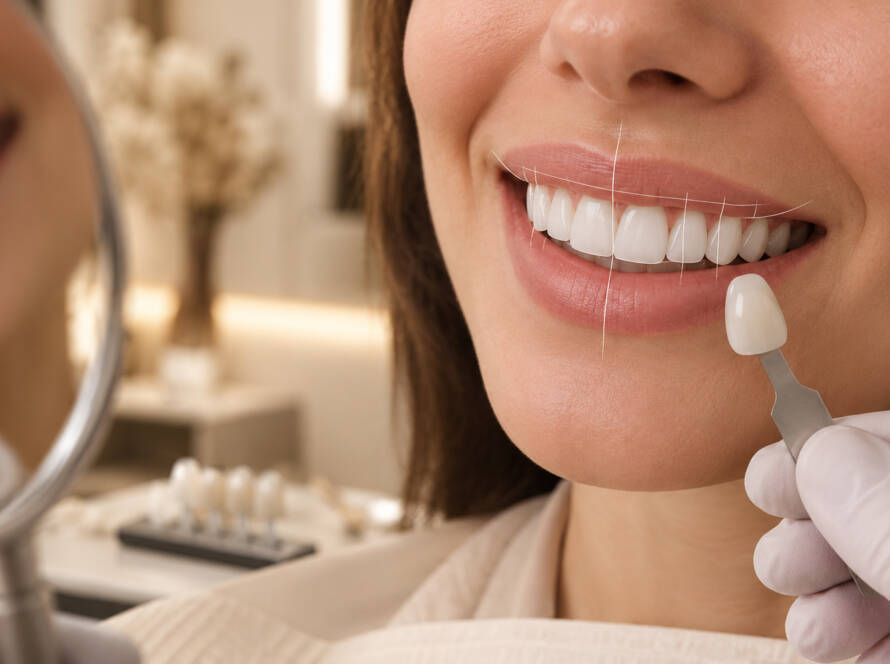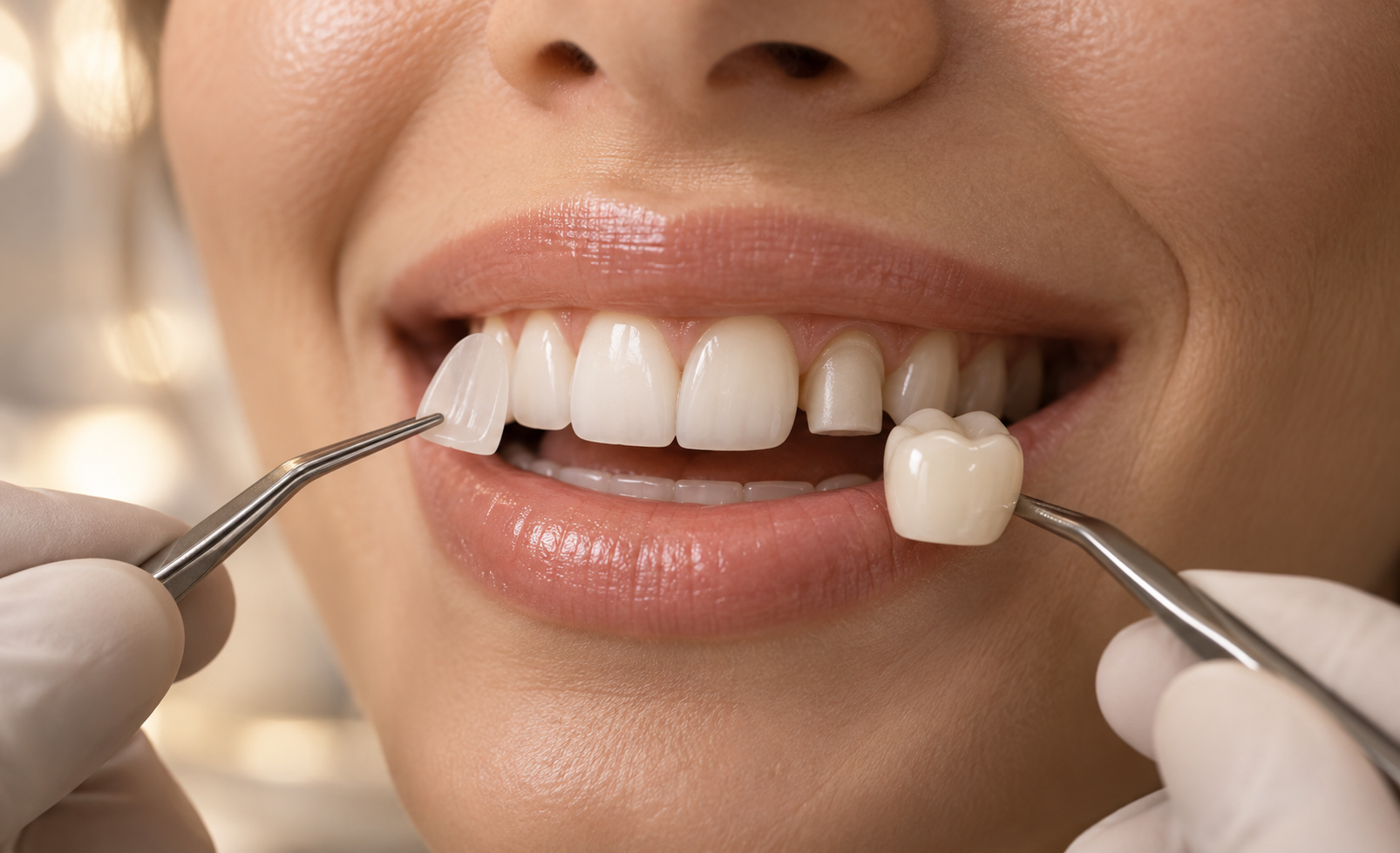
Veneers and zirconia crowns are often discussed together when people research cosmetic dentistry in Turkey, but they are not equivalent treatments. A porcelain veneer usually covers mainly the visible front surface of a tooth, whereas a crown covers the tooth much more extensively. “Zirconia” describes a ceramic material that can be used to make crowns and other fixed restorations.
That distinction matters because treatment should start with the condition of the tooth rather than with a material name. A structurally sound tooth with a limited aesthetic concern may be suitable for a conservative partial-coverage restoration, while a heavily restored, fractured or weakened tooth may need greater coverage. Bite, gum health, existing restorations and the amount of sound tooth structure all influence the decision.
Neither veneers nor zirconia crowns are universally better. They are designed for different clinical situations.
Veneer Design and Crown Design Serve Different Purposes
A veneer is a thin restoration bonded mainly to the facial surface of a tooth. It is generally considered when the main concern involves colour, shape, proportion or a limited surface defect and when the tooth is suitable for a bonded partial-coverage restoration.
A crown surrounds much more of the prepared tooth. It may be appropriate when there is significant structural loss, a large existing restoration, fracture or another reason for full coverage.
This is why “veneer vs zirconia” is not a perfectly matched comparison. Veneer describes the coverage design, while zirconia describes the restorative material. In this article, zirconia refers specifically to zirconia crowns.
When a Veneer May Be the More Conservative Option
Porcelain veneers can be considered when the treatment goal is mainly aesthetic and enough healthy tooth structure can be preserved for reliable bonding. Selected concerns involving tooth shape, proportion, localised colour change, small spaces, surface defects or limited wear may fall into this category.
The tooth still needs to be assessed for decay, cracks, existing restorations, enamel quality, periodontal health and bite. A visible front tooth is not automatically a veneer candidate, and a veneer should not be used simply because it is perceived as the “cosmetic” option.
When a Zirconia Crown May Be More Appropriate
A crown becomes more relevant when the tooth needs extensive structural restoration. This may include teeth with substantial loss of structure, large existing restorations, fractures or other conditions in which broader coverage is required.
Monolithic zirconia is one material option in fixed prosthetic dentistry. It may be considered for selected crowns and other fixed restorations on natural teeth or implants.
The material itself does not determine the indication. A tooth should not be prepared for a crown simply because zirconia is popular or because a cosmetic package includes it.

Tooth Preparation and Biological Cost
A full crown generally requires more extensive preparation than a veneer because it covers more tooth surfaces. Veneer preparation can range from minimal to more substantial depending on tooth position, existing shape, enamel, colour change and the intended final contour.
In selected cases, very limited or no-preparation veneer approaches may be possible. They are not appropriate for every tooth, because simply adding ceramic without enough space can create excessive bulk or poor contours.
The aim is not “zero preparation at any cost”. It is to avoid unnecessary removal of healthy tissue while creating a restoration that can be shaped, bonded or cemented, cleaned and maintained properly. Once natural tooth structure has been removed, it does not grow back, so the biological cost of preparation is an important part of elective cosmetic planning.
Bite, Existing Restorations and Gum Health
Aesthetic dentistry still has to function during chewing. Bite, tooth position and signs of grinding or clenching can affect how a veneer or crown is loaded, and a restoration that looks suitable in a photograph may not be mechanically appropriate.
Existing restorations also change the starting point. A tooth with a large filling or previous fracture is not biologically equivalent to an untouched tooth. Gum health and cleanability are equally important because restoration margins and contours must be compatible with the periodontal tissues.
Active decay or gum disease should be addressed as part of the wider treatment plan rather than concealed beneath a cosmetic restoration.
Zirconia Strength Does Not Make It the Default Choice
Zirconia is valued for its mechanical properties, but a stronger material is not automatically the better treatment.
If a tooth does not need full coverage, choosing a crown solely because the material is strong can mean removing more healthy tooth structure than necessary. Conversely, a veneer should not be chosen simply because it is more conservative if the tooth genuinely requires greater structural support.
Material selection therefore sits within a broader decision that includes tooth position, available structure, bite forces, opposing teeth, aesthetic requirements, margin design and hygiene access.
Maintenance and Future Treatment
Veneers and crowns are not lifetime restorations that can be ignored after placement. Both need daily plaque control and professional review, with attention to the restoration margins, surrounding gums and bite.
Over time, a restoration may chip, debond, fracture or develop marginal problems, or the supporting tooth and surrounding tissues may change. There is no single lifespan that applies to every veneer or crown. Long-term performance depends on design, material, bonding or cementation, bite, habits, hygiene and the health of the supporting tissues.
Aesthetic and Prosthetic Planning at Güler Dent
Güler Dent in Samsun, Turkey provides Smile Design and Prosthetic Dentistry as part of its clinical services. Porcelain laminate veneers may be considered within smile planning, while monolithic zirconia is one prosthetic material option for selected crowns and fixed restorations.
The clinic also has its own prosthesis laboratory. This supports prosthetic workflow, but it does not replace clinical diagnosis or create a universal indication. The choice between a veneer, crown or another treatment still depends on the condition of the tooth, surrounding tissues, function and the wider treatment plan.