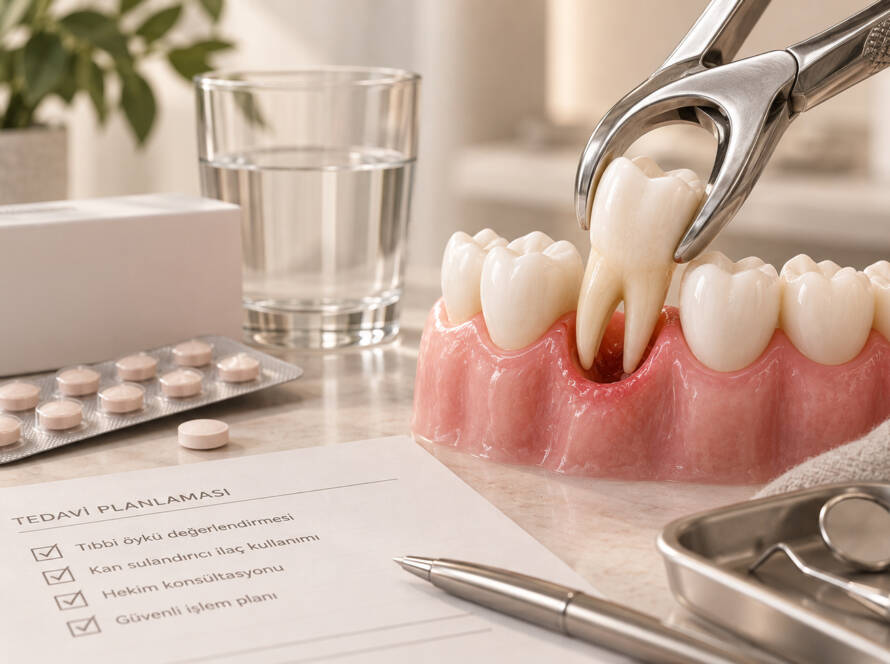
Wisdom teeth do not automatically need to be removed simply because they are present or impacted. Removal is usually considered when there is a clear clinical reason, such as recurrent significant infection, decay that cannot be managed predictably, damage to a neighbouring tooth, periodontal problems or another pathological finding.
Some wisdom teeth remain free of disease and can be monitored. The absence of pain, however, does not prove that the tooth is healthy. Clinical examination and, when indicated, dental imaging help determine whether observation is reasonable or whether treatment should be considered.
The decision therefore balances the present condition of the tooth, the likelihood of future problems, how easily the area can be kept clean and the risks associated with surgery.
What an Impacted Wisdom Tooth Means
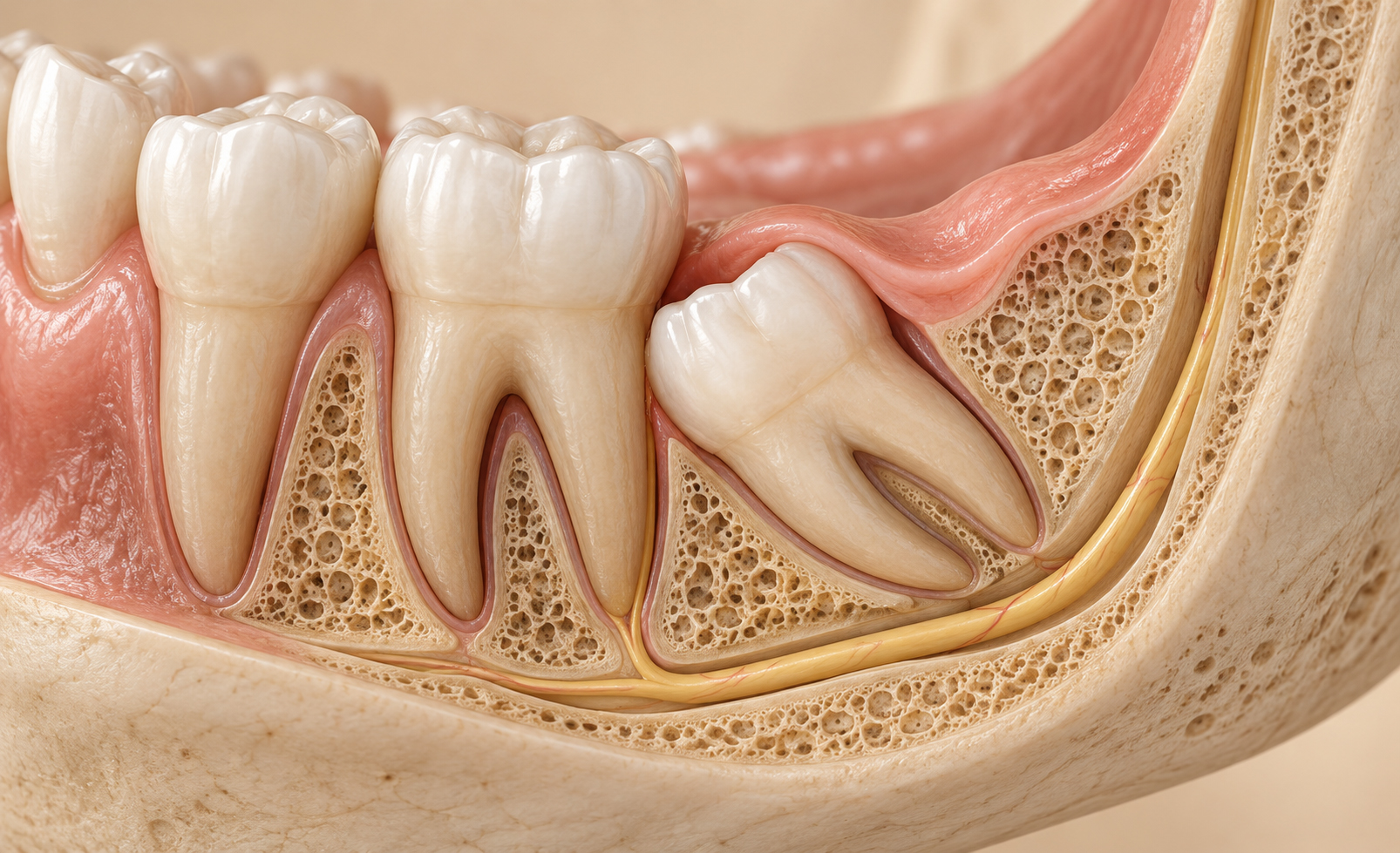
Wisdom teeth are the third molars at the back of the dental arches. They may erupt fully, erupt only partly or remain partly or completely within bone or gum tissue.
The word “impacted” describes the eruption position rather than a disease diagnosis. An impacted tooth can be symptom-free and healthy, or it can be associated with infection, decay, damage to the adjacent second molar or another problem.
Position is therefore one part of the assessment, not an automatic reason for surgery.
Situations in Which Removal May Be Considered
Recurrent or significant pericoronitis is one common reason for surgical assessment. This inflammation around a partially erupted wisdom tooth can cause pain, swelling, difficulty opening the mouth or an unpleasant taste. A single mild episode is not necessarily managed in the same way as repeated or severe episodes; severity, recurrence and long-term maintainability matter.
Removal may also be considered when severe decay, pulpal disease or periapical disease cannot be treated predictably because of the tooth’s position. Some wisdom-tooth positions make the neighbouring second molar difficult to clean and can be associated with decay, periodontal damage or root resorption. Cystic change or other pathology can create a clear indication for surgical assessment even when the patient has no pain.
In selected orthodontic, reconstructive or jaw-surgery plans, the position of a third molar may also affect the wider treatment strategy.
Monitoring a Disease-Free Wisdom Tooth
A wisdom tooth that is asymptomatic and free of disease may be monitored rather than removed. These terms are not identical: “asymptomatic” simply means that the patient does not notice pain, swelling or other symptoms, whereas “disease-free” means that examination and any necessary imaging show no relevant pathology.
Monitoring should be active rather than passive. The tooth is reviewed over time for changes such as decay, periodontal problems, infection or effects on the neighbouring tooth. There is no single follow-up interval that applies to every patient; the schedule depends on the tooth and individual risk.
Why a Painless Tooth Can Still Need Attention
Dental and periodontal changes can develop without causing early pain. A person may feel completely well while a clinician identifies decay, a periodontal defect or another change during examination or on a radiograph.
At the same time, the possibility of future disease is not a reason to remove every healthy wisdom tooth pre-emptively. The benefits and risks of observation and surgery need to be considered together.
Imaging and Surgical Risk Assessment
Dental imaging can help show the wisdom tooth’s position, root anatomy and relationship to the second molar, nerve canal or maxillary sinus. A panoramic X-ray may provide sufficient information in many cases.
When a more detailed three-dimensional view is likely to change surgical planning, CBCT may be considered. It is not routinely required for every impacted wisdom tooth.
For lower wisdom teeth, particular attention may be paid to the relationship between the roots and the inferior alveolar nerve canal. A close relationship on two-dimensional imaging may sometimes justify further imaging, but nerve proximity neither automatically requires removal nor automatically rules it out. The reason for treatment and the surgical risk must be considered together.
What the Dentist Considers Before Recommending Treatment
A balanced assessment brings several factors together: whether disease is already present, whether symptoms are actually coming from the wisdom tooth, eruption position, cleanability, the condition of the adjacent second molar, nearby anatomical structures, medical history and medications, surgical risk, the risks of leaving the tooth in place and whether reliable follow-up is possible.
This broader view helps avoid both extremes: removing every impacted tooth by default or ignoring a problematic tooth simply because it is not painful.
When a Monitored Tooth Later Needs Removal
A decision to monitor a wisdom tooth is not permanent. New decay, recurrent infection, periodontal disease, damage to the adjacent tooth or another pathological change can alter the balance and lead to a different recommendation later.
Monitoring is therefore an active clinical strategy rather than a guarantee that treatment will never be needed.
Wisdom-Tooth Assessment at Güler Dent
Oral and Maxillofacial Surgery is one of Güler Dent’s main service areas in Samsun, Turkey. Assessment can include symptoms, clinical examination, eruption position and the tooth’s relationship to surrounding tissues.
Güler Dent provides selected tooth and impacted-tooth extractions and has in-clinic tomography technology. Imaging is selected according to the clinical question rather than using three-dimensional imaging routinely for every wisdom tooth.