Dental X-rays use ionising radiation, so they are not literally radiation-free. Safety depends on using imaging only when it is clinically justified and choosing the method, field and settings that provide the necessary information without unnecessary exposure.
For most patients, appropriately selected dental radiography provides useful diagnostic information with relatively low radiation exposure. Whether a new…
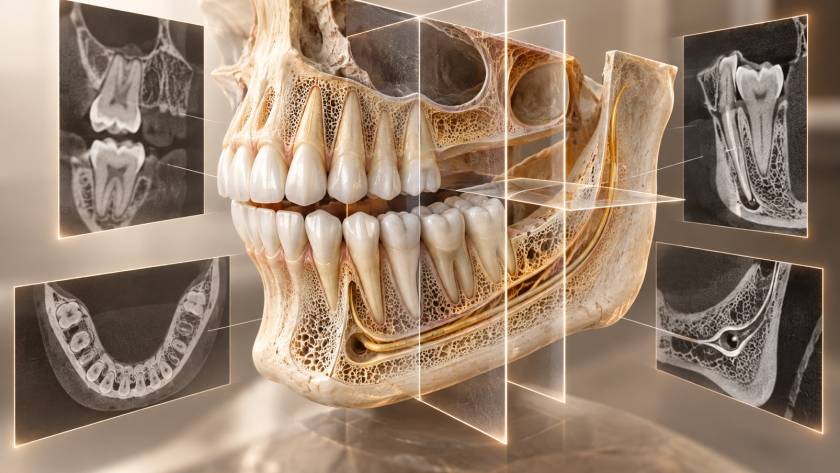
A panoramic dental X-ray and a dental CBCT scan answer different types of questions. A panoramic radiograph provides a broad two-dimensional view of the teeth and jaws, while CBCT creates a three-dimensional volumetric dataset that can be examined in multiple planes and cross-sections.
CBCT is particularly useful when a dentist needs to understand bone dimensions, the…
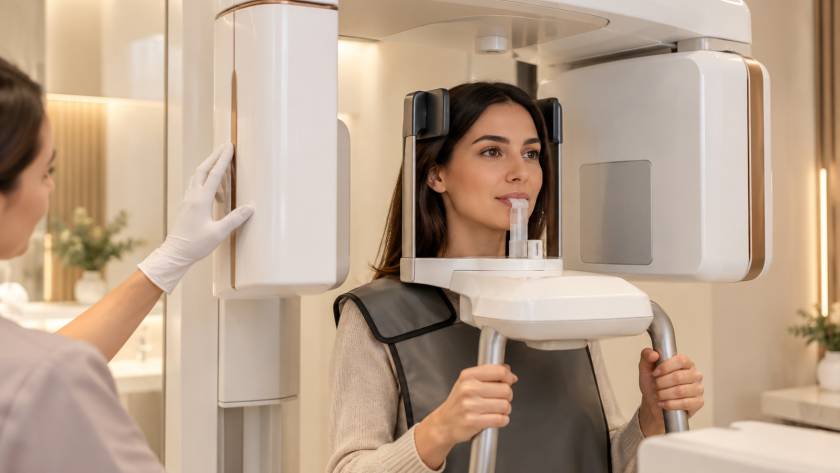
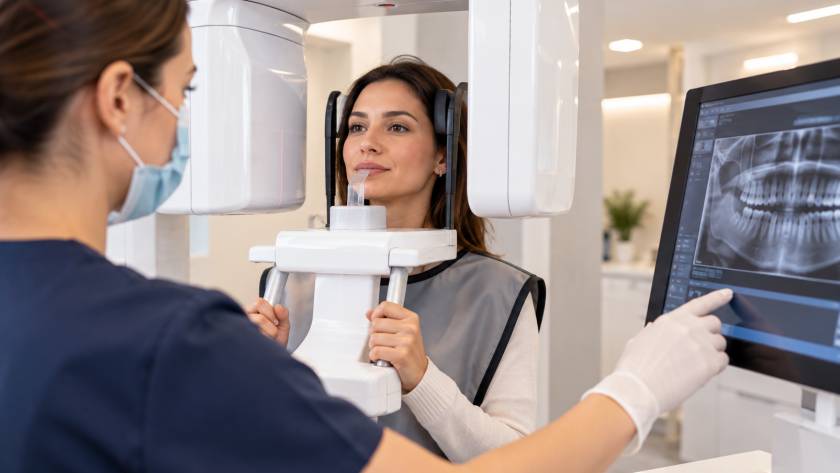
A panoramic dental X-ray is a two-dimensional image that shows the upper and lower jaws, teeth and several surrounding structures in one broad view. Unlike bitewing or periapical radiographs, the detector is outside the mouth and the imaging unit rotates around the head.
Its main advantage is coverage. A single image can provide a useful overview…