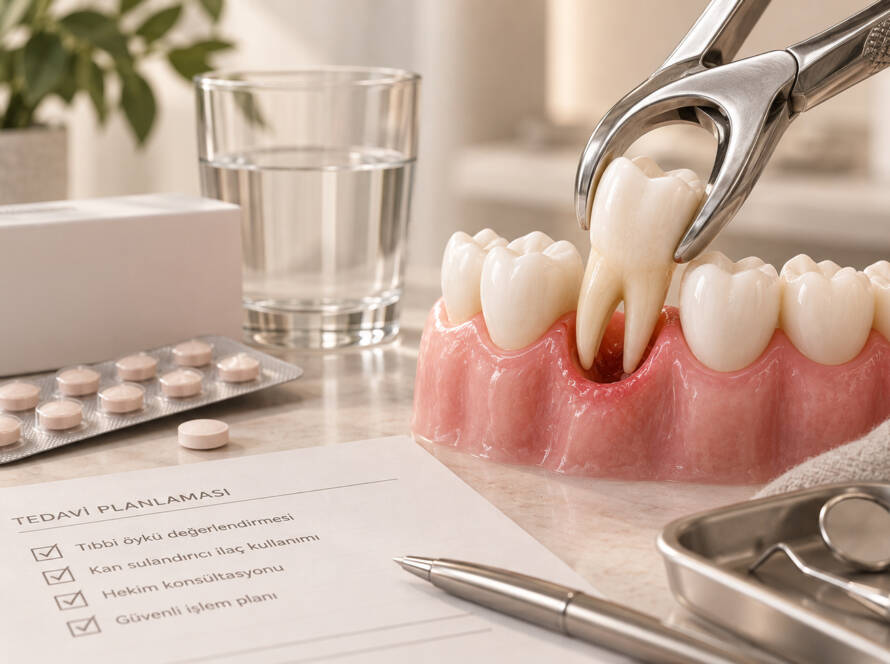
Oral Surgery in Turkey: Dental and Jaw Surgery at Güler Dent
Oral and maxillofacial surgery in dentistry covers surgical assessment and treatment involving teeth, jawbone and surrounding oral tissues. Not every impacted tooth, toothache or radiographic finding requires surgery. The decision depends on symptoms, clinical examination, medical and medication history and, when needed, appropriate imaging.
Contents
ToggleFor international patients, procedure-specific questions are often more useful than the broad label “oral surgery.” Common decision points include whether an impacted wisdom tooth actually needs removal, whether an extraction is simple or surgical, whether bone augmentation is needed for an implant plan and whether a sinus lift is indicated in the back of the upper jaw.
Güler Dent provides selected tooth and impacted-tooth extractions and advanced bone surgery including bone grafting and sinus lifting. The clinic also has in-clinic tomography technology. The exact surgical procedure, anaesthesia approach and recovery plan are case-dependent.
Which Oral and Maxillofacial Surgery Procedures Are Considered?
At Güler Dent, the verified surgical service scope includes selected tooth extractions, impacted-tooth surgery, bone grafting and sinus lifting. These are different procedures for different clinical problems, rather than one standard type of jaw surgery. An examination is needed to establish whether surgery is appropriate, whether a non-surgical option should be considered first, and whether additional imaging is indicated.
Impacted Wisdom Teeth and Other Impacted Teeth
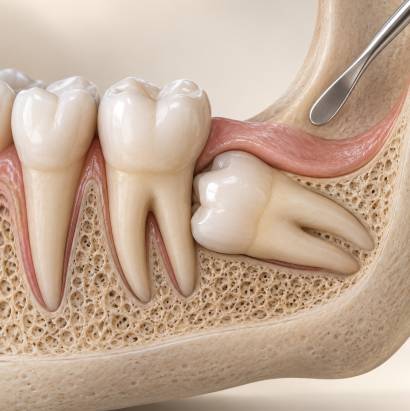
An impacted tooth is one that has not erupted into its expected position, often because of its orientation or limited space. A partially erupted tooth may be difficult to clean and can sometimes be associated with inflammation, decay or damage to a neighbouring tooth. Assessment considers symptoms, the tooth’s position and its relationship to nearby nerves and other structures. Not every impacted tooth needs removal.
Tooth Extractions and Surgical Extractions
An extraction may be considered when a tooth cannot reasonably be preserved or another clinical indication exists. A surgical approach may be needed if a tooth is deeply positioned, fractured or difficult to access or remove using conventional methods. Whether extraction is appropriate should be considered alongside restorative and endodontic options where relevant.
Bone Grafting and Sinus Lifting
These procedures may be part of an implant-related surgical plan where available bone or upper-jaw anatomy presents a limitation. They are not routine requirements for every implant and are discussed in more detail below. Their purpose, timing and potential risks should be assessed separately from the implant restoration itself.
Do All Wisdom Teeth Need to Be Removed?
No. The presence of a wisdom tooth or another impacted tooth is not by itself an indication for extraction.
Removal may be considered when there is disease or another clinical reason, such as recurrent infection, decay, damage to an adjacent tooth, periodontal problems or other relevant findings. Some asymptomatic teeth without pathology may instead be monitored.
The position of an impacted tooth and its relationship to neighbouring teeth, nerves and other structures can influence both the decision and the surgical risk.

Simple Extraction or Surgical Extraction?
Some teeth can be removed with conventional extraction techniques. Others may require a surgical approach because of their position, root anatomy, fracture, impaction or relationship to surrounding tissues. In a surgical extraction, additional access or controlled surgical steps may be needed so that the tooth can be removed while surrounding tissues and nearby anatomical structures are considered. Impacted or partly erupted teeth can require particular attention to their relationship with neighbouring teeth, bone, nerves or the maxillary sinus; appropriate imaging is selected when those relationships need clarification.
Whether an extraction is “simple” or “surgical” is determined by the clinical situation, not by how painful the tooth feels beforehand.
How Is Oral Surgery Planned?
Planning includes the reason for surgery, symptoms, previous dental treatment, general health and medications. Imaging is selected according to the clinical question.
Two-dimensional imaging may be sufficient in some cases. When more detailed three-dimensional anatomical information is needed, CBCT may be considered. Güler Dent has in-clinic tomography technology; this does not mean CBCT is required for every surgical case.
Anaesthesia and Patient Comfort
Local anaesthesia is commonly used for dental and oral-surgery procedures when appropriate. The exact approach depends on the procedure, the patient’s health and the clinical situation. The aim is effective pain control during treatment, but it would be misleading to promise that every surgical experience will be completely pain-free or identical.
Medical History, Blood Thinners and Antibiotics
Medical conditions and medications can change surgical planning. Patients using anticoagulant or antiplatelet medication should tell the dental team what they take and why.
These medicines should not be stopped or dose-adjusted by the patient without appropriate medical guidance. Bleeding risk depends on the medication, medical condition and planned procedure.
Antibiotics are also not automatically required for every extraction or oral-surgery procedure. Their use depends on infection findings, medical risk and the clinical situation.
How Oral Surgery Relates to Other Dental Treatment
Dental Implants and Surgical Planning
Implant treatment involves more than a surgical procedure. The bone, gum health, intended replacement teeth and bite must be considered together. Surgery may involve implant placement or, where clinically indicated, preparatory bone grafting or sinus lifting. The appropriate surgical approach cannot be separated from the final prosthetic plan.
Root Canal Treatment and Endodontic Surgery
A tooth with pain or a finding around its root does not automatically need extraction. Depending on the diagnosis and whether the tooth can be restored, root canal treatment or retreatment may be considered. In selected circumstances, endodontic surgery can also be a treatment option. This explains the clinical relationship between specialties; it does not imply that every endodontic surgical procedure is offered at the clinic.
Bone Grafting and Sinus Lift for Implant Planning
Bone Grafting: The Problem It Addresses
A bone graft or augmentation procedure may be considered when the available jawbone does not adequately support the proposed implant position or prosthetic design. The location, extent and cause of the bone deficiency, gum health and anatomical structures influence whether augmentation is appropriate. Grafting may add a separate surgical and healing stage.
Sinus Lifting: Upper-Jaw Implant Planning
The maxillary sinus is close to the back of the upper jaw. When available bone height is limited in this region, sinus lifting may be considered to create more favourable conditions for a planned implant. It is not a routine requirement for every upper-jaw implant, and the decision depends on examination and appropriate imaging.
Same-Stage or Staged Treatment?
Bone augmentation and implant placement may be planned together in selected circumstances or at separate stages. The amount of bone available, anatomy, surgical risks and ability to achieve suitable implant stability influence the choice. Patients travelling from abroad should clarify which stages are expected, which require healing and when review may be necessary before booking travel.
Neither grafting nor sinus lifting guarantees a particular implant outcome.
Risks and Recovery
Possible effects after dental surgery include pain, swelling, bleeding and temporary discomfort. Depending on the procedure and anatomy, risks can also involve infection, delayed healing and nearby structures such as nerves or the sinus.
Recovery is not identical for every patient or every procedure. Increasing pain, uncontrolled or recurrent significant bleeding, progressive swelling, fever, worsening bad taste or odour, or difficulty swallowing or breathing requires prompt clinical assessment.
Travel Planning After Oral Surgery
Travel planning should reflect the procedure rather than a generic recovery timetable. A straightforward extraction, removal of an impacted tooth, bone grafting and sinus lifting can involve different wound sizes, swelling patterns, review needs and restrictions. The appropriate time for a patient to travel, fly or resume normal activity cannot be set by one universal number of days; it depends on the operation, healing, medical factors and whether a post-operative review is clinically needed. If significant pain, progressive swelling, persistent bleeding, fever, discharge or another unexpected problem develops after returning home, local dental or medical assessment should not be delayed solely to wait for a future trip.
What Affects the Cost and Scope of Oral Surgery?
The clinical scope varies widely between a straightforward extraction, impacted-tooth surgery, bone grafting and sinus lifting. Cost can therefore be affected by the type and complexity of the procedure, the anatomical site, imaging requirements, additional surgical steps, the anaesthesia approach and the need for post-operative review.
A headline extraction price does not describe the same clinical work as a more complex surgical procedure. Individual cost can only be understood after the required procedure and its supporting assessment have been defined.
Oral Surgery at Güler Dent
Oral and maxillofacial surgery is one of Güler Dent’s main service areas at its clinic in Atakum, Samsun, Turkey. The clinic provides selected dental and impacted-tooth extractions, bone grafting and sinus lifting, with treatment decisions based on clinical need.
Smiles Shaped by Science, Experience, and Trust
In-clinic tomography technology is available when three-dimensional imaging is indicated as part of assessment or planning.
Frequently Asked Questions
Does every impacted wisdom tooth need surgery?
No. Removal depends on symptoms, disease, position and effects on surrounding structures.
Is every tooth extraction surgical?
No. Some teeth can be removed conventionally; others require additional surgical steps.
Do I always need antibiotics after an extraction?
No. Antibiotic need is based on infection, medical risk and the procedure.
Should I stop blood thinners before dental surgery?
Do not stop or change anticoagulant or antiplatelet medication on your own. The medication, medical condition and bleeding risk need individual assessment.
Is bone grafting always needed before implants?
No. It is considered when bone conditions and the implant plan indicate a need.
Is a sinus lift always done at the same time as an implant?
No. Same-stage or staged treatment depends on the anatomy, bone conditions and implant plan.
After Returning Home: Warning Signs and Access to Care
Before leaving Turkey after oral surgery, patients should understand the individual post-operative instructions, planned review and how to seek urgent dental or medical assessment if complications are suspected. Bleeding that does not settle, increasing swelling, fever, worsening pain or other concerning symptoms should not be managed solely by waiting for a remote reply. Ask the clinical team what written records and procedure details can be provided to support follow-up with a dentist or medical service at home. A specific overseas aftercare network or emergency-response arrangement should not be assumed.
Oral Surgery Consultation in Samsun, Turkey
If you are considering a tooth extraction, impacted-tooth surgery, bone grafting or sinus lifting in Turkey, the assessment should clarify why surgery is needed, what imaging is appropriate and what the expected post-operative review and healing considerations are for that specific procedure. International travel should be planned around the individual operation rather than a fixed recovery promise. To arrange a surgical assessment with Güler Dent Ağız ve Diş Sağlığı Polikliniği, contact the clinic at the details below.
- Address: Mimarsinan Mahallesi, Atatürk Boulevard, No: 266, Atakum, Samsun, Turkey
- Phone: +90 552 439 00 01
The surgical plan and follow-up requirements are determined after an individual clinical assessment.
This page provides general information and does not replace an individual surgical assessment.