Restorative Dentistry in Turkey
Restorative dentistry focuses on repairing teeth affected by decay, fracture, wear or failing restorations while preserving healthy tooth structure where possible. For international patients searching for dental fillings or composite bonding in Turkey, the central decision is not simply which material looks best: the cause and extent of the damage, the condition of the dental pulp, the remaining tooth structure and the bite determine whether a direct restoration is appropriate.
Contents
ToggleA composite filling may restore a tooth after decay or tissue loss. Composite bonding can use tooth-coloured resin to modify selected areas of tooth shape, repair small chips or close some spaces. These applications overlap, but they do not have exactly the same purpose. Larger defects, cracks, pulpal disease or major structural loss may require endodontic or prosthetic assessment instead of, or in addition to, a direct composite restoration.
When Is Restorative Treatment Considered?
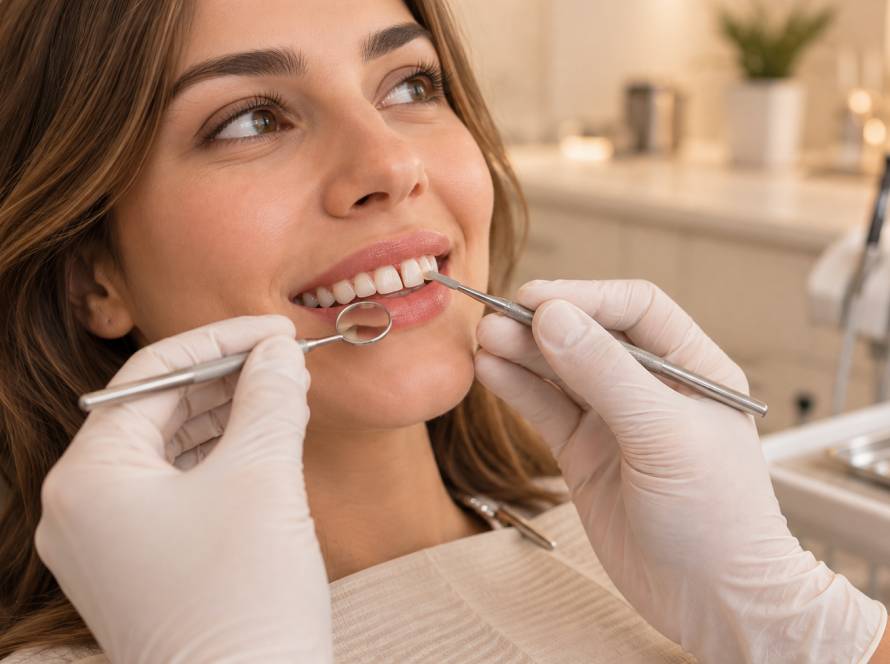
Restorative assessment may be appropriate for cavities, chipped or fractured teeth, tooth wear, defective or broken fillings, localised loss of tooth structure and some shape-related concerns.
Not every early carious lesion automatically needs a filling, and an existing restoration should not be replaced solely because it is old or discoloured. Clinical findings, symptoms, caries activity, restoration integrity and the amount of remaining tooth tissue help determine whether monitoring, repair or replacement is appropriate.
How Are Decay and Existing Restorations Assessed?
Restorative planning does not begin with the assumption that every visible mark, old filling or area of decay must be drilled and replaced. The clinician considers whether a lesion is cavitated or active, whether a restoration remains sealed and functional, whether there is recurrent decay, and how much sound tooth tissue remains.
Discolouration at the edge of an older filling does not by itself prove that the restoration has failed. Likewise, a restoration that has been in place for many years does not automatically need replacement. Monitoring, repair or replacement may each be appropriate depending on integrity, symptoms, caries activity and fracture risk.
Dental imaging may support assessment when the clinical question cannot be answered by examination alone. The type of image is selected according to need; the same radiographic approach is not required for every filling or bonding procedure.
Composite Fillings and Composite Bonding
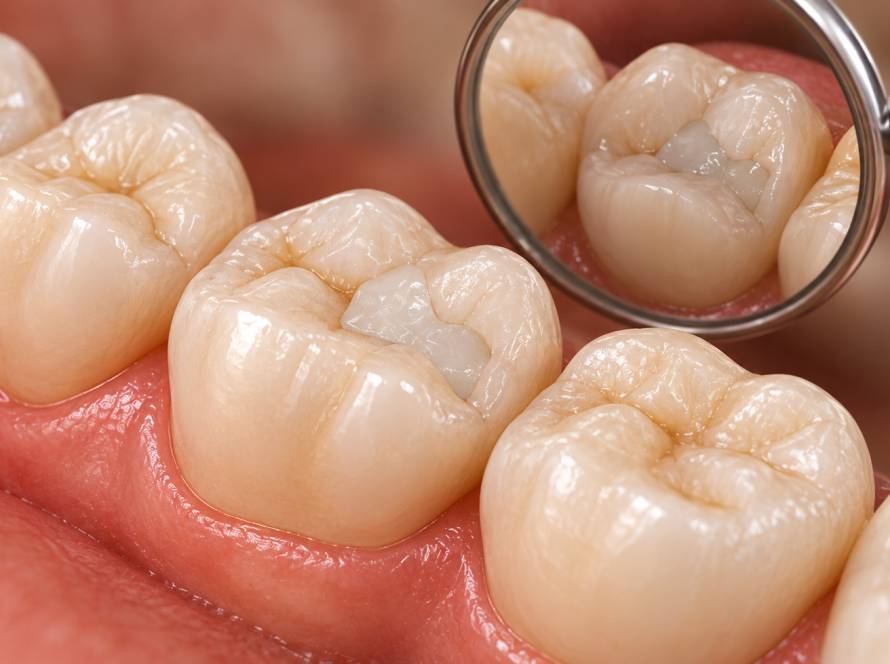
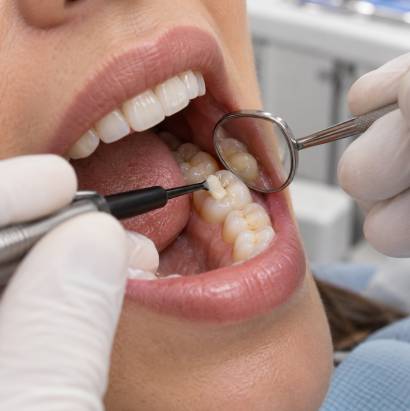
Composite resin is a tooth-coloured direct restorative material. It can be used in front or back teeth when the clinical conditions and restoration design are appropriate.
A filling generally replaces tooth tissue lost to decay or damage. Bonding often describes adding composite to selected surfaces to repair a small chip, change contour or address a limited space. The distinction is useful because aesthetic bonding should not be assumed to solve a tooth that actually needs treatment for decay, a crack or pulpal disease.

What Affects the Choice of Composite Restoration?
Composite resin can be used in both front and back teeth, but suitability depends on more than colour matching. The size and position of the defect, remaining tooth structure, chewing forces, the ability to control moisture during bonding, the condition of neighbouring and opposing teeth, and the patient’s caries risk can all influence the restoration design.
Small fractures or limited shape changes may be managed directly in selected cases, particularly in anterior teeth. Larger fractures, cracks or extensive loss of structure may place demands on the tooth that a direct composite restoration cannot predictably manage. In those situations, indirect or prosthetic options may need to be considered.
Repairing a Chipped or Broken Tooth
A small, localised chip or limited loss of tooth structure may sometimes be repaired directly with tooth-coloured composite. This can be particularly useful when enough sound tooth remains and the bite does not place excessive stress on the repaired area.
A larger fracture needs a broader assessment. The depth and direction of the fracture, pulp involvement, remaining tooth structure and chewing load can determine whether direct composite is sufficient or whether endodontic treatment, an indirect restoration or a prosthetic restoration is more appropriate. A visible broken edge alone does not show the full extent of the problem.
Repairing or Replacing an Existing Filling
An existing filling should not be replaced simply because it is old or has superficial discolouration. If only a limited part has chipped or a local defect can be managed predictably, repair may preserve more healthy tooth tissue than complete replacement.
Replacement becomes more relevant when the restoration has extensive breakdown, recurrent decay, loss of marginal integrity, fracture or another problem that cannot be managed adequately with a limited repair. The decision should therefore be based on the condition of the restoration and tooth rather than age alone.
When Is a Filling Not Enough?
A direct filling is not always the correct endpoint. Deep decay or trauma can affect the pulp inside the tooth. If the pulp is irreversibly inflamed or infected, root canal treatment may be required. If too little tooth structure remains to support a direct restoration, an indirect or prosthetic restoration may need to be considered.
The choice between a filling, root canal treatment and a more extensive restoration cannot be made from appearance alone. Symptoms, clinical tests, remaining tooth structure and appropriate imaging may all contribute to the decision.
Bonding or Veneers?
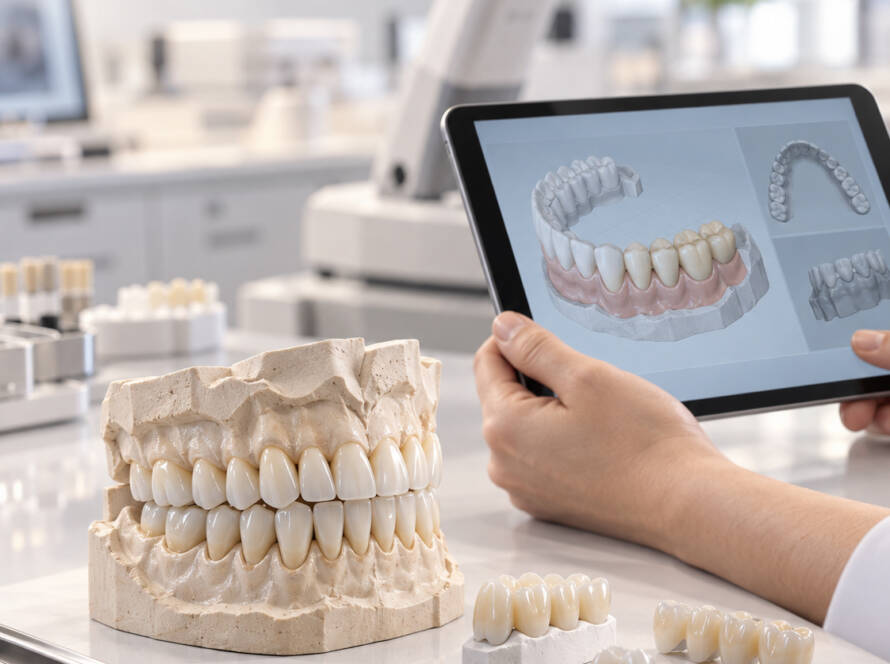
Composite bonding may be considered for selected small changes in shape, chips or spaces. Veneers are indirect restorations that cover the front surface of a tooth and involve a different restorative commitment.
Bonding can be more conservative in suitable cases, but it is not automatically better or appropriate for every aesthetic concern. Bite forces, the size of the planned change, existing restorations and tooth structure influence the choice.
How Is a Direct Restorative Treatment Carried Out?
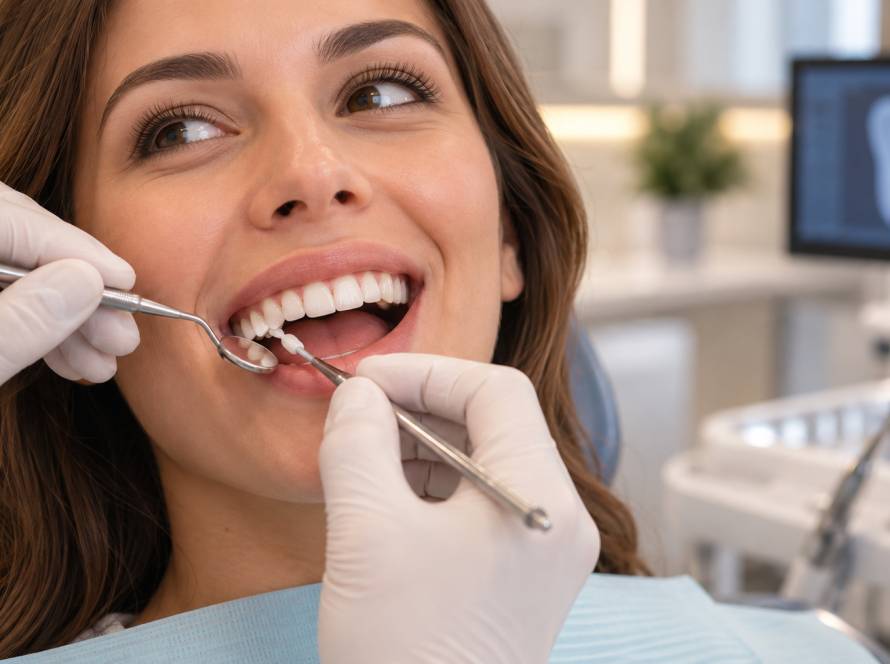
The exact steps depend on the tooth and the type of restoration. When a direct composite restoration is appropriate, the tooth is assessed and prepared according to the defect; local anaesthesia may be used when needed. Carious or damaged tissue is managed while preserving sound tooth structure where clinically possible, the tooth surface is prepared for the adhesive system, composite is placed and shaped, and the restoration is finished, polished and checked against the bite.
Not every restorative case follows the same sequence. A larger fracture, suspected crack, pulpal involvement, periodontal problem or major loss of tooth structure may change the plan and can require additional assessment or a different type of restoration.
What Happens After a Filling or Bonding?
Temporary sensitivity to cold, heat or biting can occur after some restorative procedures. Persistent, worsening or spontaneous pain should be reassessed because it may indicate a bite issue, pulpal problem, crack or another condition requiring attention.
Composite restorations can also wear, stain, chip or fracture over time. Their longevity is not fixed and depends on restoration size and position, bite forces, oral hygiene, caries risk and habits.
For someone who has travelled for treatment, persistent or worsening sensitivity, spontaneous pain, a restoration that feels high when biting, a new chip or fracture, or loss of a filling should be clinically assessed after returning home if it occurs. The cause may be minor or may indicate a pulpal, bite-related or structural problem; it should not be assumed that every symptom is simply normal post-treatment sensitivity.
What Affects the Longevity of a Filling?
There is no single lifespan that applies to every dental filling. Longevity is influenced by the material, the size and position of the restoration, chewing forces, clenching or grinding, oral hygiene, caries risk and changes in the surrounding tooth over time.
Age alone is not a reason to replace a filling. An older restoration that remains sound and functional may continue to be monitored, while a newer restoration may need attention if it fractures, loses marginal integrity, develops recurrent decay or no longer functions correctly. Depending on the defect, repair may sometimes preserve more tooth tissue than complete replacement.
Cost and Comparing Restorative Treatment Plans
The cost of a filling, repair or bonding procedure depends on what the tooth actually needs. Relevant factors can include the size and location of the defect, how many surfaces are involved, whether an existing restoration can be repaired or needs replacement, the amount of remaining tooth structure and whether endodontic or indirect restorative treatment is required instead of a direct restoration.
For international patients, a useful quotation should identify the planned treatment rather than presenting every chipped, decayed or previously restored tooth as the same procedure. Comparing like with like also means distinguishing cosmetic bonding from treatment of active decay and recognising when a larger structural or pulpal problem changes the treatment category.
Restorative Treatment Planning at Güler Dent
Smiles Shaped by Science, Experience, and Trust
Frequently Asked Questions
Is restorative dentistry the same as having a filling?
No. Fillings are a common restorative treatment, but restorative dentistry also addresses fractures, wear, failing restorations and selected form-related problems.
Does every cavity need a filling?
No. Management depends on lesion stage, cavitation, caries activity and other clinical findings.
Is composite bonding the same as a filling?
They can use the same material, but the clinical purpose may differ. Fillings commonly restore tissue lost to decay or damage; bonding often adds material to alter selected aspects of shape or repair small defects.
Can a chipped front tooth be repaired with composite?
Some limited chips can be restored with direct composite. Larger fractures, pulpal involvement or unfavourable bite conditions may require another approach.
How long do composite fillings last?
There is no universal lifespan. Size, location, bite, oral hygiene, caries risk and maintenance all matter.
Is sensitivity after a filling normal?
Short-term sensitivity can occur. Increasing, persistent or spontaneous pain should be evaluated.
After Returning Home: Sensitivity, Damage and Follow-Up
Patients travelling for composite fillings or bonding should consider how they would arrange an examination if sensitivity persists, the bite feels uncomfortable, or a restoration chips or breaks after returning home. Short-lived sensitivity can occur, but worsening, spontaneous or prolonged pain requires clinical reassessment rather than an assumption that it is normal healing. Ask the treating team what records can be provided for a local dentist if further assessment or repair is needed; do not assume that a particular international repair or follow-up service is included.
Restorative Dentistry Consultation in Samsun, Turkey
If you are considering a filling or composite bonding in Turkey, assessment should first establish whether a direct restoration is suitable and whether the tooth has decay, a crack, pulpal involvement or structural loss that changes the treatment plan. Appointment planning depends on the number of teeth involved, the type of restoration and whether any additional dental care is needed. To arrange a restorative assessment with Güler Dent Ağız ve Diş Sağlığı Polikliniği, contact the clinic at the details below.
- Address: Mimarsinan Mahallesi, Atatürk Boulevard, No: 266, Atakum, Samsun, Turkey
- Phone: +90 552 439 00 01
The diagnosis and choice between filling, bonding or another restorative approach are made after an individual clinical assessment.
This page provides general information and does not replace an individual dental examination.