Dental Crowns, Bridges and Dentures in Turkey
Prosthetic dentistry restores or replaces teeth when tooth structure is extensively damaged or teeth are missing. It includes fixed restorations such as crowns and bridges, removable complete and partial dentures, and implant-supported prostheses.
Contents
ToggleFor patients considering crowns or dentures in Turkey, the main decision is not simply which material or package to choose. The condition of the remaining teeth, gums and supporting tissues, the number and position of missing teeth, the bite, hygiene access and whether implants are clinically appropriate all affect the treatment plan.
Güler Dent provides fixed and removable prostheses, complete and partial dentures, implant-supported prostheses, crowns and bridges. Monolithic zirconia is one material option. The clinic has its own prosthesis laboratory; manufacturing time, the number of visits, fit and aesthetic results remain case-dependent.
When Is Prosthetic Treatment Considered?
Prosthetic treatment may be considered when one or more teeth are missing, when all teeth in an arch are missing, or when a tooth has lost enough structure to require a more extensive restoration.
A crown should not automatically be chosen when a more conservative restoration can adequately preserve the tooth. Likewise, replacing a missing tooth with a bridge, implant-supported restoration or removable prosthesis requires different clinical considerations.
Fixed and Removable Prostheses
Fixed prostheses are not routinely removed by the patient. Crowns and bridges are common examples.
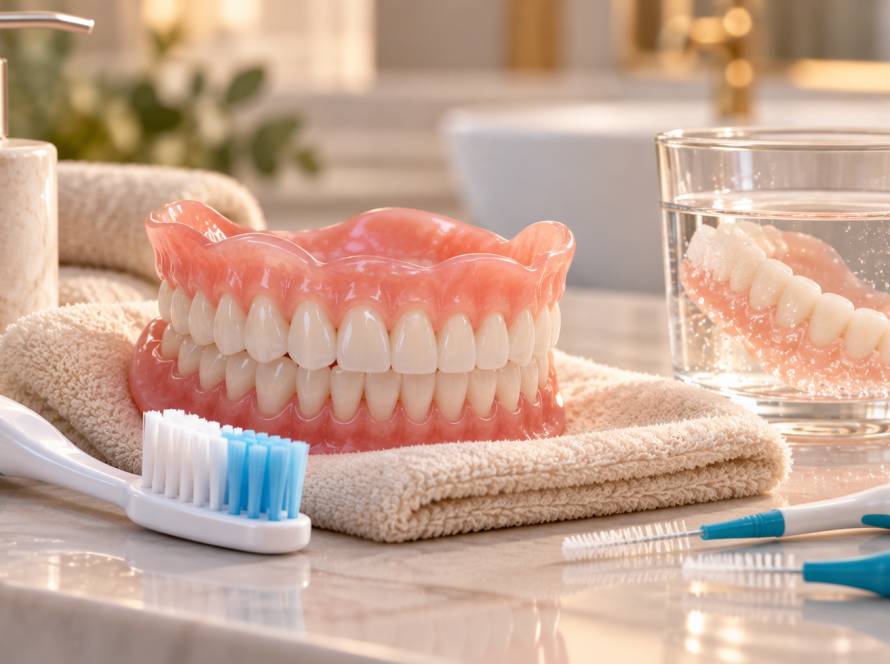
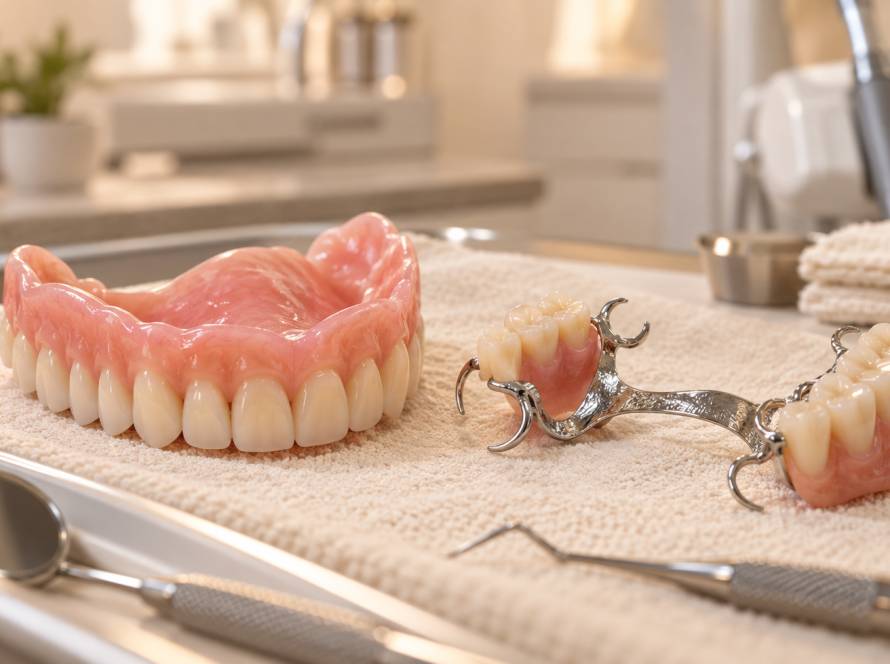
Removable prostheses can be taken out by the patient. A complete denture replaces the teeth of an edentulous arch, while a partial denture replaces some missing teeth when natural teeth remain.
The choice depends on the remaining teeth, periodontal and bone support, hygiene, bite, function and the wider treatment plan.
Complete and Partial Dentures
A complete denture is considered when there are no natural teeth remaining in an arch. Its support and stability depend on the anatomy and condition of the oral tissues, the relationship between the jaws and the way the denture is designed and adjusted. A partial denture replaces selected missing teeth while natural teeth remain. Its support and retention can involve the remaining teeth and oral tissues, so the health, position and distribution of those teeth are important to planning.
The choice between complete and partial removable prostheses is therefore not simply based on the number of missing teeth. Periodontal support, tooth position, ridge anatomy, hygiene, functional expectations and whether fixed or implant-supported alternatives are appropriate all influence the design.
Crowns and Bridges
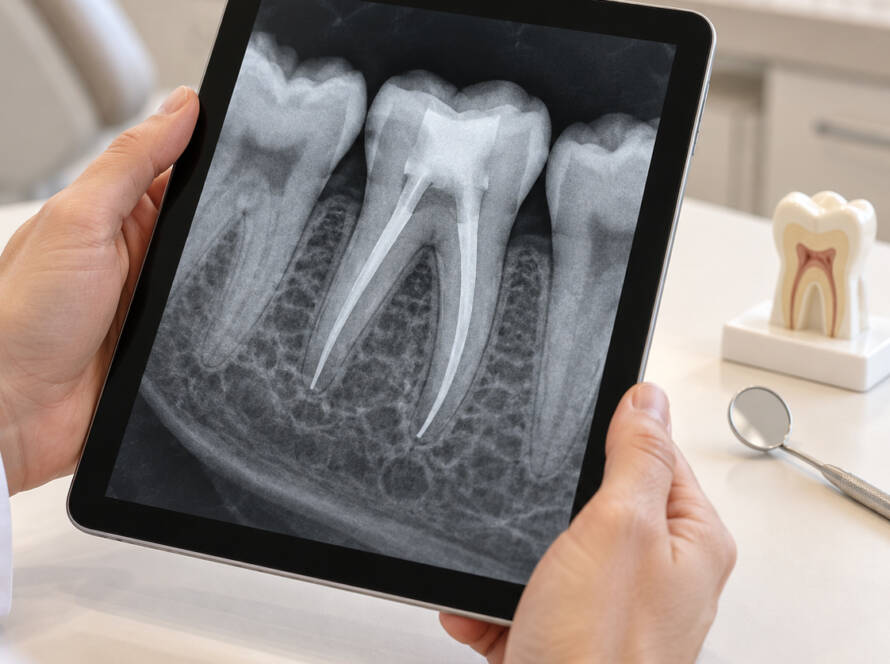
A crown covers a tooth more extensively and may be considered when a tooth needs substantial structural restoration. The amount of remaining tooth tissue, existing restorations, fractures, previous endodontic treatment, bite and aesthetic requirements can influence the decision. Planning can include tooth preparation when indicated, records or impressions, laboratory manufacture, fit and bite checks and final cementation or attachment according to the restoration design.
A bridge can replace one or more missing teeth using suitable supporting teeth. The health and preparation requirements of those supporting teeth are therefore important. Planning can include preparation of the abutment teeth when indicated, records or impressions, laboratory manufacture, provisional restoration in selected cases, fit and bite assessment and final cementation. The design also needs to allow effective cleaning around the supporting teeth and beneath the replacement tooth or teeth.
A bridge and an implant are not simply two versions of the same treatment. Implant planning adds surgical, bone and soft-tissue considerations, while a conventional tooth-supported bridge relies on neighbouring abutment teeth.
Monolithic Zirconia
Monolithic zirconia is a fixed prosthetic material option in which the restoration is made predominantly from a single zirconia ceramic structure. At Güler Dent, it may be considered for selected crowns and fixed prosthetic restorations on natural teeth or implants.
It should not be described as automatically superior for every patient. Material selection depends on the location and size of the restoration, remaining tooth structure, bite and chewing forces, opposing teeth, aesthetic requirements, hygiene and other clinical needs. Because monolithic zirconia restorations are laboratory-made, the clinical workflow can include preparation where indicated, records or impressions, laboratory fabrication and fit, contact and bite checks before final delivery. The material choice does not remove the need for accurate preparation, prosthetic design or later maintenance.
No restorative material alone can guarantee appearance, lifespan or treatment success.
Crowns for Aesthetic Treatment: Why the Indication Matters
Zirconia crowns are frequently marketed in cosmetic dental packages, but the material name does not determine whether a crown is the right treatment. Because a crown covers the tooth extensively, the reason for choosing full coverage should be assessed tooth by tooth, especially when the main concern is aesthetic and substantial healthy tooth structure remains.
Where a more conservative treatment can meet the clinical goal, that alternative should be considered. Where a tooth is heavily restored, fractured, structurally weakened or otherwise requires extensive coverage, a crown may be justified. This distinction is central to evaluating crown-focused treatment abroad without turning a material choice into a universal cosmetic solution.

Implant-Supported Prostheses
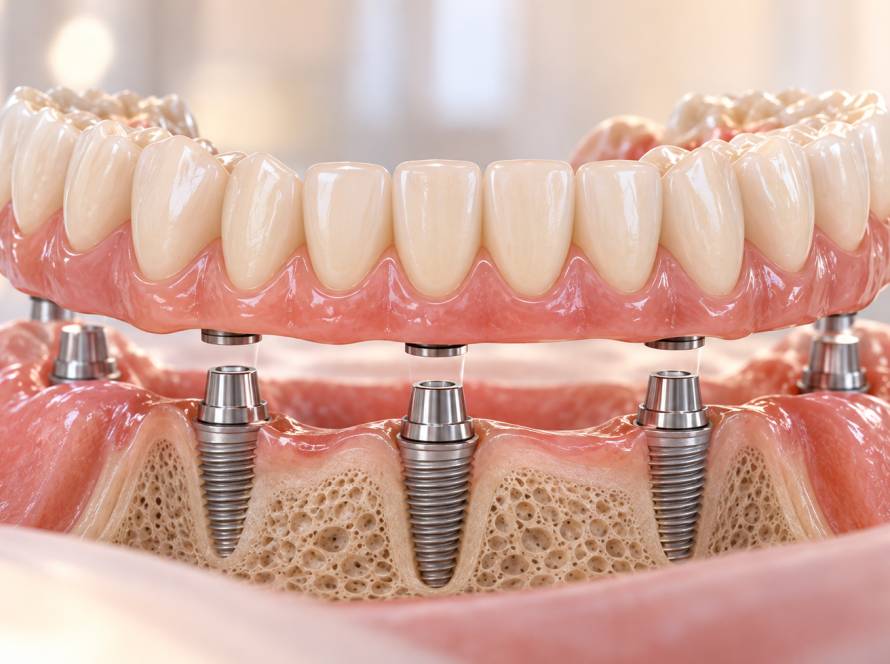
Dental implants can support fixed or removable prostheses in suitable patients. Implant suitability and prosthetic design are related but distinct decisions. A fixed implant-supported prosthesis remains in place for everyday use and depends on implant distribution, prosthetic space, bite and a design that can be cleaned appropriately. A removable implant-supported prosthesis uses implants to improve support or retention but is removed by the patient for cleaning. The two options have different design, hygiene and maintenance considerations.
The prosthetic stage considers implant number and distribution, bite, cleanability and the type of restoration. Full-arch implant-supported treatment may therefore require coordinated surgical and prosthetic planning rather than a crown-or-denture decision in isolation.
How Is Prosthetic Treatment Planned?
Planning assesses missing or damaged teeth, the health and strength of remaining teeth, gums and supporting tissues, jaw relationships, bite and oral hygiene. Imaging may be used when clinically indicated.
The steps vary with the type of prosthesis. In general, prosthetic care can involve assessment and planning, records or impressions, try-in and fit checks, delivery and follow-up. It would be misleading to promise the same number of appointments or delivery time for every crown, bridge or denture.
Records, Laboratory Stages and Fit Checks
Prosthetic treatment often depends on accurate records of the teeth, soft tissues and bite. Depending on the restoration, this may involve impressions or digital records, jaw-relation records, shade information and other clinical measurements that guide laboratory work.
Try-in and fit checks are not merely administrative steps. They are used to assess contacts, bite, appearance, support and retention before or around final delivery. A removable denture may need adjustment as the patient adapts to it, while crowns and bridges can require reassessment if contacts, bite or margins do not behave as expected. Having an in-house prosthesis laboratory can support communication between the clinical and laboratory stages, but it does not remove the need for these checks or guarantee that no adjustments will be required.
Treatment Staging When Travelling for Prosthetic Care
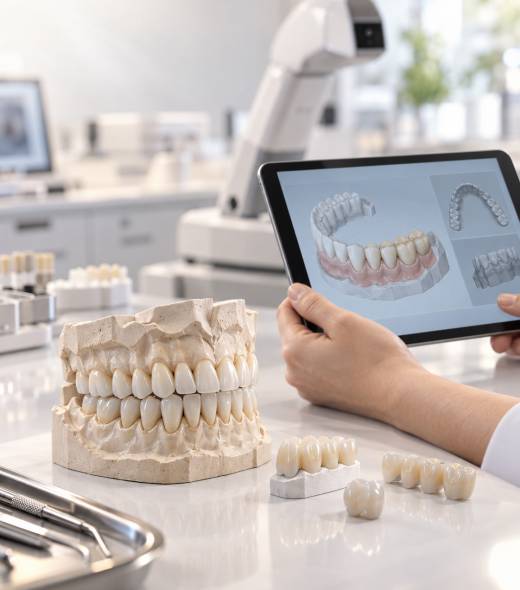
Crowns, bridges and removable dentures do not all follow the same production and fitting sequence. Depending on the case, prosthetic care can involve preparation of teeth or supporting tissues, records or impressions, laboratory work, provisional restorations when indicated, try-in or fit checks, bite assessment and final delivery.
This is why a fixed number of days or appointments should not be assumed from the presence of an in-house laboratory alone. For a patient planning treatment abroad, the relevant question is which clinical and laboratory stages are required for the specific restoration and which findings could require an additional adjustment or appointment.
Getting Used to a Denture and Ongoing Care
New removable dentures can temporarily change chewing, speech and the way the mouth feels. Cleaning the prosthesis and oral tissues remains important, as does caring for any remaining natural teeth.
Fixed restorations also require plaque control around margins and supporting teeth or implants.
A denture that repeatedly rubs, becomes loose or fractures should be professionally assessed. Patients should not grind, cut or glue a prosthesis themselves.
Fit, Adjustments and Problems After Returning Home
Fit and function are part of prosthetic treatment, not cosmetic details added after delivery. A new denture may need assessment if it repeatedly rubs or loses retention, while a crown or bridge should be reassessed if there is persistent pain, a bite that feels significantly wrong, loosening, fracture or a change around the supporting tooth or gums.
For patients who have travelled for treatment, these problems should be evaluated where clinically appropriate rather than ignored until the next trip. The necessary response may be adjustment, repair, treatment of the supporting tooth or tissues, or replacement, depending on the cause.
How Long Do Dental Prostheses Last?
There is no universal lifespan for crowns, bridges or dentures. Material, design, bite forces, oral hygiene, supporting teeth and tissues, habits and professional maintenance all influence longevity.
Oral tissues can change over time, and supporting teeth can develop new problems. A restoration that initially fits well can therefore require review, adjustment, repair or replacement later.
Comparing Costs for Crowns, Bridges and Dentures
Prosthetic treatment costs depend on the restoration being planned rather than on the word “crown” or “denture” alone. The number of teeth or units, the condition of supporting teeth and tissues, the type of prosthesis, material choice, preparatory treatment, implant support where relevant and the records, try-in or fitting stages can all affect the scope.
When comparing treatment proposals, patients should check that they are comparing the same type and extent of restoration. A quotation for a single crown is not comparable with a multi-unit bridge or full-arch plan, and a material label such as “zirconia” does not by itself show whether the underlying treatment indication and design are appropriate.
Prosthetic Dentistry at Güler Dent
Güler Dent in Atakum, Samsun, Turkey provides prosthetic dentistry as one of its main service areas. The clinic has its own prosthesis laboratory and evaluates prosthetic treatment as part of the overall dental plan.
Smiles Shaped by Science, Experience, and Trust
Options include crowns, bridges, complete and partial removable dentures, implant-supported prostheses and monolithic zirconia. The appropriate design and material are determined by the clinical situation rather than by using one restoration for every patient.
Frequently Asked Questions
What is the difference between a crown and a bridge?
A crown restores and covers an individual tooth or implant restoration, while a bridge replaces a missing tooth or teeth using supporting teeth or implants depending on the design.
Are dentures only for people with no teeth?
No. Complete dentures are used when an arch has no natural teeth; partial dentures can replace missing teeth when some natural teeth remain.
Is zirconia always the best crown material?
No. Material choice depends on the clinical and prosthetic requirements of the case.
Is a bridge better than an implant?
Neither is universally better. Supporting teeth, bone and gum conditions, surgical suitability, hygiene and the overall plan influence the choice.
Can implants support removable dentures?
Yes, implant-supported removable prostheses can be considered in suitable cases.
How many appointments do crowns or dentures take?
There is no universal appointment count. The restoration type, oral conditions, preparatory treatment and fit/try-in requirements affect the process.
Prosthetic Dentistry Consultation in Samsun, Turkey
If you are considering crowns, bridges or dentures in Turkey, an individual prosthetic assessment is needed to determine the restoration design, the condition of supporting teeth and tissues, and the clinical and laboratory stages required. Depending on the case, records or impressions, try-in, bite and fit checks, final delivery and later adjustments may all form part of treatment, so travel plans should not be based on a universal appointment count. To arrange a prosthetic assessment with Güler Dent Ağız ve Diş Sağlığı Polikliniği, contact the clinic at the details below.
- Address: Mimarsinan Mahallesi, Atatürk Boulevard, No: 266, Atakum, Samsun, Turkey
- Phone: +90 552 439 00 01
The final restoration and appointment sequence are determined by the individual clinical and prosthetic findings.
This page is for general information and does not replace an individual prosthetic assessment.