Root Canal Treatment in Turkey: Endodontic Care at Güler Dent
Root canal treatment is used when the pulp inside a tooth is irreversibly inflamed or infected and the tooth can be retained. It is not the correct treatment for every toothache, deep cavity or sensitive tooth. Diagnosis considers symptoms, clinical tests, the condition of the pulp and tissues around the root, restorability and appropriate imaging.
Contents
ToggleFor patients considering root canal treatment in Turkey, the decision is broader than “root canal or implant.” If a natural tooth can be predictably restored, endodontic treatment may be part of preserving it. A previously treated tooth can also develop a new problem months or years later, and retreatment may be an option in selected cases rather than proceeding directly to extraction.
Another important point is that root canal treatment and the final restoration are connected. After the root canal system has been treated, the tooth needs an appropriate coronal restoration to protect it and reduce the risk of recontamination or fracture. This does not mean that every root-treated tooth automatically needs a crown; the remaining tooth structure, tooth position and functional load matter.
When Is Root Canal Treatment Considered?
The dental pulp can be damaged by deep decay, cracks, trauma or repeated dental procedures. Persistent spontaneous pain, prolonged temperature sensitivity, pain on biting, swelling or new symptoms in a previously root-treated tooth may require endodontic assessment.
Symptoms alone do not establish the diagnosis. Some pulpal or root-area disease can exist with little pain, while some tooth pain comes from conditions that do not require root canal treatment.
How Is the Diagnosis Made?
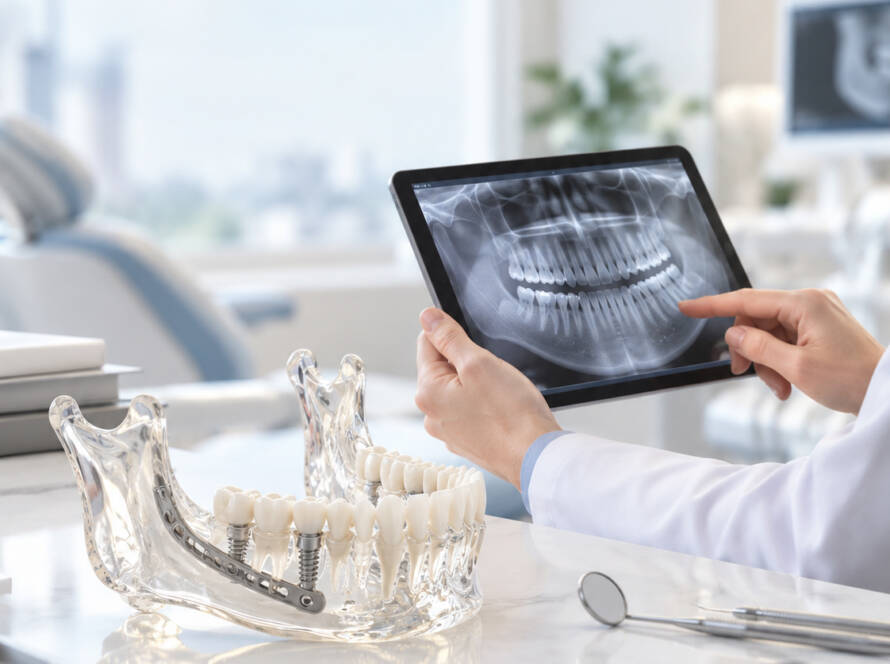
Diagnosis considers the history of the tooth, decay and existing restorations, clinical tests, biting and surrounding-tissue findings and, when indicated, dental radiographs.
CBCT is not required for every root canal. Two-dimensional dental radiographs are sufficient in many cases, while three-dimensional imaging may be considered when anatomy or diagnosis is more complex. Güler Dent has in-clinic tomography technology, but its use is based on clinical need.
What Happens During Root Canal Treatment?
After assessment, local anaesthesia is commonly used where appropriate. Access is made to the internal part of the tooth, inflamed or infected pulp tissue is removed, and the root canal system is cleaned, shaped and disinfected. The canals are then filled and sealed.
The purpose is not simply to stop pain. Treatment aims to manage pulpal or root-canal infection and allow the tooth to be restored for continued function when it is clinically retainable.
The number of appointments varies with canal anatomy, infection, whether the tooth is being treated for the first time or retreated, and other clinical factors.
Vital-Pulp Treatment and Other Endodontic Options
Endodontics includes more than conventional root canal treatment. When the pulp is still capable of healing and the diagnosis supports preservation, selected vital-pulp approaches may be considered instead of removing the entire pulp.
Depending on the clinical findings, this can include procedures such as direct pulp capping or pulpotomy in appropriate teeth. These are not alternatives for every deep cavity, and their suitability depends on symptoms, pulp status, contamination, remaining tooth structure and the ability to restore the tooth predictably.
When the pulp is irreversibly inflamed or infected, or when the root-canal system itself needs treatment, conventional root canal treatment becomes the relevant option. The distinction is diagnostic rather than based only on how deep a cavity appears.
Does Every Deep Cavity Need Root Canal Treatment?
No. A deep cavity does not automatically mean the pulp is irreversibly damaged. Depending on diagnosis, restorative treatment may be sufficient in some cases, and selected vital-pulp approaches may be considered when the pulp can be preserved.
The choice between a filling, pulp-preserving treatment and root canal treatment depends on the condition of the pulp and the tooth, not on cavity depth alone.
What Is Root Canal Retreatment?
A root-treated tooth can become painful or diseased again because of complex canal anatomy, new decay, breakdown of the restoration, fracture or renewed contamination.
Retreatment involves reopening the tooth, removing previous root-filling materials, reassessing the canal system and treating it again when appropriate. It is not suitable for every failed tooth. Restorability, cracks, remaining tooth structure and the nature of the problem all influence whether retreatment, endodontic surgery, extraction or another option is considered.


When May Endodontic Surgery Be Considered?
Endodontic surgery is an advanced option for selected teeth when a non-surgical approach is not suitable or has not resolved the problem. It can involve surgical assessment and treatment around the root tip and surrounding tissues.
It is not automatically the next step whenever a root-treated tooth remains symptomatic. The diagnosis, previous treatment, root anatomy, restorability of the tooth and the relationship to nearby structures all influence whether retreatment, endodontic surgery, extraction or another approach is more appropriate.
What Restoration Is Needed After Root Canal Treatment?
The opening in the tooth must be restored appropriately after endodontic treatment. A permanent restoration helps seal the tooth and protect remaining structure.
A crown is not mandatory after every root canal. The need for a filling, onlay-type restoration, crown or another approach depends on how much tooth structure remains, whether the tooth is anterior or posterior, cracks, previous restorations and chewing forces.
This restorative decision is important because treating the canals without considering how the tooth will be restored leaves part of the treatment question unresolved.
Planning Root Canal Treatment When Travelling
For an international patient, the treatment question includes both the endodontic procedure and how the tooth will be definitively restored. Some teeth can be treated in fewer appointments than others, while retreatment, complex anatomy, persistent infection or restorative needs can require additional stages. There is no universal trip or appointment count that applies to every case.
Where a temporary restoration is present, the tooth still requires an appropriate definitive restoration and protection. If significant pain or pressure persists or increases, visible swelling develops, the temporary restoration is lost, the bite feels markedly uneven or previous symptoms return after travel, the tooth should be clinically reassessed rather than waiting solely for a future overseas appointment.
What Influences the Outcome of Root Canal Treatment?
The result of endodontic treatment depends on more than whether the canals have been filled. Diagnosis, root and canal anatomy, the extent of infection, infection control during treatment, cleaning and filling of the canal system, the quality and timing of the final coronal restoration, remaining tooth structure and ongoing oral care all influence prognosis.
For this reason, a fixed success percentage or lifetime guarantee is not appropriate for every tooth. The aim is to preserve a tooth that is biologically and restoratively maintainable, while recognising when retreatment, surgery or extraction may become necessary.
Pain and Symptoms After Treatment
Temporary tenderness or discomfort can occur after root canal treatment. Local anaesthesia is commonly used during treatment where appropriate, but the experience can still vary with inflammation, tooth condition and individual sensitivity. Increasing pain, marked swelling, fever or other worsening symptoms should be reassessed.
A treated tooth can also develop problems later. New symptoms should not automatically be labelled as “root canal failure”; the cause needs to be identified.
Cost and Comparing Root Canal Treatment Plans
Root canal cost can vary with the tooth and the complexity of treatment. Relevant factors include canal anatomy, whether the tooth is receiving first-time treatment or retreatment, whether additional diagnostic imaging is indicated and what restoration is needed after the endodontic phase.
A low headline figure should therefore not be compared without checking whether the permanent restoration is a separate part of the plan. For a previously treated tooth, the need to remove or replace an existing restoration and the possibility that the tooth may not be restorable can also change the overall treatment decision.
Endodontic Care at Güler Dent
Endodontics is one of Güler Dent’s main clinical service areas at its clinic in Atakum, Samsun, Turkey. Care in this field includes root canal treatment, retreatment, selected vital-pulp approaches and endodontic surgery, with the choice determined by diagnosis and restorability.
Endodontics Specialist Uzm. Dt. Buğra Güler takes part in the assessment process in this clinical field at Güler Dent.
Bilim, Deneyim ve Güvenle Şekillenen Gülüşler
Güler Dent also has in-clinic tomography technology for cases in which three-dimensional imaging is clinically indicated.
Frequently Asked Questions
Does every toothache need a root canal?
No. Tooth pain has different causes. Diagnosis is required before deciding on root canal treatment.
Can a root canal be completed in one appointment?
Some cases can be managed in fewer appointments than others, but there is no universal appointment count. Anatomy, infection and retreatment complexity can change the plan.
Does every root-treated tooth need a crown?
No. The final restoration depends on remaining tooth structure, tooth position, chewing load and other restorative factors.
Can a root canal be redone?
Yes, retreatment may be considered in selected teeth that develop persistent or new disease after previous treatment.
Is extraction and an implant always better than retreatment?
No. The tooth’s restorability, endodontic findings, periodontal condition and overall treatment plan should be assessed before choosing between retaining and replacing the tooth.
Is CBCT always needed for root canal treatment?
No. It may be useful in selected complex cases but is not routine for every tooth.
Root Canal Consultation in Samsun, Turkey
If you are considering root canal treatment or retreatment in Turkey, the consultation should first establish the diagnosis and whether the tooth is restorable. Appointment planning also needs to account for whether treatment is first-time or retreatment, whether a temporary restoration is required and how the tooth will receive its definitive filling, onlay, crown or other restoration. Patients travelling from abroad should not assume that every tooth can follow the same appointment schedule. To arrange an endodontic assessment with Güler Dent Ağız ve Diş Sağlığı Polikliniği, contact the clinic at the details below.
- Address: Mimarsinan Mahallesi, Atatürk Boulevard, No: 266, Atakum, Samsun, Turkey
- Phone: +90 552 439 00 01
The decision to retain, retreat or restore a tooth is based on an individual clinical and radiographic assessment.
This page is for general information and does not replace an individual endodontic diagnosis or treatment plan.