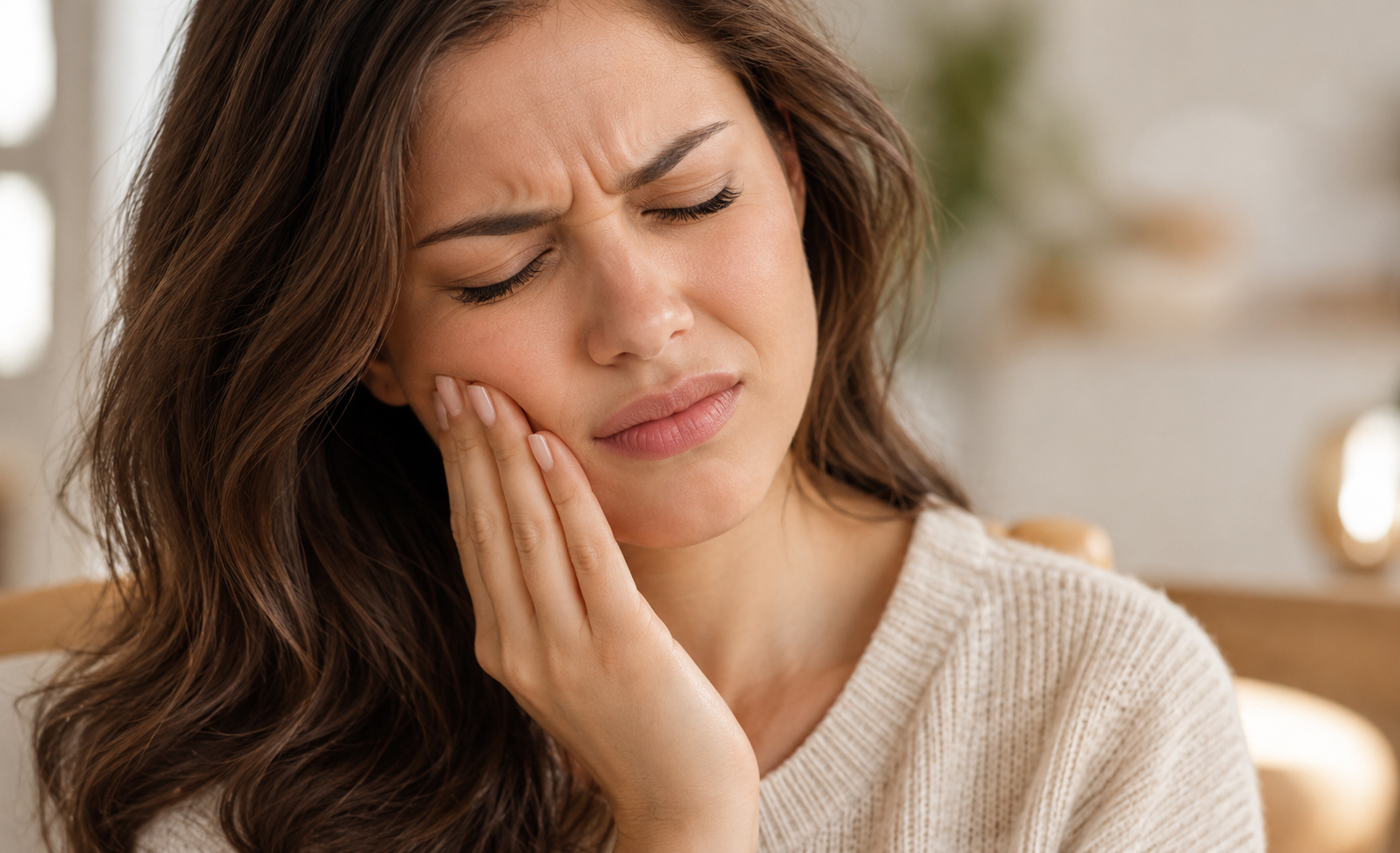
Temporary sensitivity to cold, heat, sweetness or pressure can occur after a dental filling, particularly when the original cavity was deep or the tooth was already irritated before treatment.
What matters clinically is how the symptom behaves. Brief sensitivity that is gradually becoming less noticeable can fit post-treatment recovery. A filling that feels clearly high when biting, pain that is becoming stronger, spontaneous throbbing, lingering temperature pain, swelling or a bad taste should be reassessed.
Sensitivity after a filling does not automatically mean that root canal treatment is needed.
Why Sensitivity Can Develop After a Filling
A filling changes a tooth both mechanically and biologically. Decayed or damaged tissue is managed, the remaining tooth is restored and the pulp can react to the original disease, the depth of the cavity and the restorative procedure itself.
Temporary pulpal irritation, a deep lesion close to the pulp, a high restoration, exposed or recently treated dentine, a crack, a bonding problem or pulpal inflammation that was already advanced before treatment can all produce symptoms.
The pattern of pain helps the dentist decide which explanation is more likely.
Cold and Heat Sensitivity
Cold sensitivity can occur after a restoration, particularly after deeper treatment. A short sensation that settles quickly and becomes less noticeable over time may reflect a pulp that is recovering.
Lingering temperature pain, increasing sensitivity, spontaneous pain without a trigger, pain that disturbs sleep or symptoms accompanied by swelling or a bad taste are more concerning. These findings do not prove a particular diagnosis, but they justify further evaluation.
No single symptom should be used to diagnose the pulp in isolation.
Pain When Biting
A filling that contacts the opposing tooth too early can place additional pressure on the tooth and the tissues around the root. Patients may describe the tooth as “hitting first”, feeling taller than the others or hurting mainly when they chew.
A bite problem can often be identified during examination and adjusted if appropriate.
Biting pain can also come from cracks, pulpal disease or other structural problems, so it should not automatically be blamed on filling height.
Deep Cavities and Pulp Irritation
A deep cavity leaves less dentine between the restoration and the pulp, and the pulp may already have been irritated by decay before treatment.
Some deeply affected teeth recover and remain vital. Others develop pulpal inflammation that does not resolve. The dentist may consider symptoms before treatment, temperature-test responses, cavity depth, any pulp exposure, remaining tooth structure and how symptoms change after the filling.
A deep filling increases clinical concern but does not guarantee a future root canal.
Cracks and Restorative Problems
A crack that was present before treatment, or that later becomes clinically significant, can cause sharp pain during chewing, particularly when pressure is released. Not every crack is visible on a dental X-ray.
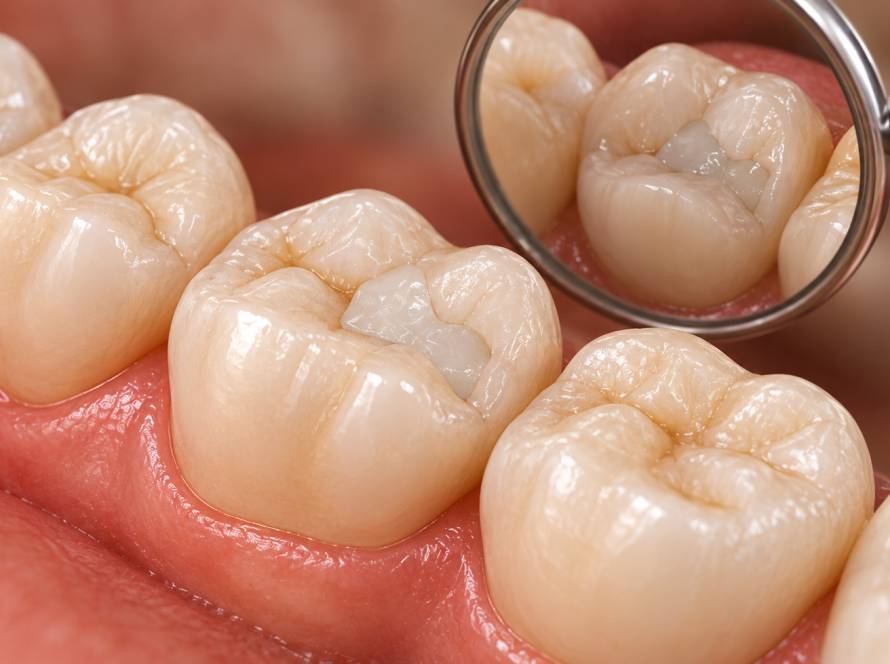
Restorations can also develop defects. Depending on the material and clinical situation, marginal gaps, bonding problems, fracture or recurrent decay can contribute to symptoms.
The filling and the underlying tooth therefore need to be assessed together.
When Sensitivity Needs Reassessment
Arrange a review if pain is becoming stronger, temperature pain lingers, the tooth hurts spontaneously, chewing becomes increasingly painful, the filling feels clearly high, swelling develops, there is drainage or a bad taste, part of the restoration breaks or symptoms improve and then return.
There is no single number of days that separates every normal recovery from every problem. The character of the symptoms and the direction in which they are changing are more useful than a rigid countdown.
Sensitivity Does Not Automatically Mean Root Canal Treatment
Some post-filling sensitivity settles without endodontic treatment. Root canal treatment is considered when diagnosis shows that the pulp or root-canal system has disease requiring endodontic care and the tooth can be retained.
A high bite may need adjustment, a minor restorative defect may need repair and a crack may require a different restorative approach.
Treatment is based on diagnosis rather than on the fact that a filling was recently placed.
What the Dentist May Check
Assessment can include how symptoms are triggered and how long they last, the bite and contact points, filling margins, remaining tooth structure, percussion or biting tests, pulp-sensibility tests, periodontal findings and dental radiographs when clinically indicated.
CBCT is not a routine test for ordinary post-filling sensitivity. Three-dimensional imaging is reserved for selected questions in which it is expected to add useful information.
Post-Filling Assessment at Güler Dent
Restorative Dentistry and Endodontics are main clinical service areas at Güler Dent in Samsun, Turkey. Post-filling symptoms can be assessed from both perspectives: whether the restoration or bite needs attention and whether the pulp requires endodontic evaluation.
Endodontics Specialist Uzm. Dt. Buğra Güler takes part in assessment in this field. Güler Dent also has in-clinic tomography technology for situations in which three-dimensional imaging is clinically indicated.