A smile makeover is not one procedure or a standard cosmetic package. It is a personalised treatment plan built around what a person wants to change and what their teeth, gums and bite can support safely.
Planning usually begins by defining the aesthetic concerns clearly, then assessing oral health, existing restorations, tooth structure, gum levels and function. Only after that assessment does it make sense to compare whitening, composite bonding, veneers, crowns, orthodontic treatment or periodontal care.
The aim is not to use as many cosmetic procedures as possible. It is to choose the least invasive combination that can address the actual problem while preserving healthy tooth tissue and maintaining a functional bite.
From Aesthetic Goals to a Clinical Plan
Different smile concerns call for different solutions. A person who mainly dislikes tooth colour may need a very different plan from someone whose front teeth are heavily restored, worn, misaligned or structurally damaged.
Common goals include lightening natural teeth, repairing worn or chipped edges, reducing a small gap, improving tooth proportions, changing visible old restorations, addressing gum display or correcting tooth position.
Clarifying the goal at the beginning helps avoid unnecessary treatment and makes it easier to choose an approach that addresses the real concern rather than applying the same cosmetic package to everyone.
Oral Health Comes Before Elective Cosmetic Treatment
Aesthetic planning should not hide active disease. Before definitive cosmetic treatment, the dentist may need to assess for caries, gingival or periodontal inflammation, cracked or weakened teeth, failing restorations, endodontic problems, tooth wear, bite instability and areas that are difficult to keep clean.
If a health problem needs treatment first, the cosmetic sequence may change. Active periodontal inflammation, for example, can affect gum levels and restoration margins, while a tooth with deep decay may need restorative or endodontic care before an aesthetic plan is finalised.
Analysing the Smile as a Whole
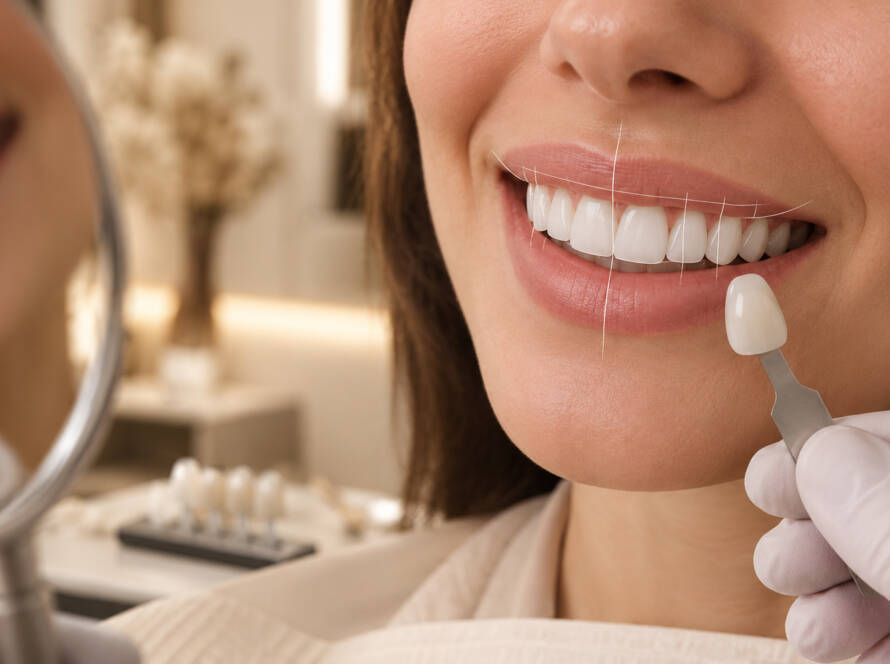
Smile planning is more than choosing a tooth shade. Tooth shape and proportion, position and symmetry, visible tooth display, spaces, old restorations, gum levels, lip movement, bite and signs of grinding or wear can all influence the plan.
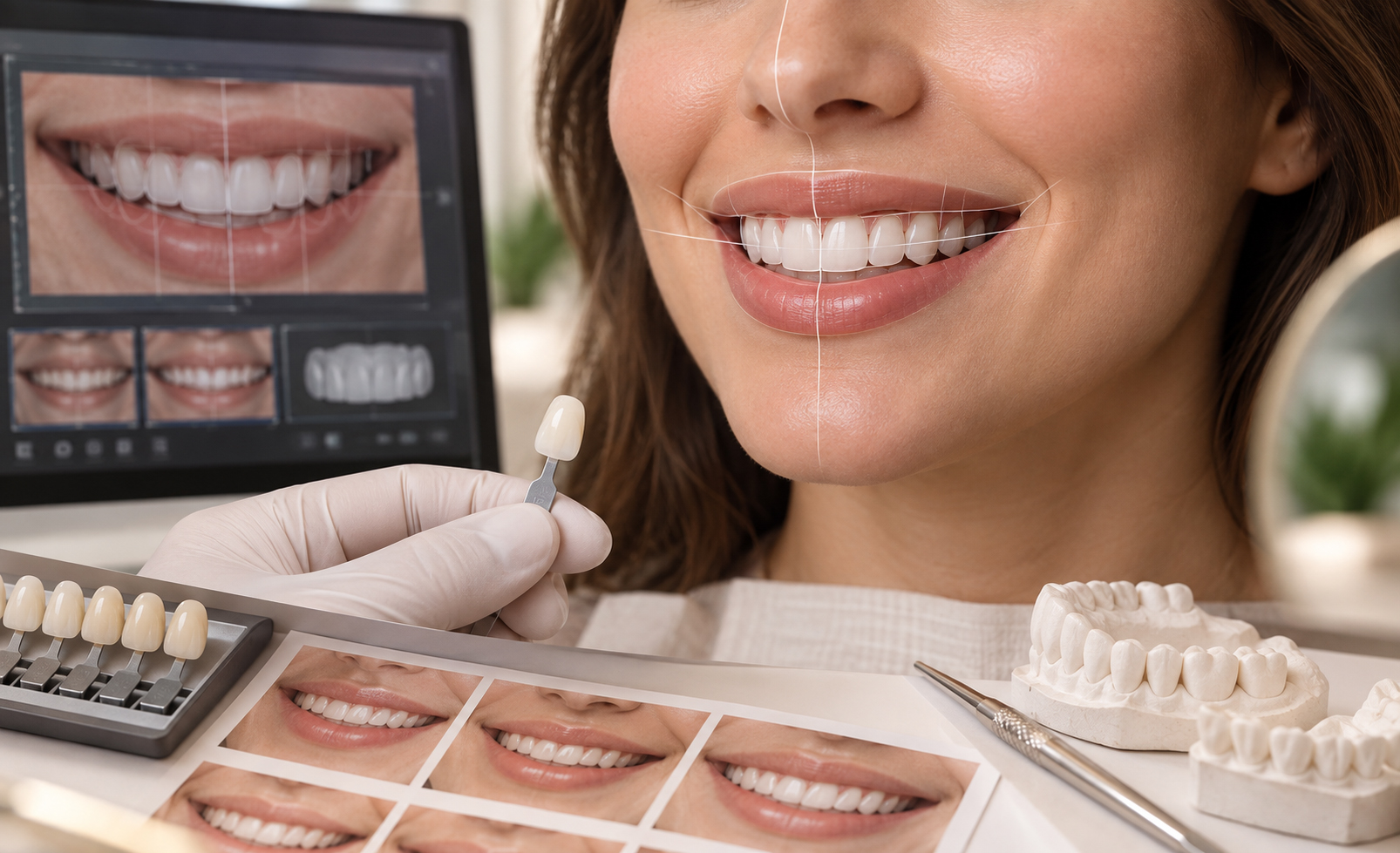
Photographs, models or digital scans can support assessment and communication where useful. No single digital workflow is mandatory for every patient.
The records are tools to support diagnosis and discussion rather than substitutes for clinical judgement.

Matching Treatments to Specific Problems
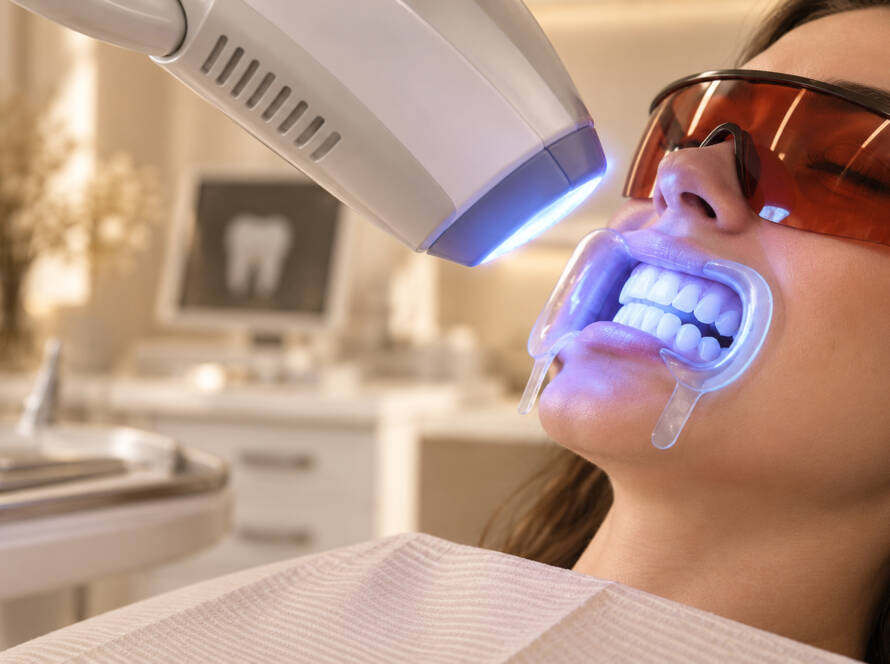
Whitening changes the colour of natural teeth but does not alter tooth shape, close gaps or lighten existing crowns, veneers or composite fillings.
Composite bonding can add tooth-coloured resin to selected areas to repair small chips, adjust edge shape or reduce limited spaces. It can be conservative in suitable cases but is not appropriate for every structural or aesthetic concern.
Porcelain veneers cover mainly the front surface of selected teeth and can change colour, contour and proportion. Crowns cover more of the tooth and are generally considered when greater structural restoration is required.
When the underlying concern is tooth position, orthodontic movement may address the problem more directly than reshaping or covering teeth. If gum health or gum display affects the result, periodontal assessment may form part of the plan.
The presence of an uneven gum line or “gummy smile” does not automatically mean that surgery is needed.
Preserving Healthy Tooth Structure
A good cosmetic plan considers biological cost as well as appearance. Whitening does not require restorative tooth preparation, and selected bonding can be largely additive.
Veneers and crowns may require preparation depending on the tooth and restoration design, with crowns generally involving more extensive coverage.
The useful question is not simply whether teeth will be “shaved”. It is whether the amount of preparation is justified by the treatment goal. Natural tooth structure does not grow back once it has been removed.
Sequencing Combined Treatment
When more than one procedure is needed, order matters. There is no universal sequence, but the logic should follow the treatments selected and the health of the mouth.
Disease and inflammation may need to be controlled before definitive cosmetic work. Orthodontic movement may be completed before permanent restorations. If whitening is planned, it can affect the shade selected for later bonding or ceramic work because restorations do not whiten like natural enamel.
Periodontal treatment that changes gum contours may also require the tissues to become clinically stable before final restorative margins are confirmed.
How Whitening, Bonding, Veneers and Crowns Fit Together
Whitening is useful when natural tooth colour is the main concern and can be a standalone treatment or part of a wider plan. Existing crowns, veneers and composite restorations do not lighten in the same way, so their colour relationship needs to be considered before treatment starts.
Bonding is useful for selected small shape changes, edge wear, chips or limited spaces. In a combined plan it may follow tooth-position or colour treatment, and the bite must be considered because thin composite additions at heavily loaded edges can chip.
Veneers and crowns should not be treated as interchangeable “smile makeover teeth”. A veneer is a partial-coverage restoration used for selected aesthetic changes, while a crown may be more appropriate when the tooth needs extensive structural coverage. The decision should be made tooth by tooth.
Digital Smile Planning
Digital images, scans and simulations can help patients and dentists discuss proportions, shapes and possible directions. They can improve communication, but they do not guarantee the final clinical result.
A screen preview cannot fully predict how teeth, gums, materials, bite and biological tissues will behave. Digital planning should support, rather than replace, clinical judgement.
Final Review and Long-Term Maintenance
A completed smile makeover should be reviewed for more than appearance. Bite contacts, comfort, restoration margins, hygiene access, gum response, colour, symmetry and any need for adjustment all matter.
Cosmetic dentistry still requires long-term dental care. Whitening may need future maintenance, composite can stain or chip, and ceramic restorations need professional review alongside the supporting teeth and gums.
The number of appointments and overall duration depend on which treatments are actually required. Timing is a separate planning question and should be discussed only once the treatment components are known.
Smile Makeover Planning at Güler Dent
Smile Design is one of the main clinical service areas at Güler Dent in Samsun, Turkey. Smile-related options can include teeth whitening, aesthetic composite filling or bonding, porcelain laminate veneers, monolithic zirconia, periodontal aesthetic approaches and implant-supported prosthetic solutions when clinically appropriate.
Güler Dent also has its own prosthesis laboratory as part of its prosthetic infrastructure. This does not determine which treatment is appropriate or guarantee a particular number of visits or aesthetic result. Treatment selection remains based on the condition of the teeth, gums, bite and the patient’s goals.