If you have a deep cavity, sensitivity or tooth pain, it is understandable to wonder whether a filling will be enough or whether you need root canal treatment. The decision is not based on cavity size alone. Dentists also look at the condition of the pulp inside the tooth, how much healthy tooth structure remains, the pattern of your symptoms, the results of clinical tests and, when needed, dental imaging.
A filling or another direct restoration may be appropriate when the tooth can be restored and the pulp does not need endodontic treatment. Root canal treatment becomes relevant when disease inside the pulp or root-canal system cannot be managed with a simple restoration. In selected vital permanent teeth with deep decay, there may also be a third possibility: a pulp-preserving approach designed to maintain pulp vitality when the clinical findings support it.
Two teeth that look similarly “deep” on an X-ray can therefore require very different treatment.
Filling and Root Canal Treatment Address Different Problems
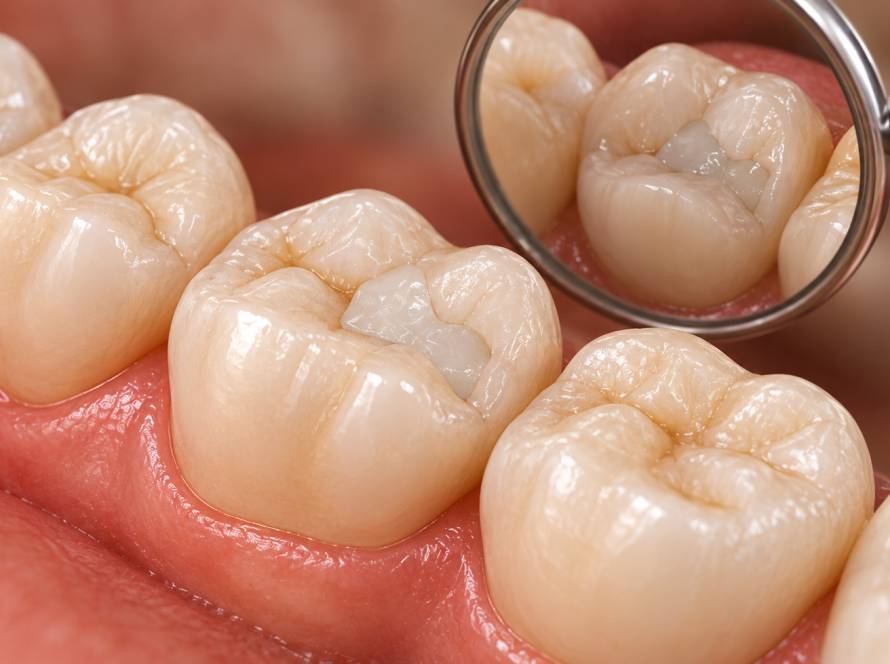
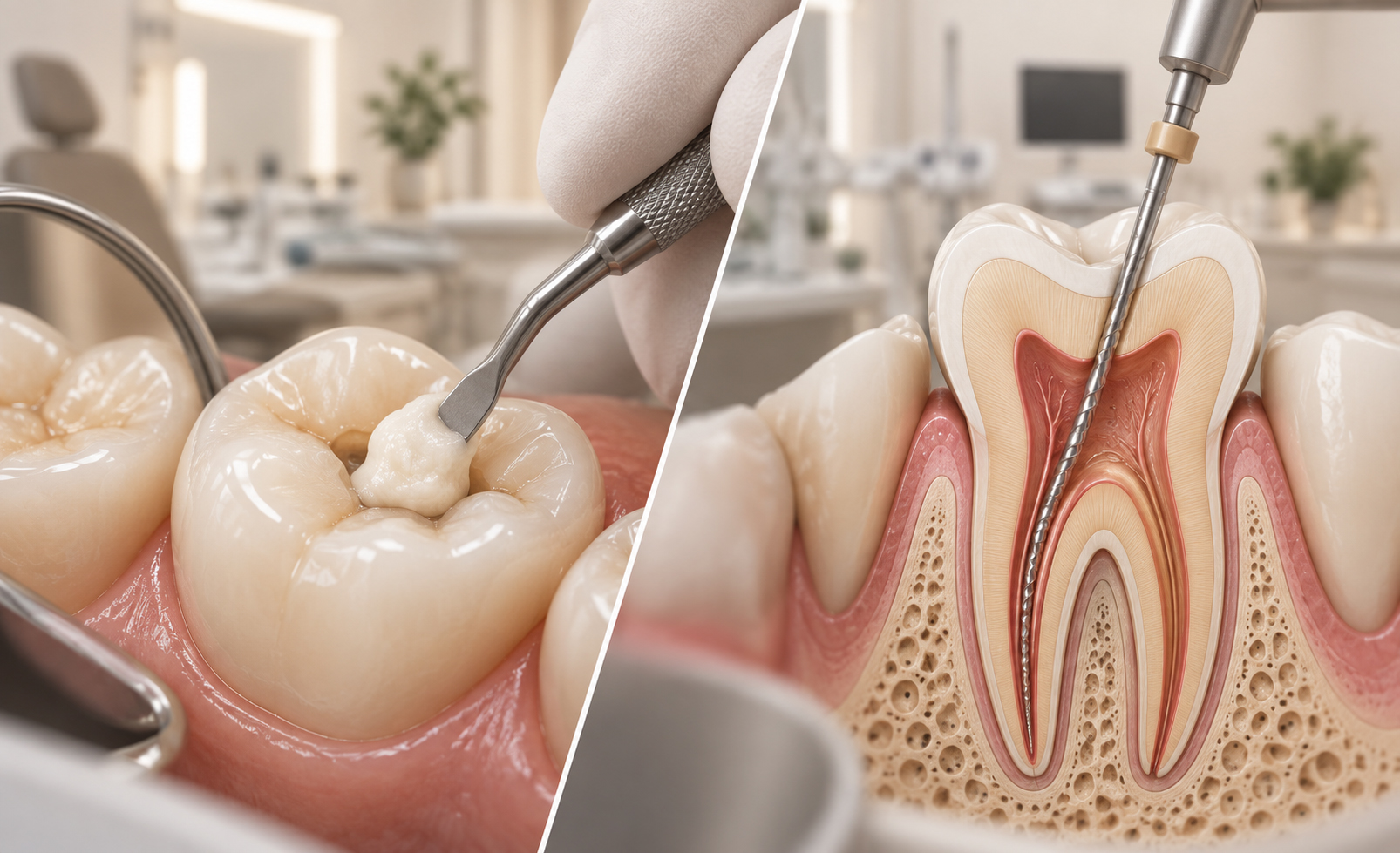
A dental filling restores tooth structure that has been lost through decay, wear, fracture or another defect. The damaged area is treated and the missing structure is rebuilt with an appropriate restorative material.
Root canal treatment is aimed at disease inside the tooth. Inflamed or infected pulp tissue is removed, the canals are cleaned and disinfected, and the root-canal system is filled and sealed. The tooth then needs an appropriate restoration above the gumline.
The treatments are not different sizes of the same procedure. A root canal is not simply a “larger filling”, and a filling cannot treat disease that has progressed inside the root-canal system.
When a Filling May Be Enough
A filling may be suitable when the tooth can be restored directly and the pulp remains healthy enough not to require root canal treatment. Dentists consider the depth and location of the decay together with the amount of remaining tooth structure, the condition of the pulp, any cracks or existing restorations, and how the tooth functions in the bite.
Not every early carious lesion needs drilling and filling. Depending on its stage and activity, some early lesions may be managed with preventive or non-operative care. At the other end of the spectrum, a tooth can have so much structural loss that it needs a larger restoration than a direct filling even though root canal treatment is not required.
This is why the restorative decision and the endodontic decision must be made separately.
Deep Decay Does Not Automatically Mean Root Canal Treatment
A deep cavity increases the chance that the pulp has been affected, but depth alone does not mean the pulp must be removed. Modern management of deep caries places greater emphasis on preserving healthy tissue and, where appropriate, maintaining pulp vitality.
In selected vital permanent teeth, controlled caries removal or vital-pulp procedures may be considered. Even if the pulp is exposed, the treatment decision still depends on diagnosis, symptoms, tissue condition, restorability and other clinical findings.
Pulp-preserving treatment is not a way to avoid root canal treatment at any cost. It is an evidence-based option for carefully selected teeth whose pulp is still capable of healing.
Findings That Make Root Canal Treatment More Likely
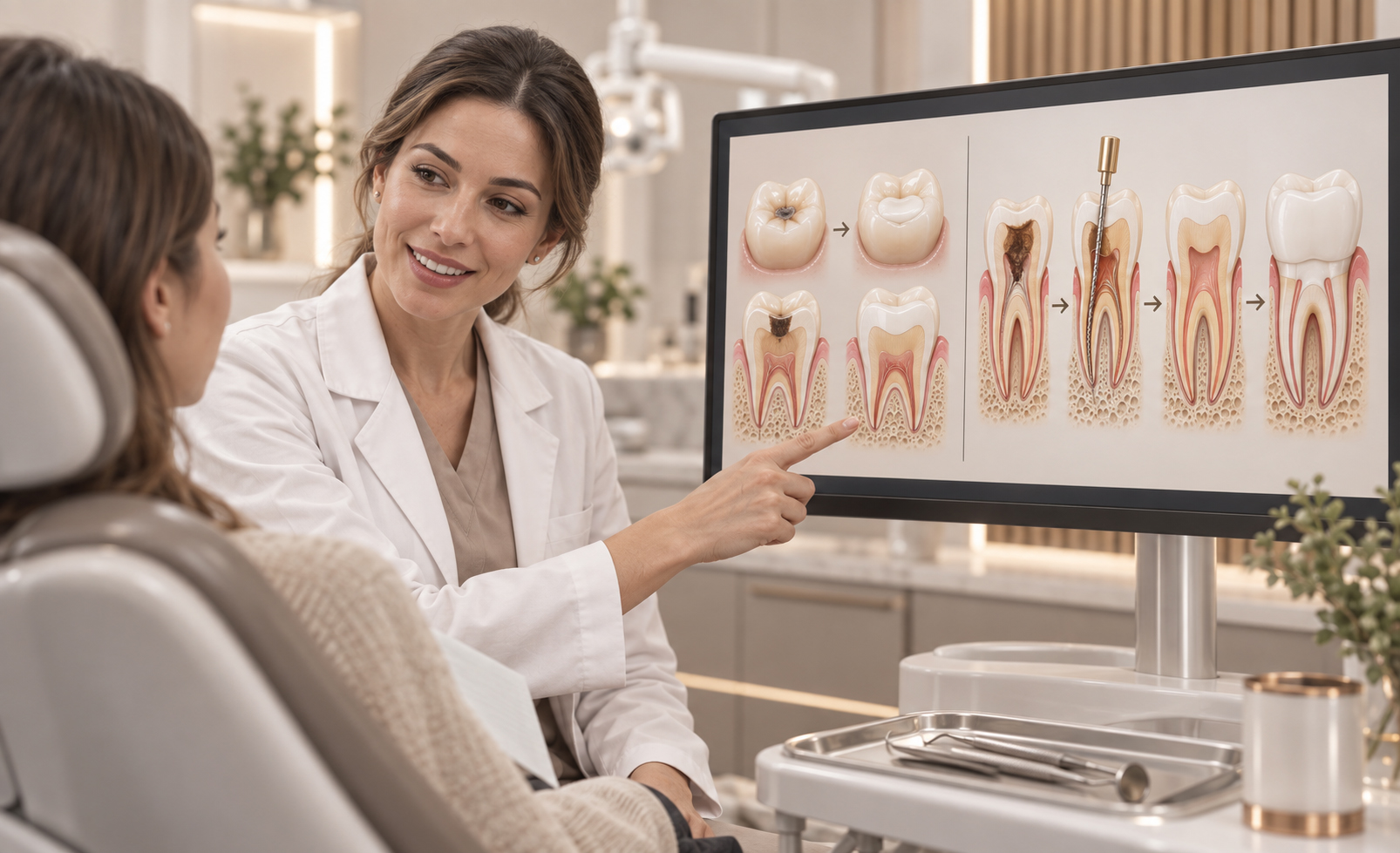
Root canal treatment is more likely when the pulp has irreversible disease, has become necrotic, or when infection or inflammation involving the root-canal system and tissues around the root requires endodontic management.
Symptoms that can prompt an endodontic assessment include spontaneous pain, pain that lingers after hot or cold stimulation, pain on biting, swelling or a history of trauma. Cracks and repeated dental treatment can also affect the pulp.
Symptoms still need to be interpreted in context. Some teeth with significant pulpal or apical disease cause surprisingly little pain, while severe pain can also come from conditions that do not require root canal treatment.
Why Symptoms Need to Be Interpreted Alongside Clinical Tests
Pain is useful diagnostic information, but its intensity does not tell the whole story. A dentist may ask when the pain started, whether it occurs spontaneously, what triggers it, how long it lasts and whether it is changing.
Those details are considered alongside examination findings and tests of the pulp and surrounding tissues. The absence of pain does not prove that the pulp is healthy. Equally, sensitivity after a filling does not automatically mean that a root canal is needed.
The diagnosis comes from the overall pattern rather than one symptom in isolation.
The Role of Examination and Dental Imaging
Dental radiographs can show the depth of decay, existing restorations, structural changes and changes around the roots. They are an important part of assessment, but they do not provide a complete answer on their own.
A dentist may combine the history of the tooth with visual examination, pulp-sensibility testing, biting or percussion tests, an assessment of remaining tooth structure and appropriate dental radiographs. Three-dimensional imaging is not routine for every cavity or possible root canal. It is reserved for selected endodontic situations in which the additional information is expected to influence diagnosis or treatment planning.
When a Previously Filled Tooth Later Needs Root Canal Treatment
A tooth that has already been filled can sometimes develop a later need for endodontic treatment. This does not necessarily mean that the filling itself caused the problem.
The original depth of the decay, the condition of the pulp at the time of treatment, cracks, recurrent decay, changes around an existing restoration or later pulpal disease can all be relevant. Temporary sensitivity after restorative treatment can also occur without indicating irreversible pulp disease.
Symptoms that become more intense, occur spontaneously, persist rather than settle, cause marked pain on biting or are accompanied by swelling should be reassessed.
Restoring a Tooth After Root Canal Treatment
Root canal treatment addresses disease inside the tooth, but it does not complete the restorative treatment. The tooth still needs to be sealed and restored so that it can function and the remaining structure can be protected.
The appropriate restoration depends on how much sound tooth tissue remains, where the tooth is in the mouth, the chewing forces it carries, whether cracks are present and the wider restorative plan. A root-treated tooth does not automatically require the same type of filling, onlay or crown as every other root-treated tooth.
That choice is a separate restorative decision.
Filling and Root Canal Assessment at Güler Dent
Restorative Dentistry and Endodontics are both main clinical service areas at Güler Dent in Samsun, Turkey. Assessment can consider the tooth from both perspectives: whether it can be restored conservatively and whether the pulp or root-canal system requires endodontic treatment.
Endodontics Specialist Uzm. Dt. Buğra Güler takes part in assessment in this field. Güler Dent also has in-clinic tomography technology for situations in which three-dimensional imaging is clinically indicated.
The aim is to identify the biological and structural condition of the tooth and choose treatment accordingly, rather than selecting a procedure from a label such as “deep cavity”.