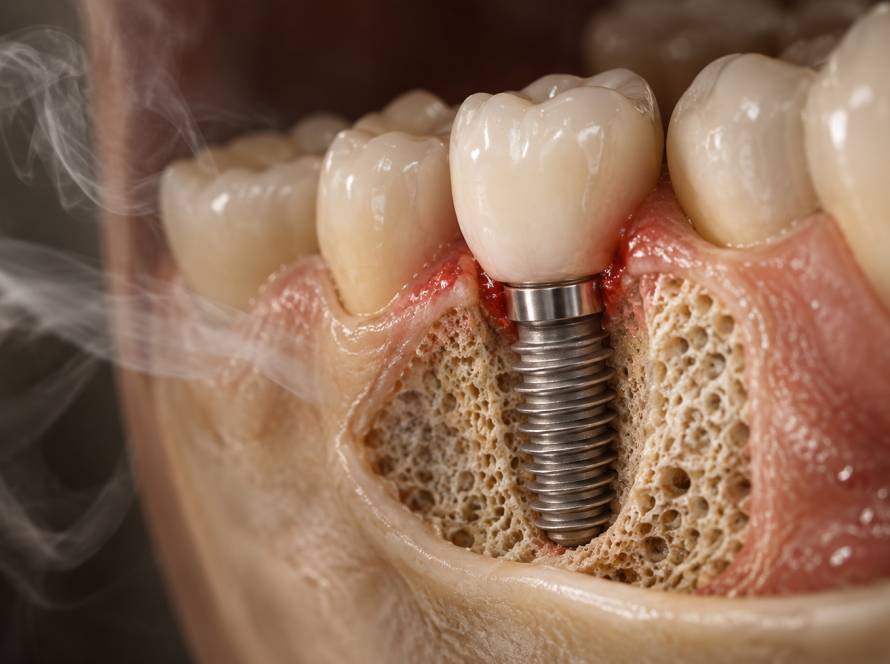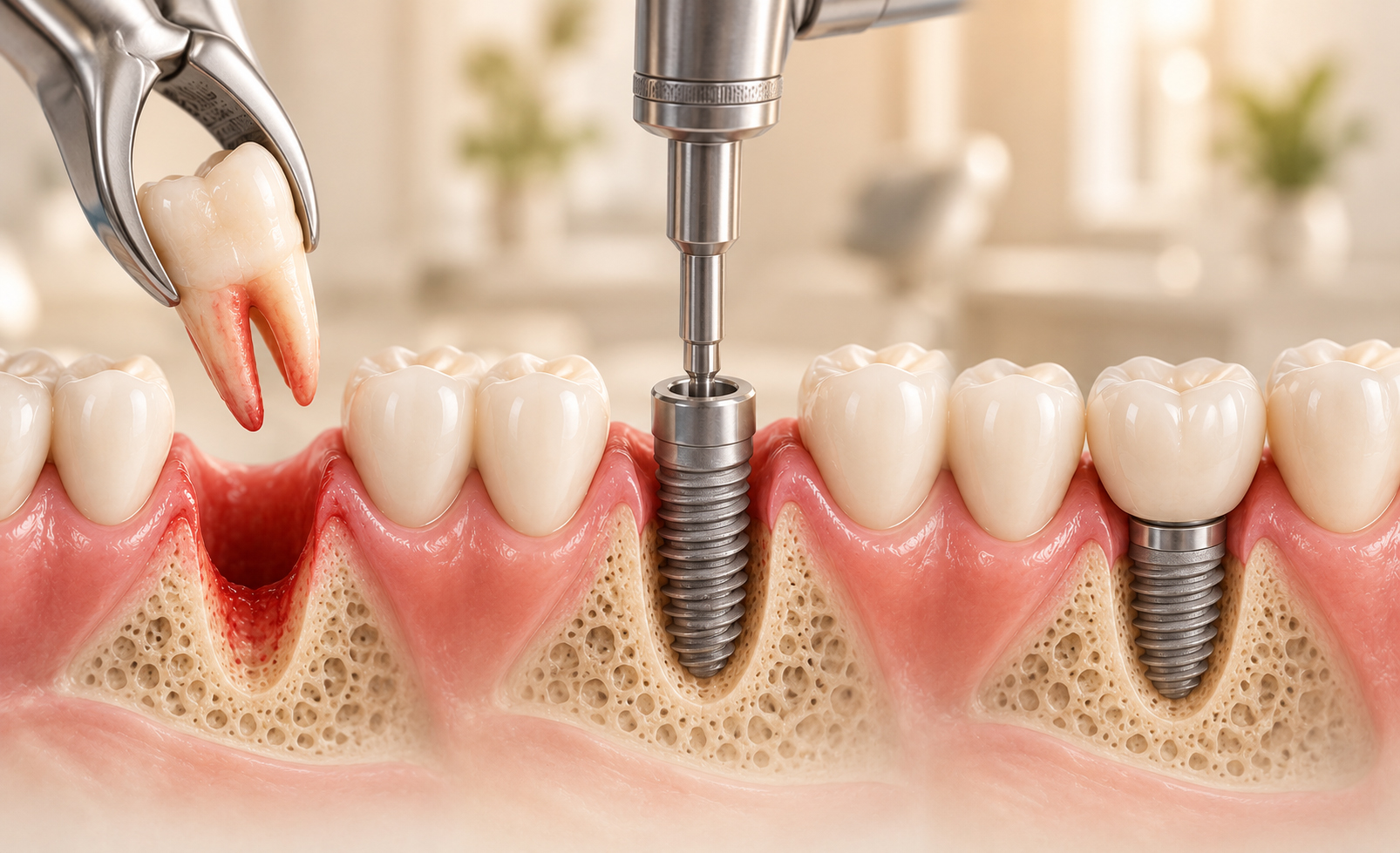
An implant can sometimes be placed at the same appointment as a tooth extraction, but immediate placement is suitable only for selected sites.
The decision is not simply whether an implant can fit into the empty socket. The implant must be positioned correctly for the planned restoration, achieve adequate primary stability and be supported by acceptable bone and soft-tissue conditions.
“Immediate implant placement” describes when the implant fixture is inserted. It does not automatically mean that a permanent crown or bridge can be fitted on the same day. Implant placement and implant loading are separate clinical decisions.
What Immediate Implant Placement Means
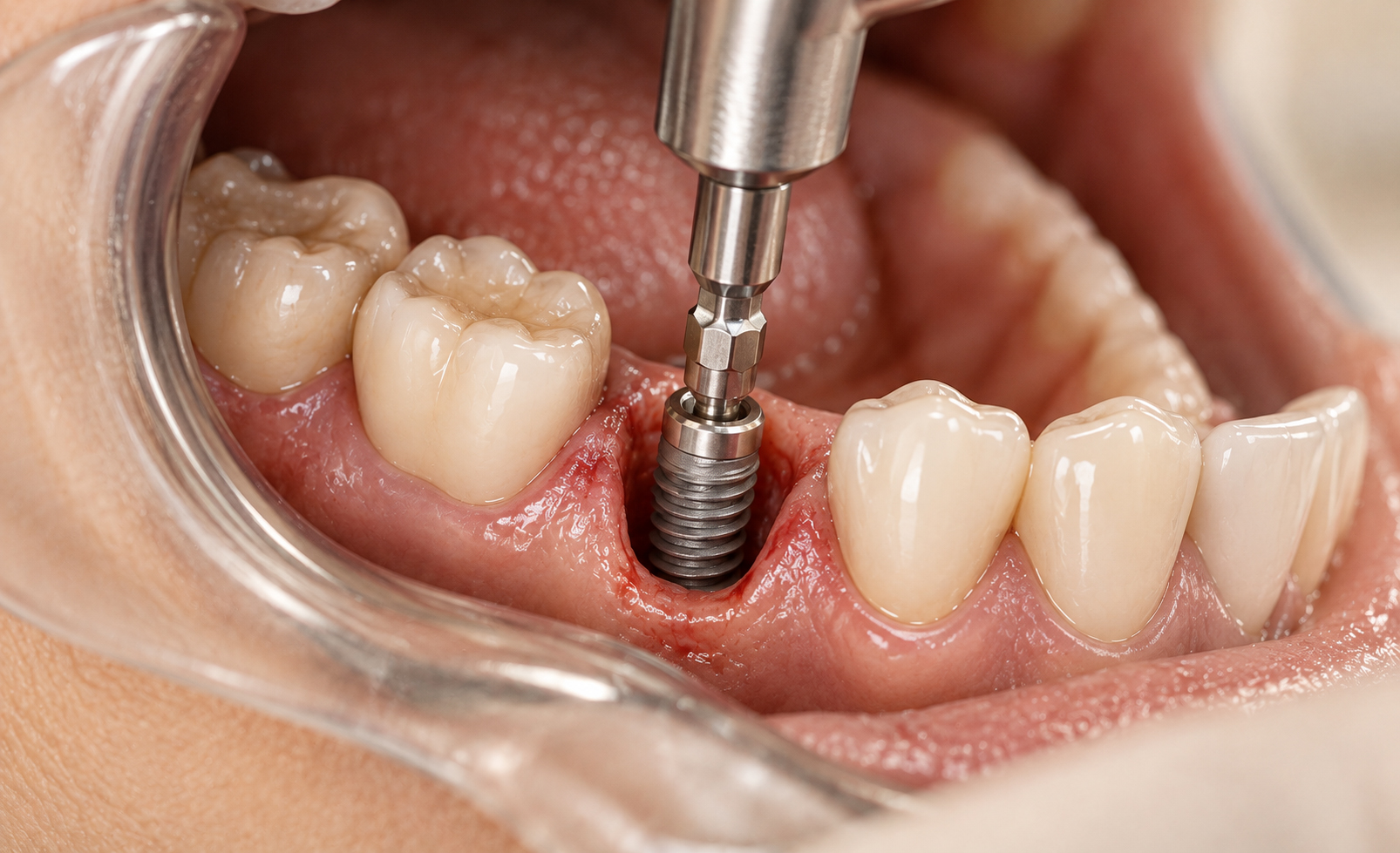
Immediate placement means that the implant is inserted into the extraction site during the same appointment in which the tooth is removed.
Other timing protocols place the implant after a period of soft-tissue or bone healing. The choice is based on the condition of the site rather than on a preference for speed.
Immediate placement can reduce the number of separate surgical stages in selected cases, but it also requires careful site selection and precise three-dimensional positioning.
Immediate Placement Is Not the Same as Same-Day Teeth
Implant placement describes when the implant enters the bone. Immediate restoration or loading describes when a temporary or functional restoration is connected to the implant.
A site can be suitable for immediate implant placement but unsuitable for immediate loading. The timing of a provisional or final restoration depends on implant stability, bite forces, prosthetic design and the wider treatment plan.
A same-day implant should therefore not be interpreted as a promise of a same-day permanent tooth.
Primary Stability and Implant Position
Primary stability is the mechanical stability of the implant at the moment it is placed.
For immediate placement, the implant needs secure anchorage in suitable bone while remaining in the correct restorative position. Moving the implant into an unfavourable position simply to gain stability can compromise the final result.
If adequate stability cannot be achieved where the implant needs to be, delayed placement may be the safer and more predictable option.
Socket Anatomy and Facial Bone
The condition of the extraction socket affects the plan. Dentists consider whether the socket walls are intact, the thickness and condition of the facial bone, how much bone is available for anchorage, the shape of any defect and the proximity of neighbouring teeth and anatomical structures.
A compromised socket does not automatically rule out implant treatment, but it can change whether immediate placement is advisable and whether augmentation needs to be considered.
Soft-Tissue Conditions
Gum and soft-tissue anatomy influence healing as well as appearance, particularly in the front of the mouth where recession or loss of tissue volume may be visible.
Tissue thickness, gum level and the condition of the facial bone are therefore part of the risk assessment. Immediate placement does not prevent the normal biological changes that follow extraction.
Infection and Previous Pathology
A tooth with infection or previous pathology cannot be managed with a universal yes-or-no rule.
The clinician considers whether infection is acute or chronic, whether the socket can be debrided adequately, how much supporting bone remains, whether primary stability is achievable, whether pathology has damaged the socket walls and the patient’s overall medical and periodontal condition.
Current implant literature supports immediate placement in selected sites with previous local pathology when the clinical conditions are favourable. That does not mean infection can be ignored. Acute infection, extensive tissue destruction or an inability to clean the site properly can change the timing.
Bone Grafting and Immediate Placement
Bone grafting can be used to manage selected defects around extraction sites, but it does not replace the need for correct implant position and primary stability.
Some defects can be managed at the same appointment. Other sites may be better treated with ridge preservation or augmentation first, followed by implant placement later.
The sequence depends on the anatomy and restorative goal rather than on a standard protocol.
When Delayed Placement Is More Appropriate
A delayed or early-placement approach may be chosen when the socket has major bone-wall defects, primary stability cannot be achieved in the correct position, acute infection or pathology creates an unfavourable environment, soft tissues need improvement, additional bone reconstruction is required or the restorative or aesthetic risk is high.
Waiting is not a treatment failure. Different timing protocols exist because extraction sites present different biological and anatomical conditions.
Planning Before and During Extraction
Assessment begins before the tooth is removed and can include the reason for extraction, periodontal and endodontic findings, tooth position, bone and soft-tissue anatomy, the intended final restoration and appropriate dental imaging.
CBCT may be considered when three-dimensional information is expected to affect planning, but it is not automatic for every extraction.
Final suitability can sometimes only be confirmed after the tooth has been removed and the socket inspected directly. A clinician may therefore plan for immediate placement and still change to a delayed approach if the intra-operative findings are unfavourable.
Immediate Implant Assessment at Güler Dent
Dental Implant and Oral & Maxillofacial Surgery are main clinical service areas at Güler Dent in Samsun, Turkey.
Güler Dent provides selected tooth extractions and implant treatment and has in-clinic tomography technology for situations in which three-dimensional imaging is clinically indicated. Bone grafting and sinus lifting are also within the clinic’s oral-surgery scope when clinically appropriate.
These resources support planning but do not mean every extraction is treated with immediate implant placement.