Dental implant treatment in Turkey does not have one universal duration. The overall timeline depends on the condition of the missing-tooth site, whether extraction is required, when the implant is placed, how healing progresses, whether bone or sinus augmentation is needed and what type of final crown, bridge or prosthesis is planned.
The surgical appointment is only one stage. Implant treatment can also involve assessment, imaging, healing review and prosthetic work.
For patients travelling for care, the number and spacing of visits should follow the confirmed clinical stages rather than a standard “X-day” package.
The Main Stages of Implant Treatment
A typical implant pathway can include assessment and planning, extraction where necessary, implant placement, healing and integration, prosthetic records, the final restoration and long-term maintenance.
Not every patient follows these stages in the same order. Some steps can be combined in selected cases, while others need to be separated to allow healing or additional treatment.
The useful timeline is therefore the one built around the actual clinical plan.
Assessment and Planning
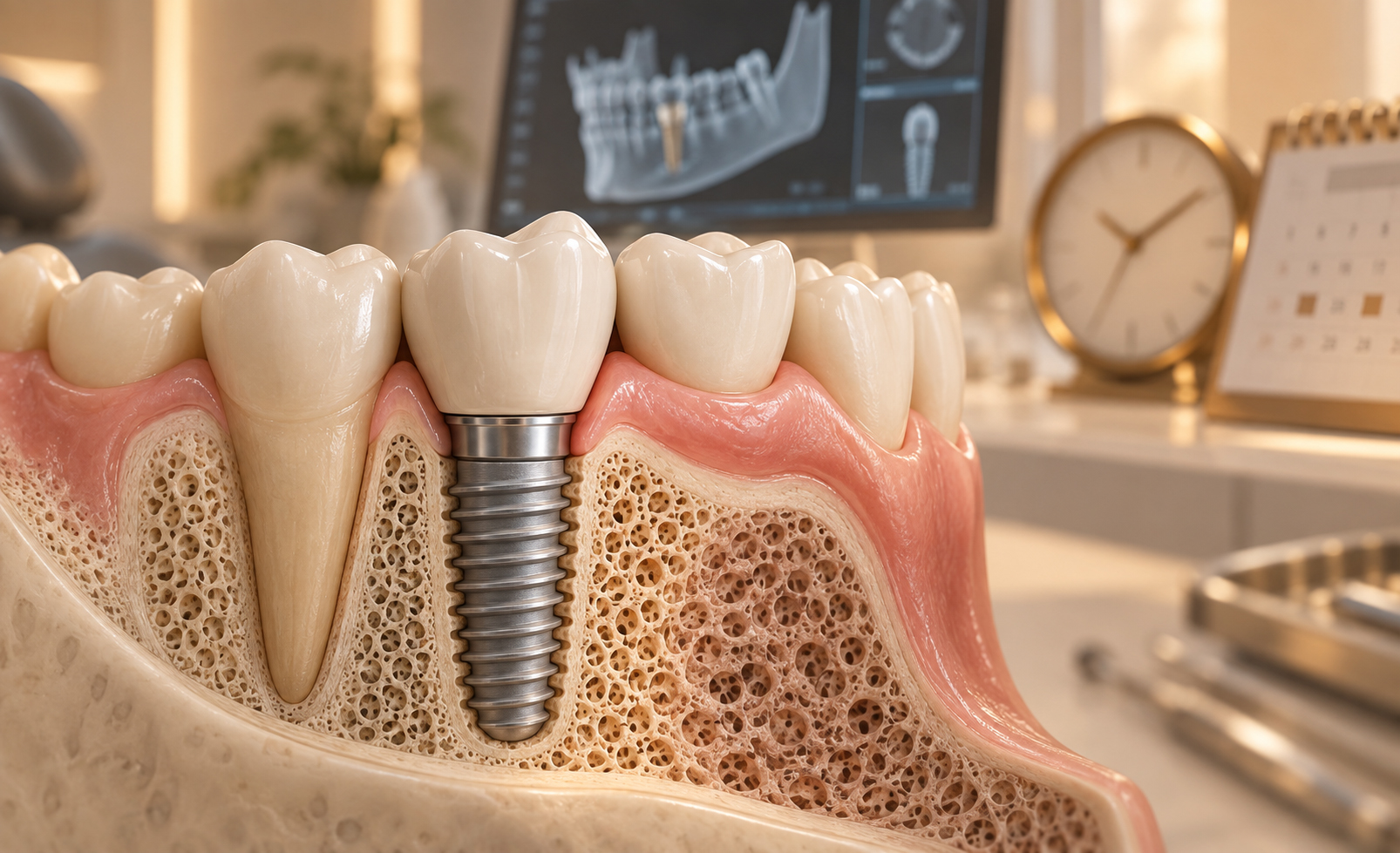
Planning starts before implant surgery. The clinician may assess the missing-tooth area, remaining teeth, periodontal health, bite, medical history, medicines, bone and soft tissues, the intended final restoration and any existing radiographs.
Additional imaging is used only when the current information does not answer the planning question.
Implant position should support the final prosthetic result, so a faster surgery date does not compensate for incomplete assessment.
Tooth Extraction and Implant Timing
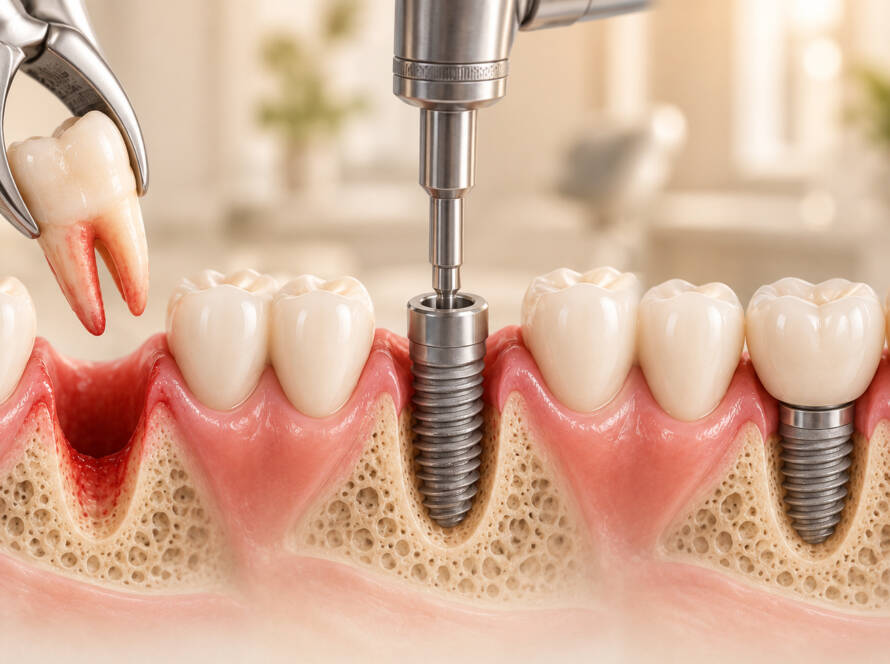
If a tooth still needs to be removed, the implant may be placed at the same appointment in a suitable socket, after a period of soft-tissue healing or after more complete bone healing.
Immediate placement is not automatically better or faster for every case. If the socket cannot provide adequate stability in the correct restorative position, another timing strategy may be chosen.
This is one reason treatment duration cannot be predicted from the fact that a tooth needs extraction alone.
Healing and Osseointegration
After placement, bone and soft tissues heal around the implant. Osseointegration describes the biological connection that develops between bone and the implant surface.
This process takes time, but there is no single waiting period that applies to every patient and every implant site.
Implant stability, bone quality and quantity, site location, surgical procedure, grafting, smoking and other risk factors, and the planned loading approach all influence when the treatment can move safely towards definitive restoration.
Immediate or Early Restoration
In selected cases, a temporary restoration can be connected soon after implant placement when stability, bite and prosthetic design are suitable.
This is a separate decision from the timing of implant placement itself. An immediately placed implant does not automatically receive an immediately loaded restoration, and a provisional restoration should not be mistaken for a guaranteed same-day final tooth.
The definitive prosthetic stage may still follow after healing.
Bone Grafting and Sinus Augmentation
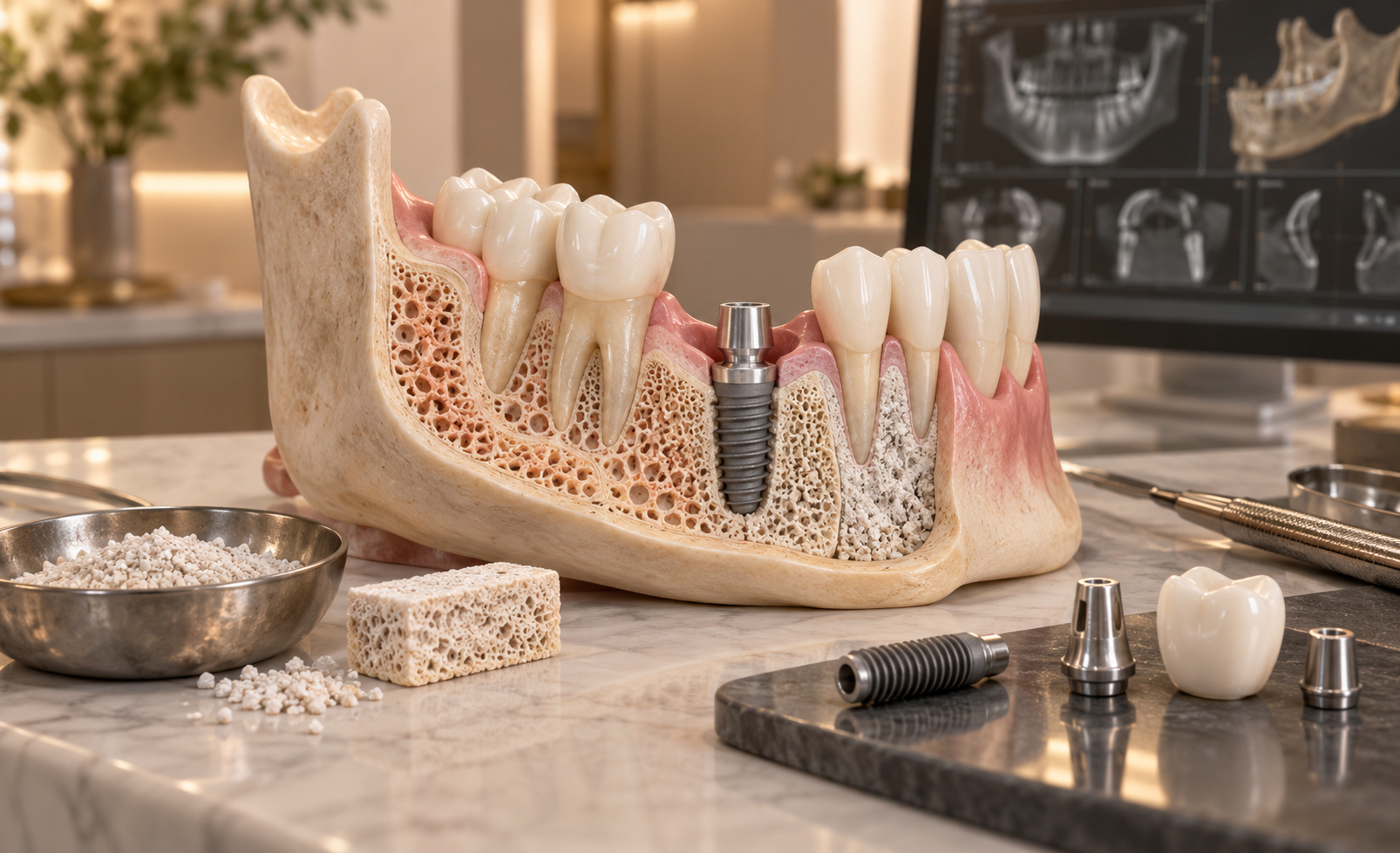
Bone grafting can change the treatment sequence. A small defect may sometimes be managed at the time of implant placement, while a larger deficiency may require augmentation before the implant is placed.
The same applies to sinus augmentation in the posterior upper jaw. Depending on anatomy and implant stability, a sinus procedure can sometimes be combined with implant placement or may require a staged approach.
These procedures do not have one universal healing period or one standard effect on the timeline.
The Final Prosthetic Stage
The prosthetic phase begins when the implant and surrounding tissues are considered ready for the planned restoration.
This can involve impressions or digital records, bite records, provisional stages where needed, laboratory work, try-in or fit assessment and placement of the final crown, bridge or prosthesis.
A single implant crown follows a different workflow from a multi-unit or full-arch restoration.
Güler Dent has its own prosthesis laboratory, which supports the prosthetic workflow but does not create one fixed delivery time for every case.
Travel Planning and Number of Trips
There is no universal number of trips for dental implant treatment.
Some treatment plans require separate surgical and prosthetic stages, while others can combine more steps. Travel planning depends on extraction timing, healing, whether implant placement can be immediate, grafting or sinus augmentation, the type of final prosthesis and whether additional dental care is needed.
A generic one-trip or two-trip claim should not replace a case-specific treatment plan.
Full-Arch Treatment Has a Different Timeline
Full-arch implant treatment involves multiple implants and a more complex prosthetic plan. Provisional restorations may be used in selected cases, but final timing still depends on implant stability, healing, bite and the design of the definitive prosthesis.
A full-arch case should not be reduced to the timeline of a single implant crown.
Factors That Can Extend or Change the Schedule
Active periodontal disease, untreated infection, insufficient bone, grafting or sinus augmentation, poor soft-tissue conditions, healing complications, unstable medical conditions, smoking-related risk or a need to revise the prosthetic plan can all change the sequence.
A delay can be clinically appropriate when it improves treatment conditions. Treatment should not be compressed simply to fit a predetermined travel schedule.
Dental Implant Timeline at Güler Dent
Dental Implant is one of the main clinical service areas at Güler Dent in Samsun, Turkey.
The clinic has in-clinic tomography technology for cases in which three-dimensional imaging is clinically indicated and its own prosthesis laboratory as part of its prosthetic infrastructure. Bone grafting and sinus lifting are also within oral-surgery scope when clinically appropriate.
These resources support planning but do not mean every patient follows the same treatment duration, number of visits or travel itinerary.