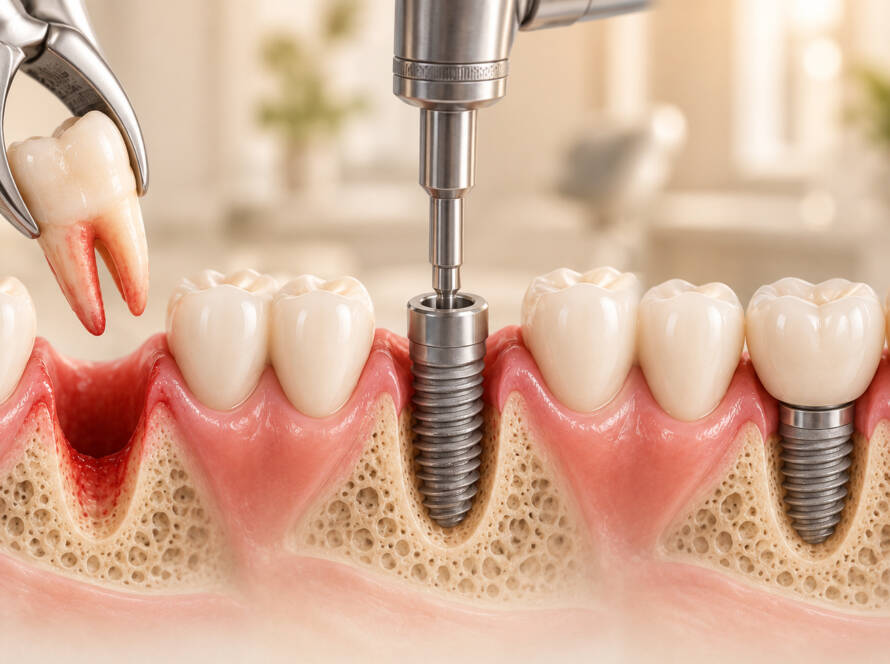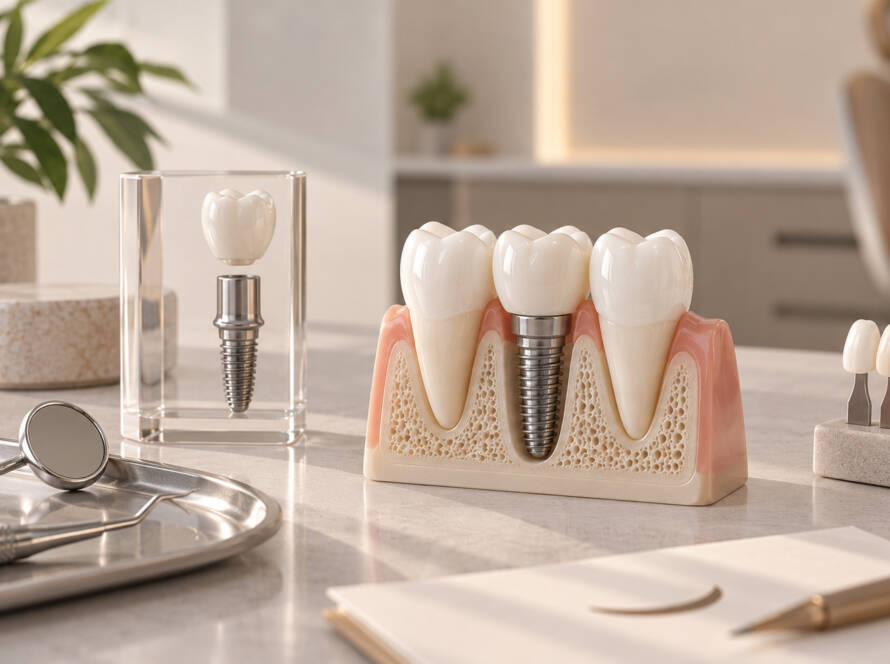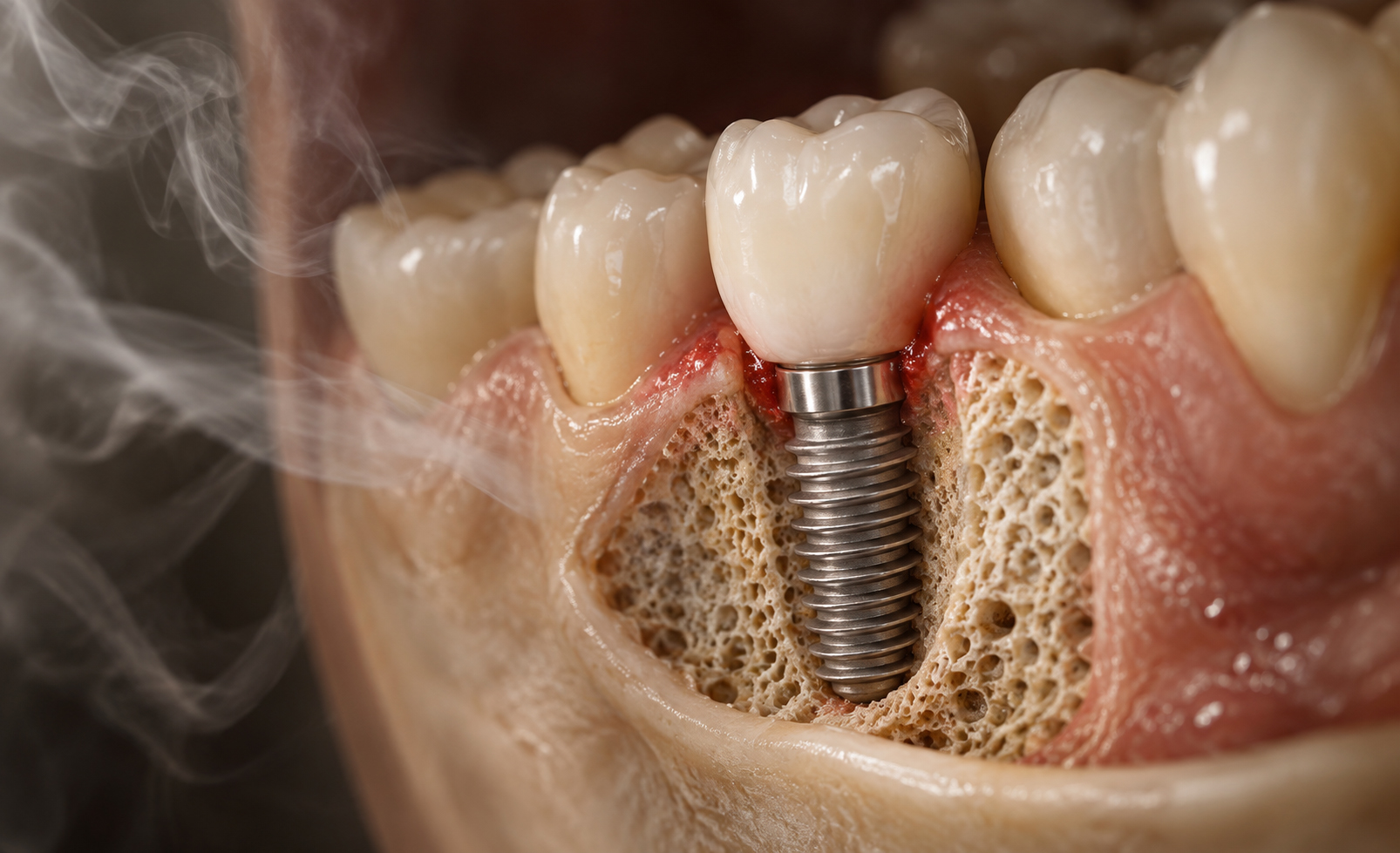
Smoking does not automatically make dental implant treatment impossible, but it is an important risk factor. Research associates cigarette smoking with poorer implant survival, greater crestal bone loss and a higher risk of peri-implant disease. It can also interfere with wound healing after implant surgery.
There is no scientifically established “safe number” of cigarettes during implant healing. The safest approach is to avoid smoking during surgical healing and follow the treating clinician’s individual advice about cessation before and after treatment.
Why Smoking Matters During Implant Healing
Implant treatment depends on healing of both the gum and bone around the surgical site. Cigarette smoke exposes tissues to nicotine, carbon monoxide, heat and numerous other substances that can reduce blood supply, impair oxygen delivery, alter inflammatory and immune responses and interfere with wound healing.
These effects are relevant during the early surgical phase and can continue to influence long-term peri-implant tissue health.
Implant Failure and Bone Loss
Systematic reviews have found an association between cigarette smoking and lower implant survival as well as greater crestal bone loss compared with non-smoking groups.
This does not mean that every smoker will lose an implant or that every non-smoker will have an uncomplicated result. Bone and soft-tissue conditions, surgical and prosthetic planning, periodontal history, diabetes, plaque control, bite forces and maintenance all contribute to outcome.
Smoking should therefore be understood as one important risk factor within a broader clinical picture.
Smoking and Peri-Implant Disease
Peri-implant mucositis is inflammation of the soft tissues around an implant without the progressive supporting bone loss used to define peri-implantitis. Peri-implantitis involves inflammation together with progressive loss of supporting bone.
Smoking is associated with greater peri-implant risk. It can also reduce visible bleeding in some periodontal tissues, so an absence of bleeding does not necessarily prove that the area is healthy.
Diagnosis depends on clinical and radiographic assessment rather than symptoms alone.
The Early Post-Operative Period
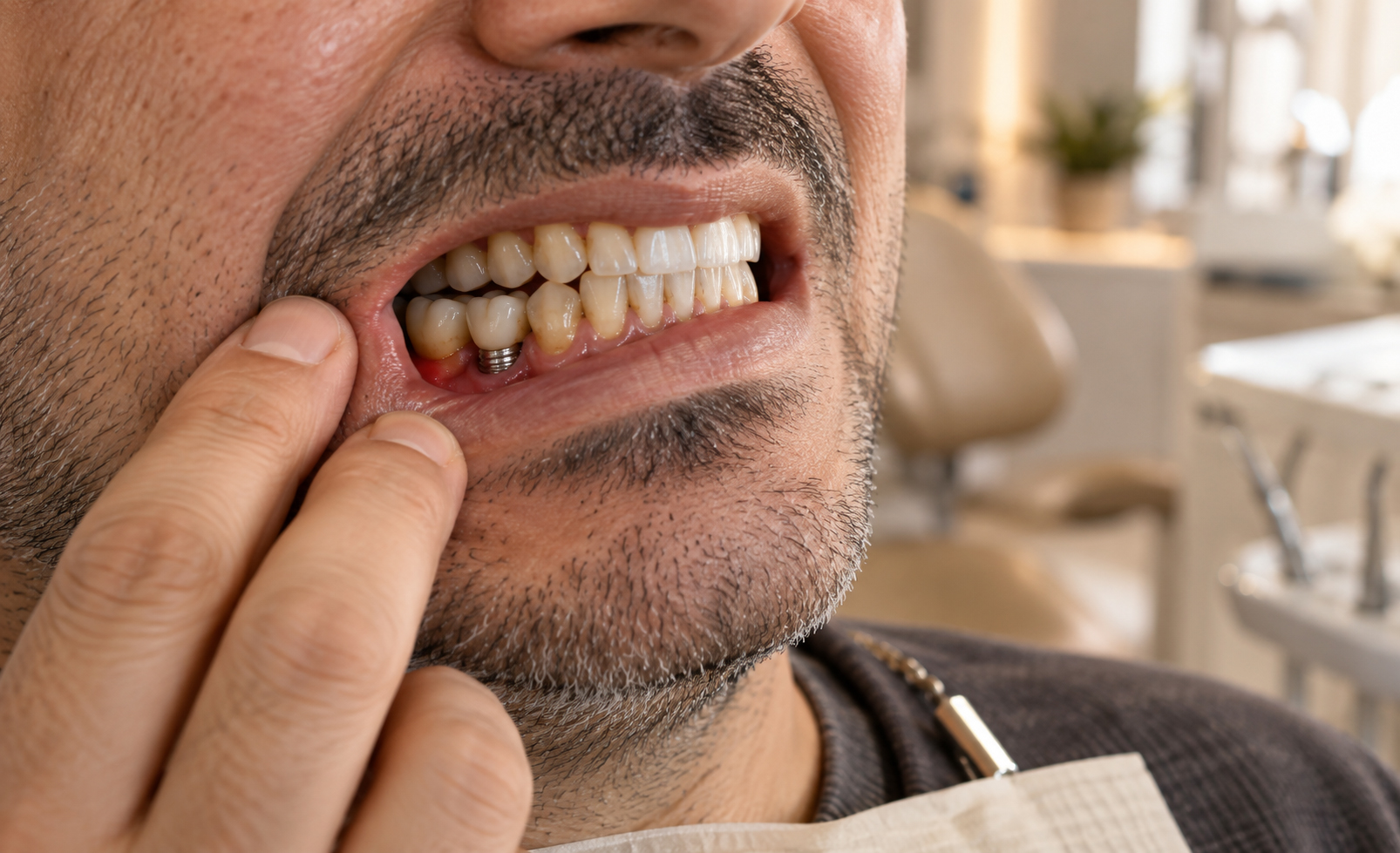
A fresh implant wound needs stable clotting, an adequate blood supply and tissue repair. Smoking adds heat, smoke toxins, nicotine exposure and suction forces to that environment.
Protecting the surgical site can be particularly important when implant placement is combined with extraction or grafting. For this reason, smoking after implant surgery is strongly discouraged.
Smoking Before and After Surgery
Reducing or stopping smoking before surgery can improve the treatment environment, but there is no single cessation window that is appropriate for every patient and every procedure.
The same applies after surgery. The biological risk does not disappear at one exact number of days, and osseointegration continues beyond the earliest stage of wound healing.
Patients should report their smoking pattern accurately and follow the treating clinician’s advice for the specific procedure. Remaining smoke-free throughout healing provides the strongest risk reduction.
Light Smoking Is Still Exposure
No amount of smoking has been shown to be risk-free for implant healing. Although risk is likely related to the level of exposure, it is not possible to give a personal threshold below which implant complications cannot occur.
“Light smoking” should therefore not be interpreted as “no risk”.
Vaping and Other Nicotine Products
Evidence about vaping and dental implants is less mature than the evidence about conventional cigarettes. Vaping can still involve nicotine and other aerosol exposures that may affect oral tissues, so it should not be assumed to be biologically irrelevant simply because tobacco is not being burned.
Research on nicotine pouches and other smoke-free products is also more limited. Nicotine exposure may still be relevant to blood flow and healing, but the clinical evidence base is not as extensive as it is for cigarette smoking.
Patients should tell the dental team about smoking, vaping and other nicotine use as part of their medical and habit history.
Combined Risk Factors
Smoking becomes even more important when it occurs alongside other implant and periodontal risks.
A history of periodontitis, poor plaque control and smoking can make long-term peri-implant maintenance more challenging. Diabetes can also affect healing and periodontal risk, particularly when it is poorly controlled.
Implant candidacy should consider the combined risk profile rather than treating each factor as an isolated yes-or-no item.
Oral Hygiene Does Not Remove Smoking-Related Risk
Good plaque control is essential, but it cannot cancel out the biological effects associated with smoking.
Daily hygiene and professional maintenance help protect peri-implant tissues, and patients who smoke still need careful attention to plaque control, periodontal health and implant maintenance.
Risk-based follow-up may need to be more intensive depending on the individual clinical picture.
How Smoking Risk Is Assessed
Assessment may include current cigarette use, duration and intensity of smoking, vaping or other nicotine exposure, periodontal history, plaque control, diabetes, bone and soft-tissue conditions, planned grafting, the type of implant restoration and the patient’s ability to maintain long-term care.
The aim is to explain risk honestly and identify whether treatment conditions can be improved before surgery.
Implant and Periodontal Care at Güler Dent
Dental Implant and Periodontology are main clinical service areas at Güler Dent in Samsun, Turkey.
Smoking and nicotine use are relevant to both surgical healing and long-term peri-implant tissue health. Treatment planning can consider smoking together with periodontal status, bone, general health and the planned restoration rather than treating it as the only factor.