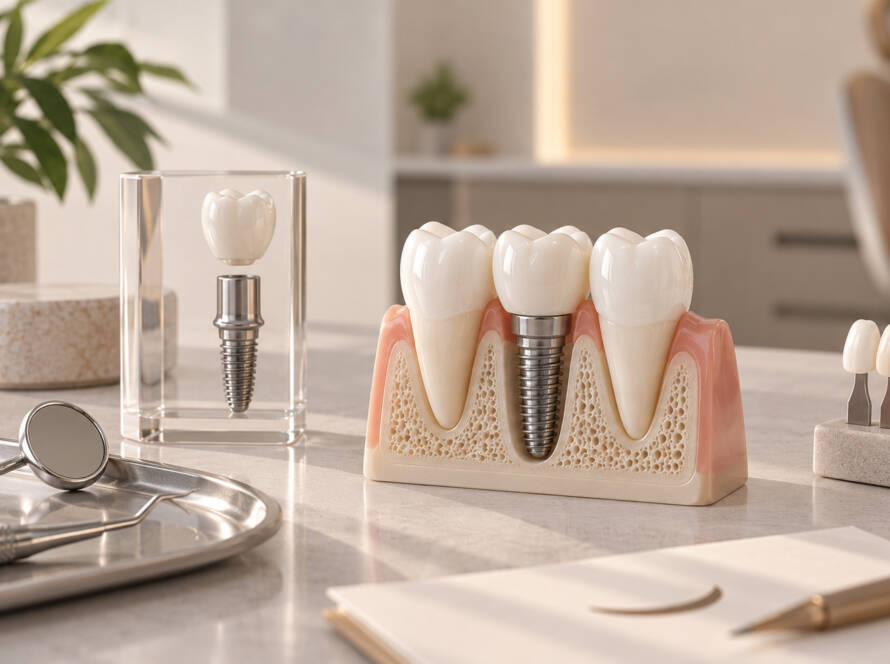
Many adults with one or more missing teeth can be considered for dental implants, but suitability is not determined by one age limit or one medical diagnosis.
Implant candidacy depends on general health, periodontal stability, the amount and shape of available bone, nearby anatomical structures, medication history, smoking or nicotine use, diabetes control, oral hygiene, bite forces and the type of final restoration being planned.
A risk factor does not always make implant treatment impossible. Some conditions can be treated or stabilised first, while others alter timing, surgical approach or long-term risk. In some situations, a different tooth-replacement option may be more appropriate.
What Implant Candidacy Involves
A suitable implant plan needs more than enough room in the jaw. The patient needs an appropriate tooth-replacement indication, oral tissues that can support treatment, a site that can accept an implant or an appropriate plan for a deficient site, controlled active dental and periodontal disease, and a medical history compatible with elective oral surgery.
Good plaque control and a prosthetic design that can be maintained are equally important.
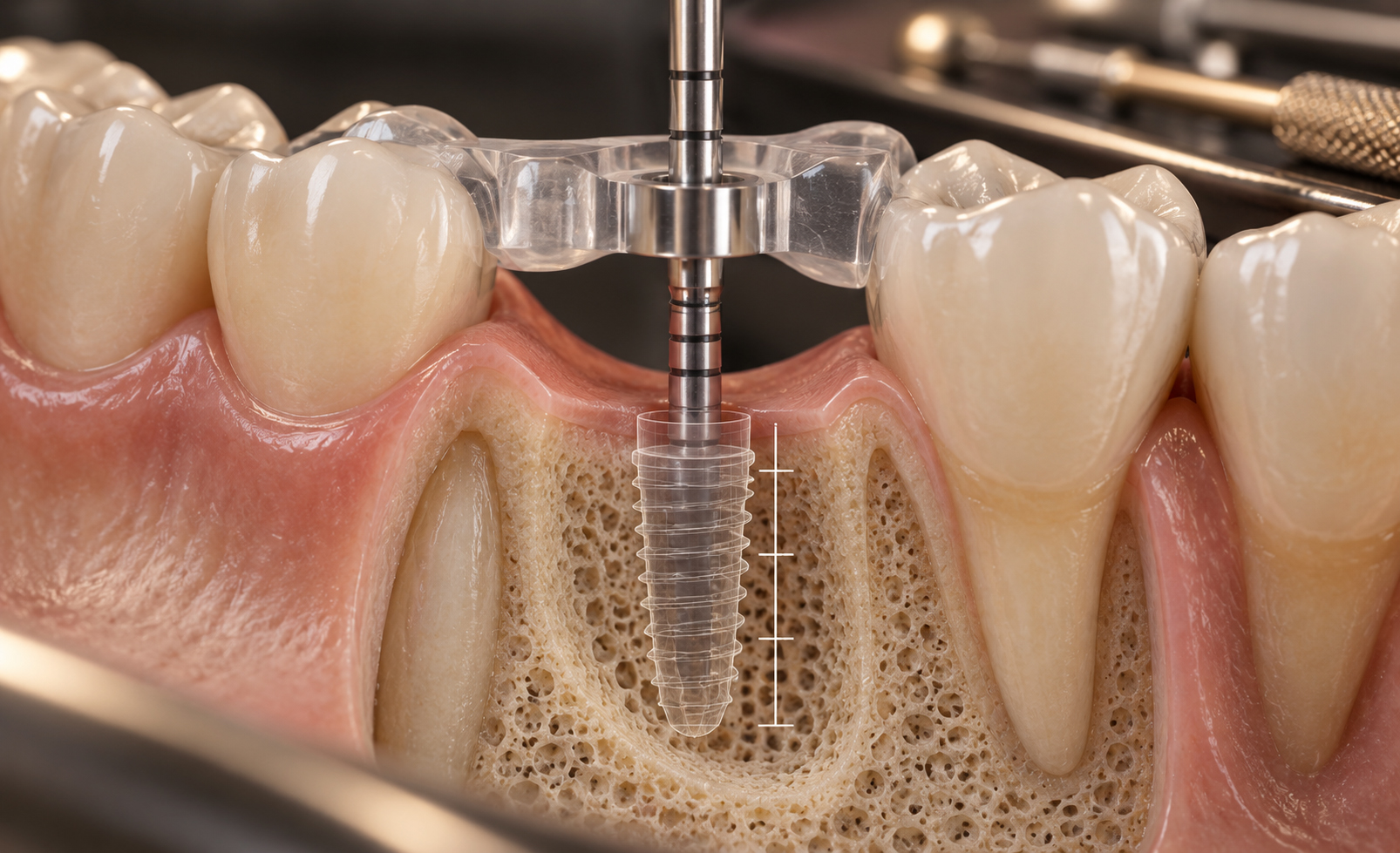
Implants are placed to support crowns, bridges or removable prostheses, so position must be planned from the final restoration backwards rather than simply filling an available space in bone.
Periodontal Health and Plaque Control
Active periodontal disease and poor plaque control are important considerations before implant placement. Periodontitis affects the tissues supporting natural teeth and is also associated with increased risk around implants, particularly when disease is uncontrolled or long-term maintenance is poor.
A history of periodontitis does not mean that implants are never possible. What matters is whether disease has been treated and stabilised, whether remaining teeth are maintainable and whether effective plaque control and professional maintenance can be sustained.
A technically placeable implant is not a good long-term treatment if the final prosthesis cannot be kept clean.
Bone and Anatomy
The clinician assesses bone width, height, shape and quality together with the relationship to structures such as the mandibular nerve canal and maxillary sinus. The position of neighbouring teeth and the planned angle of the restoration also influence the surgical plan.
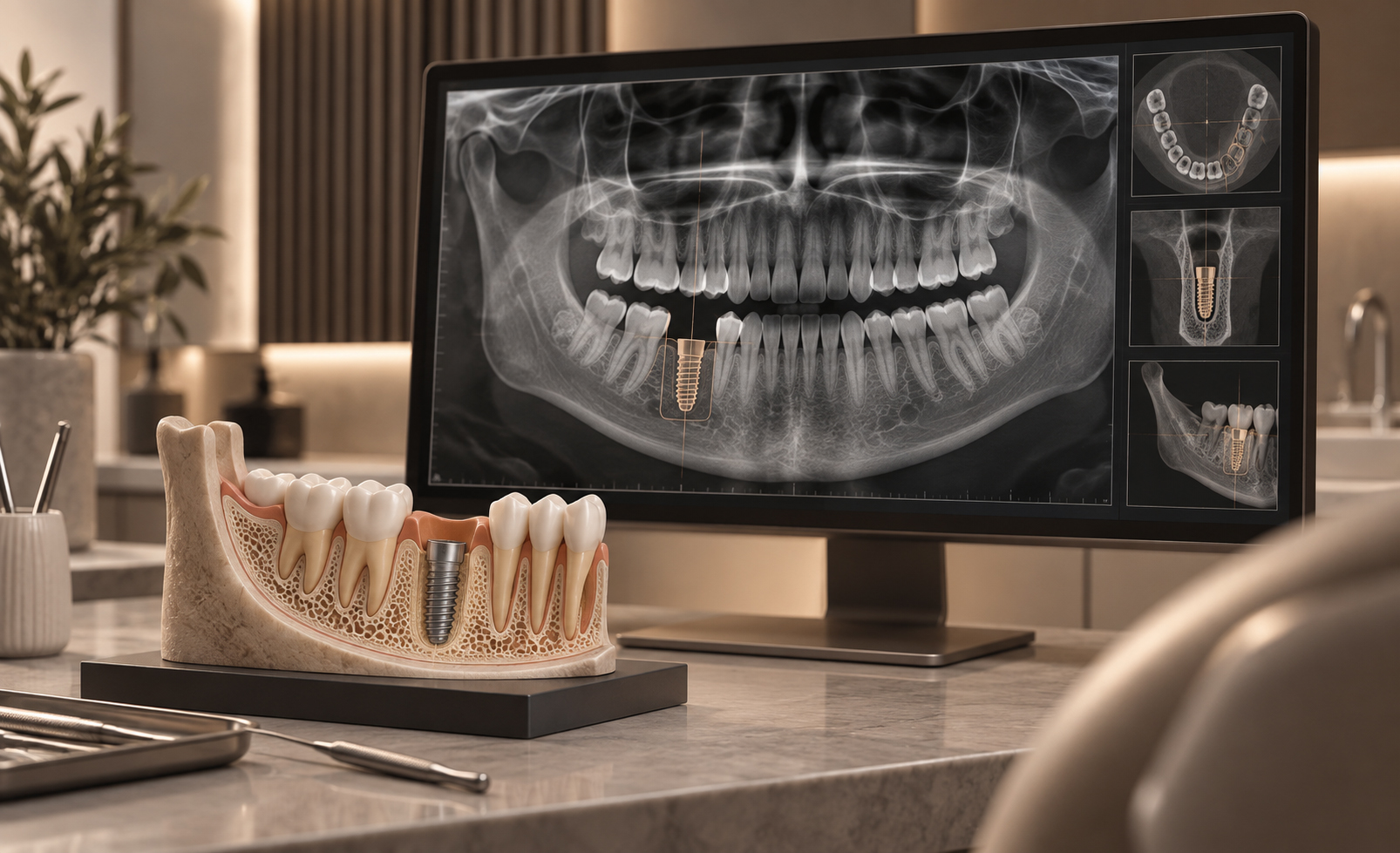
A panoramic radiograph may provide a useful overview. CBCT can be used when three-dimensional information is clinically necessary, but it is not an automatic requirement for every implant patient.
Bone Loss Does Not Always Exclude Treatment
Some sites with insufficient bone can be considered for augmentation procedures such as bone grafting or, in selected upper-jaw cases, sinus augmentation.
This does not mean that every deficient site can or should be grafted. Feasibility depends on the type of defect, available anatomy, soft tissues, general health, surgical risk and prosthetic goals.
In some cases, a different implant position, prosthetic design or non-implant treatment is preferable.
Age and Growth
There is no single upper age limit that determines implant candidacy. In older adults, overall health, medications, periodontal condition, bone, oral hygiene and the ability to maintain the prosthesis are generally more important than chronological age.
In younger patients the concern is different. Implant placement is usually delayed until craniofacial and jaw growth is sufficiently complete because an implant does not move with developing teeth and jaws in the same way as a natural tooth.
Timing therefore depends on biological development rather than on a universal birthday.
Diabetes and General Health
Diabetes does not automatically exclude implant treatment. The relevant issues include metabolic control, healing capacity, periodontal condition and other risk factors.
Poorly controlled diabetes can increase infection and healing concerns, while a patient with well-managed disease may have a very different risk profile.
Other medical conditions can also influence planning, including cardiovascular disease, bleeding disorders, immune-related conditions, metabolic bone disorders, previous cancer treatment involving the jaws and conditions that affect wound healing. Severity, treatment status and current control matter more than the diagnosis label alone.
Medicines and Medical Treatment
Some medicines can affect bleeding, bone metabolism, immune function or healing. Relevant categories can include anticoagulant and antiplatelet medicines, some antiresorptive drugs used for osteoporosis or cancer, immunosuppressive medicines and corticosteroids.
Patients should provide an accurate medication list. Prescription medicines should not be stopped, skipped or changed simply because implant surgery is being considered.
If a medication creates a significant surgical question, coordination with the prescribing medical professional may be appropriate.
Smoking, Vaping and Nicotine
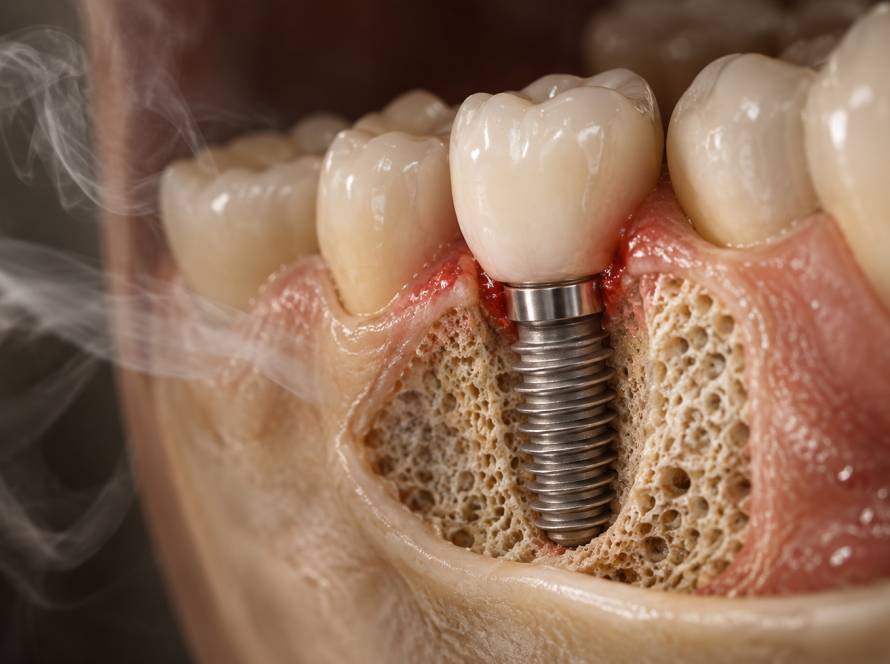
Smoking is an important implant and periodontal risk factor. It can impair wound healing and is associated with higher rates of implant complications and peri-implant disease.
Smoking is not an automatic universal prohibition, but the risk should be discussed honestly and considered together with plaque control, periodontal history, diabetes and other factors.
Vaping and other nicotine use should also be disclosed. Evidence for different products continues to evolve, and it is not appropriate to assume that non-cigarette nicotine exposure is irrelevant to oral wound healing.
Bite Forces and Bruxism
Bruxism does not necessarily exclude implant treatment, but heavy bite forces can influence prosthetic planning and mechanical risk.
The clinician may assess tooth wear, bite pattern, previous restoration fractures, parafunctional habits and the design and material of the planned prosthesis.
The implant and its final restoration need to function as one system.
When Treatment May Be Delayed
Implant treatment may be postponed when there is active periodontitis, untreated dental infection, poor plaque control, unstable systemic disease, unresolved surgical-risk questions, incomplete growth or a need to prepare bone or soft tissues first.
Delay does not necessarily mean permanent exclusion. The aim is to create a safer and more maintainable treatment environment before elective surgery.
When Another Tooth-Replacement Option May Be Better
Implants are one way to replace missing teeth, not the only one. Depending on the clinical situation, alternatives can include tooth-supported bridges, removable partial dentures, complete dentures or, in selected spaces, no immediate replacement.
The condition of neighbouring teeth, bone, gums, bite, medical risk and patient preferences all contribute to the comparison.
How Candidacy Is Assessed
A full implant assessment can include medical and medication history, smoking or nicotine use, dental and periodontal history, examination of the missing-tooth area and remaining teeth, bite and prosthetic space, dental radiographs, CBCT when clinically indicated and discussion of alternatives and maintenance.
The purpose is to determine not only whether an implant can be placed, but whether it can be restored and maintained predictably.
Dental Implant Assessment at Güler Dent
Dental Implant is one of the main clinical service areas at Güler Dent in Samsun, Turkey.
Güler Dent has in-clinic tomography technology for situations in which three-dimensional imaging is clinically indicated and its own prosthesis laboratory as part of its prosthetic infrastructure. Bone grafting and sinus lifting are also within the clinic’s Oral & Maxillofacial Surgery scope when clinically appropriate.
These resources support planning but do not mean every patient needs CBCT, grafting or the same surgical sequence.