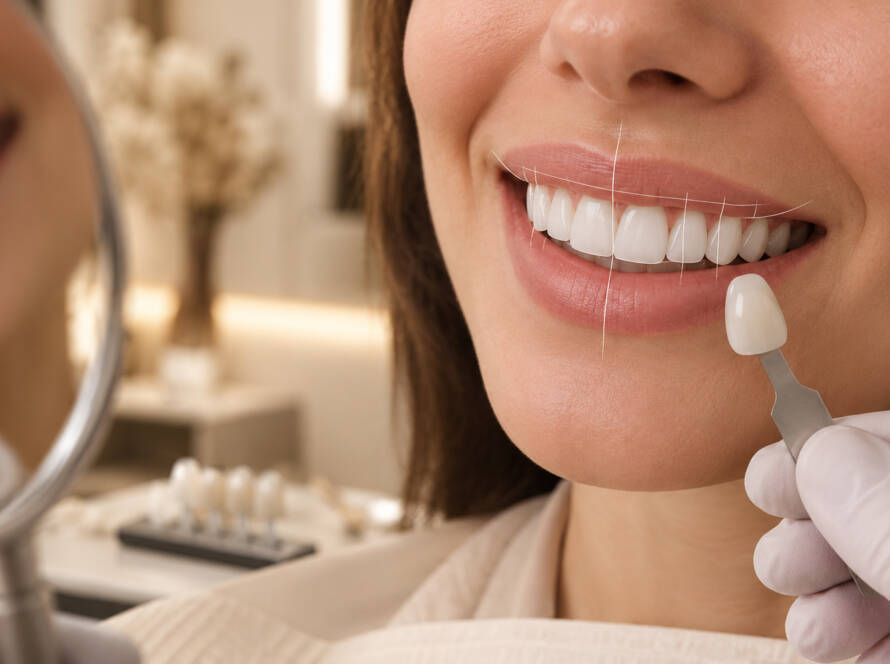
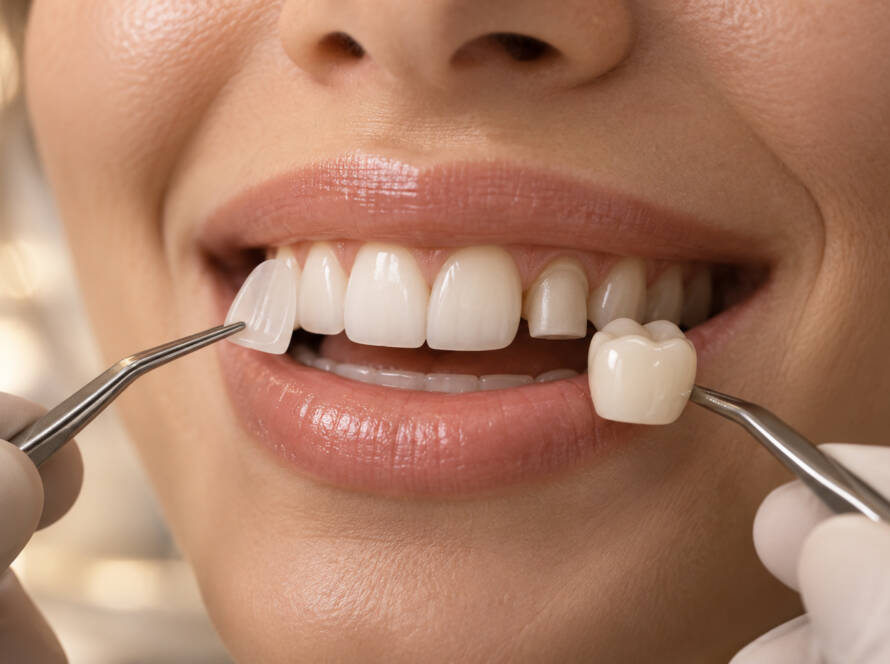
Teeth whitening may be suitable for people who want to lighten the colour of their natural teeth and whose teeth and gums are healthy enough for elective bleaching.
Suitability is not decided simply by whether the teeth look yellow or dark. The cause of discolouration, active decay, gum health, cracks, exposed root surfaces, existing sensitivity and visible restorations all influence planning.
Crowns, veneers, bridges, implant-supported restorations and composite fillings do not whiten in the same way as natural tooth structure. If they are visible in the smile, whitening can create a colour mismatch that needs to be considered before treatment.
The aim should be a realistic improvement in natural tooth colour rather than a guaranteed number of shades.
When Whitening Is Most Appropriate
Whitening is primarily a colour treatment. It can be considered when the main concern is the shade of natural teeth rather than tooth shape, position or structural damage.
People commonly seek whitening because of age-related darkening, tea or coffee staining, tobacco-related staining, dietary pigments or general yellowing. It can also form part of a wider aesthetic plan before tooth-coloured restorations are selected.
Response varies from person to person. Starting shade, enamel and dentine characteristics and the cause of discolouration all influence the result.
What Whitening Can and Cannot Change
Peroxide-based whitening can lighten many surface stains and some internal discolouration, depending on the cause and method used.
It does not move teeth, close gaps, repair chips, rebuild worn edges, correct decay or change tooth shape. It also does not lighten crowns, veneers or composite fillings in the same way as natural enamel and dentine.
If the main concern is shape, alignment or structural damage rather than colour, another treatment may be more appropriate.
Oral Health Should Be Checked First
Whitening is elective. Untreated oral disease should be identified before cosmetic bleaching begins.
Active caries, gingival or periodontal inflammation, cracked teeth, exposed root surfaces, defective restorations, unexplained tooth pain or significant sensitivity can all change the timing or method of treatment.
These findings do not necessarily mean whitening can never be carried out. They may simply need to be addressed first so that bleaching is not performed over an undiagnosed problem.
Different Types of Discolouration Respond Differently
Extrinsic stains develop mainly on the outer surface and can be associated with tea, coffee, tobacco and pigmented foods. Some surface staining may improve with professional cleaning alone, while bleaching can lighten the underlying natural tooth colour.
Intrinsic discolouration arises within the tooth structure. It can be associated with ageing, developmental factors, previous trauma, medication exposure or changes within the pulp.
Some intrinsic colour changes respond to bleaching, but the degree of improvement is more variable. Fixed promises such as a guaranteed number of shades are not clinically meaningful for every patient.

A Single Dark Tooth Needs Separate Assessment
One unusually dark tooth should not automatically be treated as a general whitening problem.
Previous trauma, pulpal changes, root canal treatment, a large restoration, internal discolouration or developmental differences can all alter the colour of a single tooth.
The cause should be diagnosed before treatment. In selected situations, the appropriate approach for one discoloured tooth differs from external whitening across the whole smile.
Existing Fillings, Crowns and Veneers
Tooth-coloured restorative materials do not bleach like natural enamel and dentine. Composite fillings and bonding, porcelain veneers, ceramic crowns and implant-supported crowns or bridges therefore remain essentially the same shade while the surrounding natural teeth may become lighter.
This can leave an older visible restoration looking darker after whitening. That does not make whitening impossible, but it should be included in colour planning and may affect whether a visible restoration later needs adjustment or replacement for aesthetic reasons.
Whitening With Sensitive Teeth
A history of sensitivity does not automatically rule out whitening, but the cause and severity should be assessed.
Sensitivity can be related to gum recession, enamel wear, cracks, exposed dentine, decay, defective restorations or recent dental treatment. If the cause is unclear, it is more appropriate to evaluate the tooth than to increase the intensity or frequency of bleaching.
Tooth sensitivity and gingival irritation are among the most common side effects of peroxide-based whitening. The approach can be adjusted according to the whitening method, concentration, exposure time and the individual patient.
Persistent, spontaneous or otherwise unusual pain should be assessed rather than assumed to be a normal whitening effect.
Gum Irritation
Whitening gels can irritate the gingival tissues if they contact the gums, particularly when trays fit poorly or excess gel is used.
Professional techniques are designed to control material placement and protect soft tissues where appropriate. Significant irritation should prompt reassessment rather than simply continuing treatment unchanged.
Pregnancy and Breastfeeding
Teeth whitening is an elective cosmetic treatment rather than urgent dental care. Because it is not medically necessary, clinicians may prefer to postpone bleaching during pregnancy and sometimes during breastfeeding, depending on the circumstances and professional guidance.
This should not be confused with necessary dental care. Pain, decay, infection and gum disease still require appropriate assessment during pregnancy.
Professional and Over-the-Counter Whitening
Dentist-supervised and over-the-counter products can both contain peroxide-based bleaching agents. They can differ in concentration, delivery method, tray fit, supervision and the ability to assess the cause of discolouration before treatment.
Over-the-counter products should be used according to their instructions. DIY methods based on acids, abrasive powders or unproven household mixtures can damage tooth surfaces and are not equivalent to evidence-based whitening.
Setting Realistic Expectations
A realistic whitening plan aims for improvement rather than a guaranteed shade. The final colour is influenced by the starting shade, the cause of discolouration, the whitening method, enamel and dentine characteristics, previous dental treatment and individual response.
Colour can also change again over time because of diet, tobacco, ageing and other factors. Whitening is therefore best understood as a colour-management treatment rather than a permanent one-time transformation.
Teeth Whitening at Güler Dent
Teeth whitening is one of the smile-related treatment options available at Güler Dent in Samsun, Turkey.
Suitability is assessed in the context of tooth and gum health, existing restorations, sensitivity history and the likely cause of discolouration.
If colour is only one part of a broader aesthetic concern, whitening can be considered within a wider smile-planning discussion rather than used as a solution for shape, spacing or structural problems.