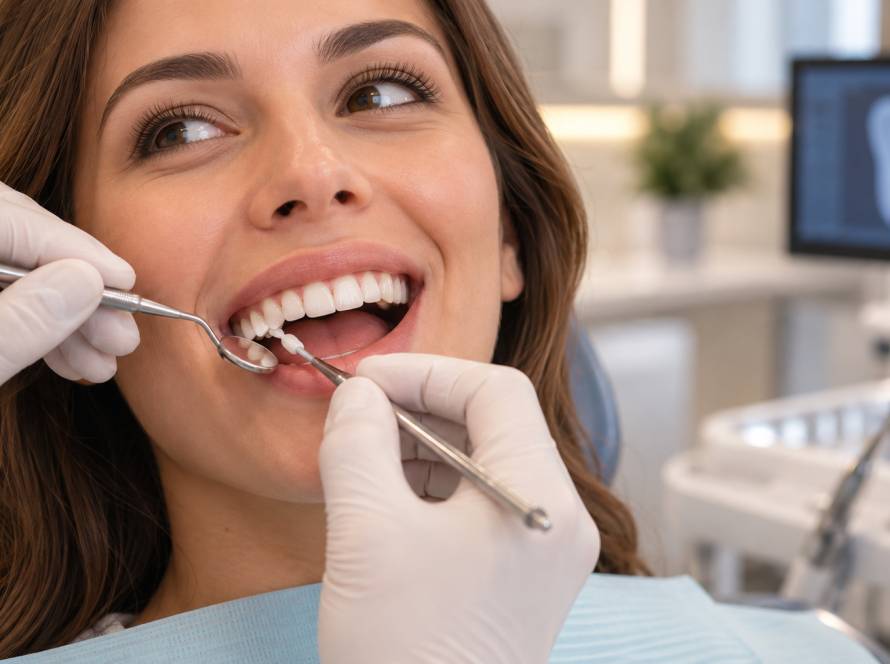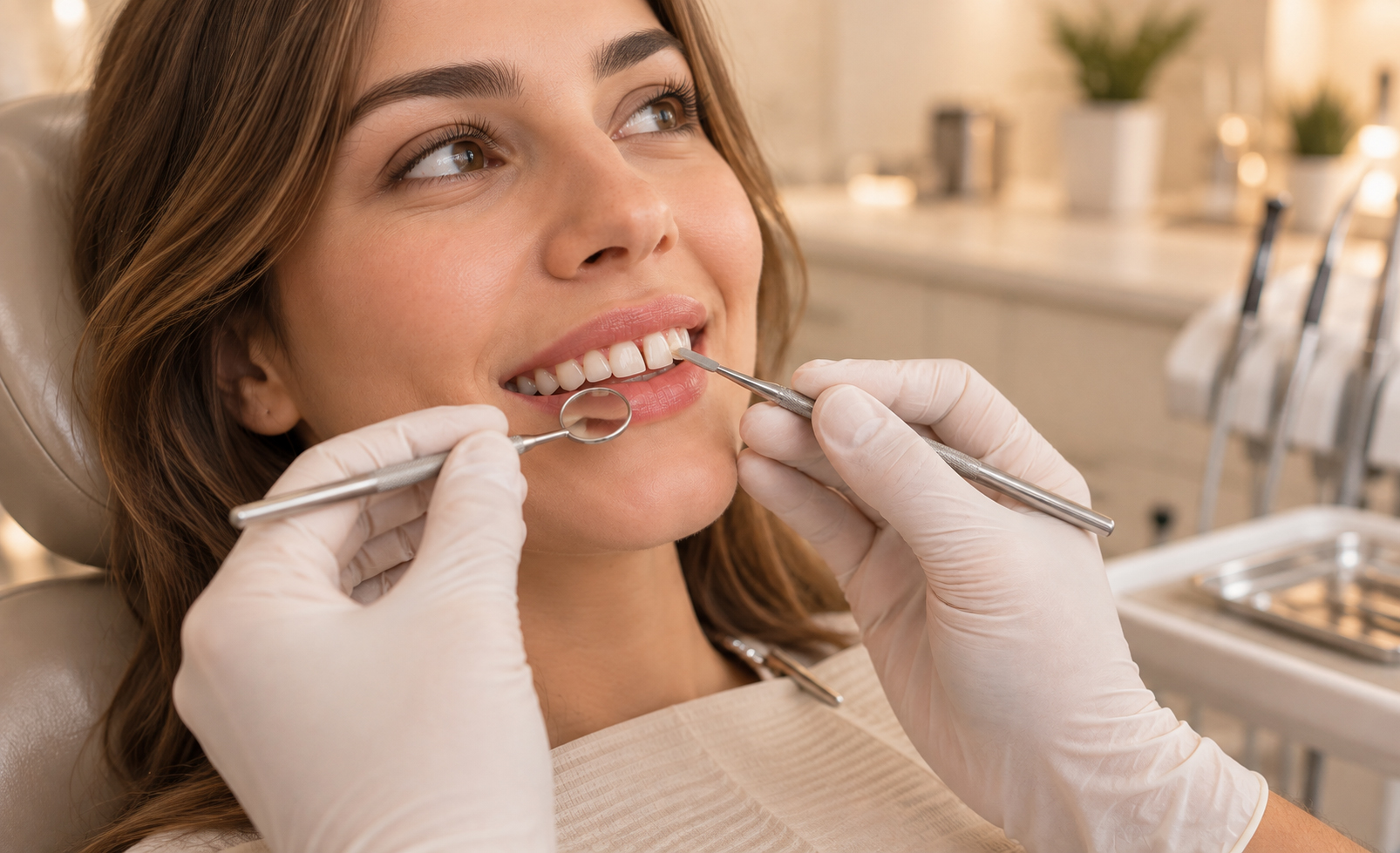
Composite bonding uses tooth-coloured resin applied directly to selected tooth surfaces to repair or reshape small areas. It may be considered for minor chips, worn or uneven edges, small gaps and limited changes in tooth shape or proportion.
For patients researching composite bonding in Turkey, the main issue is whether composite is the right material and treatment design for the problem being treated. Bonding can be conservative because it is often additive and can preserve substantial natural tooth structure, but it is not automatically “no-prep” and it is not the right option for severe structural damage, major bite problems, active disease or every aesthetic goal.
How Composite Bonding Works
Composite bonding is a direct restorative and aesthetic technique. Tooth-coloured resin is applied to the tooth, shaped by the dentist, bonded with an adhesive system and hardened with a curing light before being finished and polished.
The word “bonding” can refer broadly to adhesive dentistry, but in patient-facing cosmetic dentistry it usually describes adding composite resin to change shape or repair a limited defect.
Because the material is shaped directly on the tooth rather than manufactured as a laboratory ceramic restoration, the workflow differs from porcelain veneers.
Changes Composite Bonding Can Address
Bonding is most useful when the required change is relatively localised. It can be considered for small chips, worn or uneven incisal edges, minor asymmetry, selected small spaces, localised contour defects and some superficial enamel irregularities.
It may also be used to replace or refine a visible old composite restoration.
The fact that resin can be added to a tooth does not mean every cosmetic concern should be treated this way. The width of a gap, tooth position, bite, remaining enamel and gum health all influence suitability.
Edge Bonding and Worn Front Teeth
“Edge bonding” usually refers to adding composite mainly to the biting edge of a front tooth. It may be useful when teeth have small chips, wear or uneven edge length.
This can be a conservative way to rebuild limited lost structure or improve symmetry, but the edge is also exposed to functional forces. Heavy grinding, clenching or an unfavourable bite can increase the risk of chipping.
Aesthetic improvement therefore needs to be planned alongside function.
Closing Small Gaps With Composite
Selected small gaps can sometimes be reduced or closed by adding composite to the sides of the teeth.
Proportion matters. Simply making teeth wider can create an unnatural result if tooth size, symmetry and gum contours are not considered. Larger spaces, or gaps caused mainly by tooth position, may be better managed with orthodontic treatment or another restorative approach.
The cause of the spacing should be understood before deciding that bonding is the appropriate solution.
Tooth Preparation for Bonding
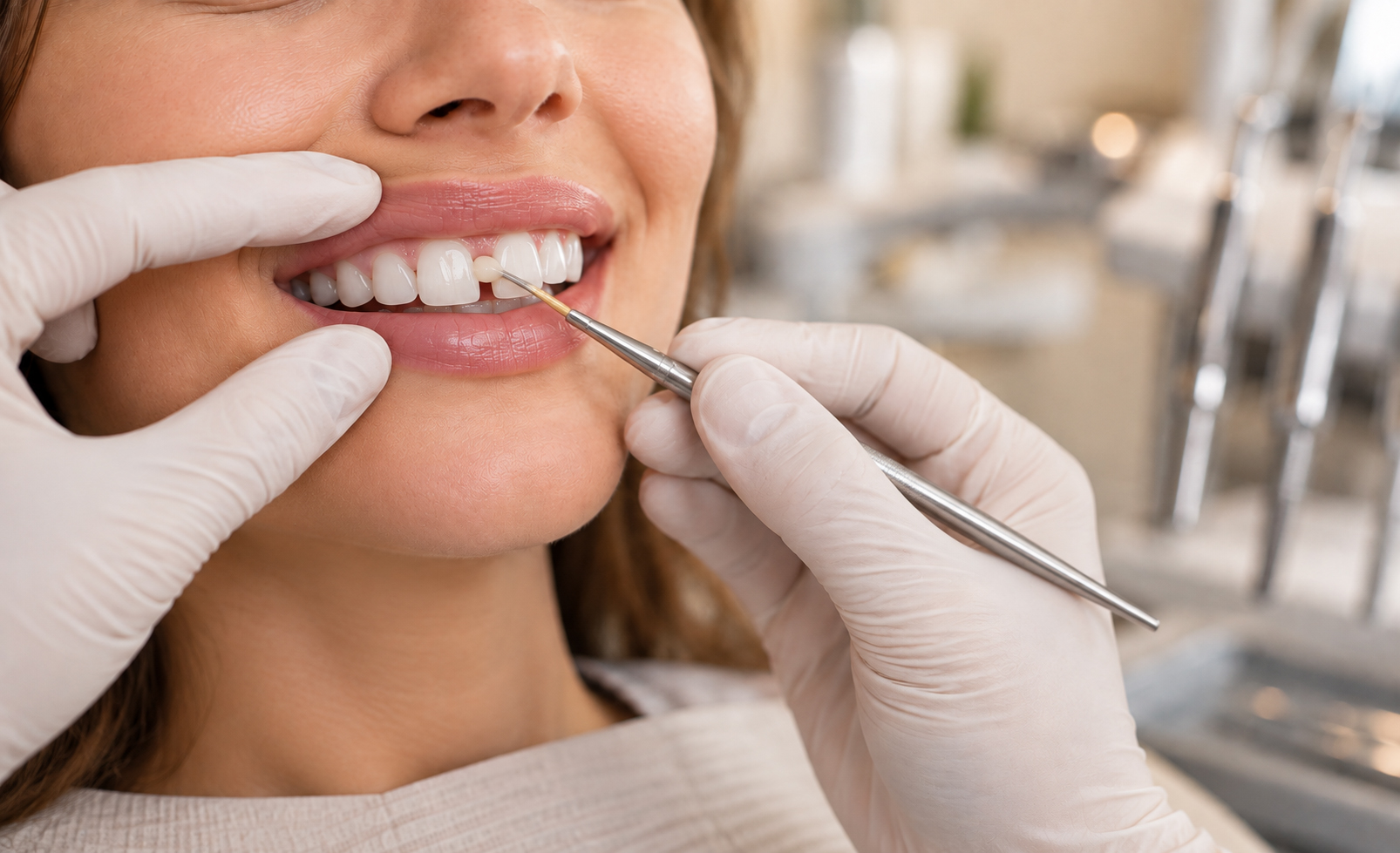
Bonding can often be performed with little removal of healthy tooth structure because material is being added. It is nevertheless too absolute to say that bonding never involves preparation.
Surface treatment is required for adhesive bonding, and selected teeth may need limited contour adjustment or management of an existing restoration to create a suitable form and margin.
The amount of preparation depends on the starting tooth position, the treatment goal and the restoration design.
Bonding and Composite Fillings Use Similar Materials for Different Purposes
Composite fillings and cosmetic bonding can use the same or similar resin materials, but their clinical purposes often differ.
A composite filling commonly replaces tooth structure lost through decay, fracture or another defect. Composite bonding, in everyday patient terminology, usually describes adding material for a small aesthetic or shape-related change.
The uses can overlap. A chipped front tooth may be restored with composite in a way that is both restorative and aesthetic. The useful distinction is why the material is being placed and what problem it is intended to solve.
Composite Bonding and Porcelain Veneers
Composite bonding is placed directly on the tooth. Porcelain veneers are indirect ceramic restorations that cover the facial surface of selected teeth.
Bonding can be more conservative in suitable cases and a small defect can often be repaired directly. Veneers provide a different type of colour, form and surface stability, but they also involve a laboratory process and a different restorative commitment.
Neither is universally better. Bonding may suit a limited change, while a veneer may be considered when a broader and more controlled facial-surface change is clinically appropriate.
Situations in Which Bonding May Be Less Suitable
Bonding may not be the best approach when a tooth has extensive structural loss, untreated decay, active periodontal inflammation or a crack that requires a more substantial restoration.
It can also be less predictable when heavy bite forces act on the planned composite, when there is significant crowding or tooth-position change, when a large gap would require disproportionate tooth widening, or when a broad colour change is the main goal.
A heavily damaged tooth may need a different restoration; pulpal disease may require endodontic treatment; and alignment problems may need orthodontic consideration. Bonding should therefore form part of diagnosis-based planning rather than a standard cosmetic package.
Staining, Chipping and Repair
Composite resin can change in surface gloss or colour over time and may chip, fracture or wear. Risk is influenced by restoration size and position, bite forces, grinding or clenching, oral hygiene, staining habits, the amount of natural tooth supporting the restoration and the quality of finishing and maintenance.
A small defect does not always require complete replacement. Depending on the condition, polishing, repair or partial replacement may be possible.
How Long Bonding Lasts
There is no universal lifespan for composite bonding. A small edge repair in a favourable bite has a different mechanical environment from a large composite build-up across several teeth.
Long-term performance depends on material, design, bite, habits, hygiene and maintenance. Bonded restorations should be reviewed over time rather than treated as having a guaranteed number of years.
Assessing Suitability
Clinical assessment considers the exact change the patient wants, remaining enamel and tooth structure, caries and existing restorations, the size and cause of any gap or chip, tooth position and symmetry, gum health and bite forces.
It also considers whether whitening, orthodontics, veneers or another restoration would address the problem more appropriately.
Photographs can help discuss appearance but do not replace examination of the tooth structure and bite.
Composite Bonding at Güler Dent
Restorative Dentistry is one of the main clinical service areas at Güler Dent in Samsun, Turkey. Aesthetic composite filling and bonding can also be considered within smile-related planning when clinically appropriate.
Treatment is based on the condition of the tooth, the scale of the requested change and functional requirements rather than treating bonding as a universal cosmetic solution.