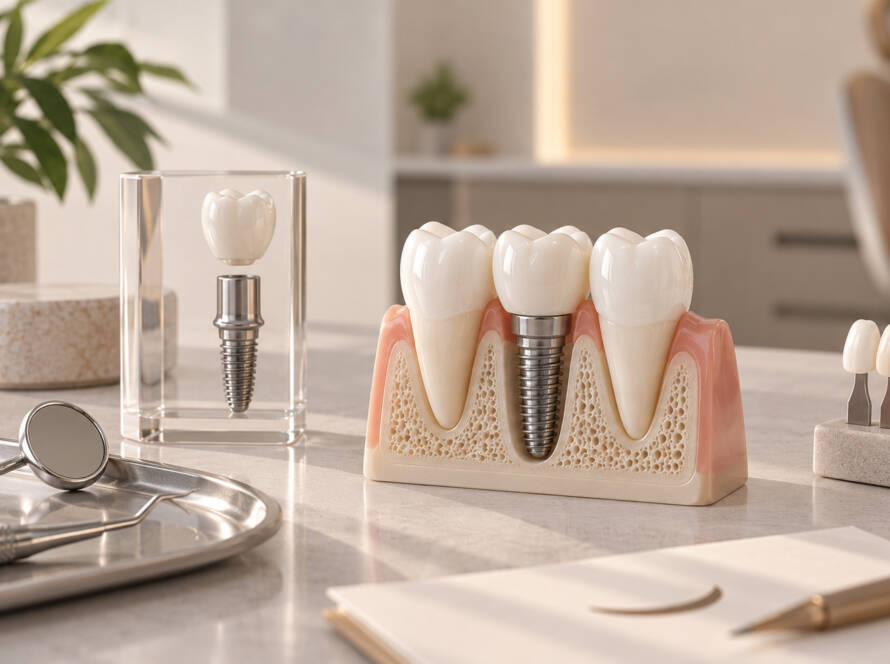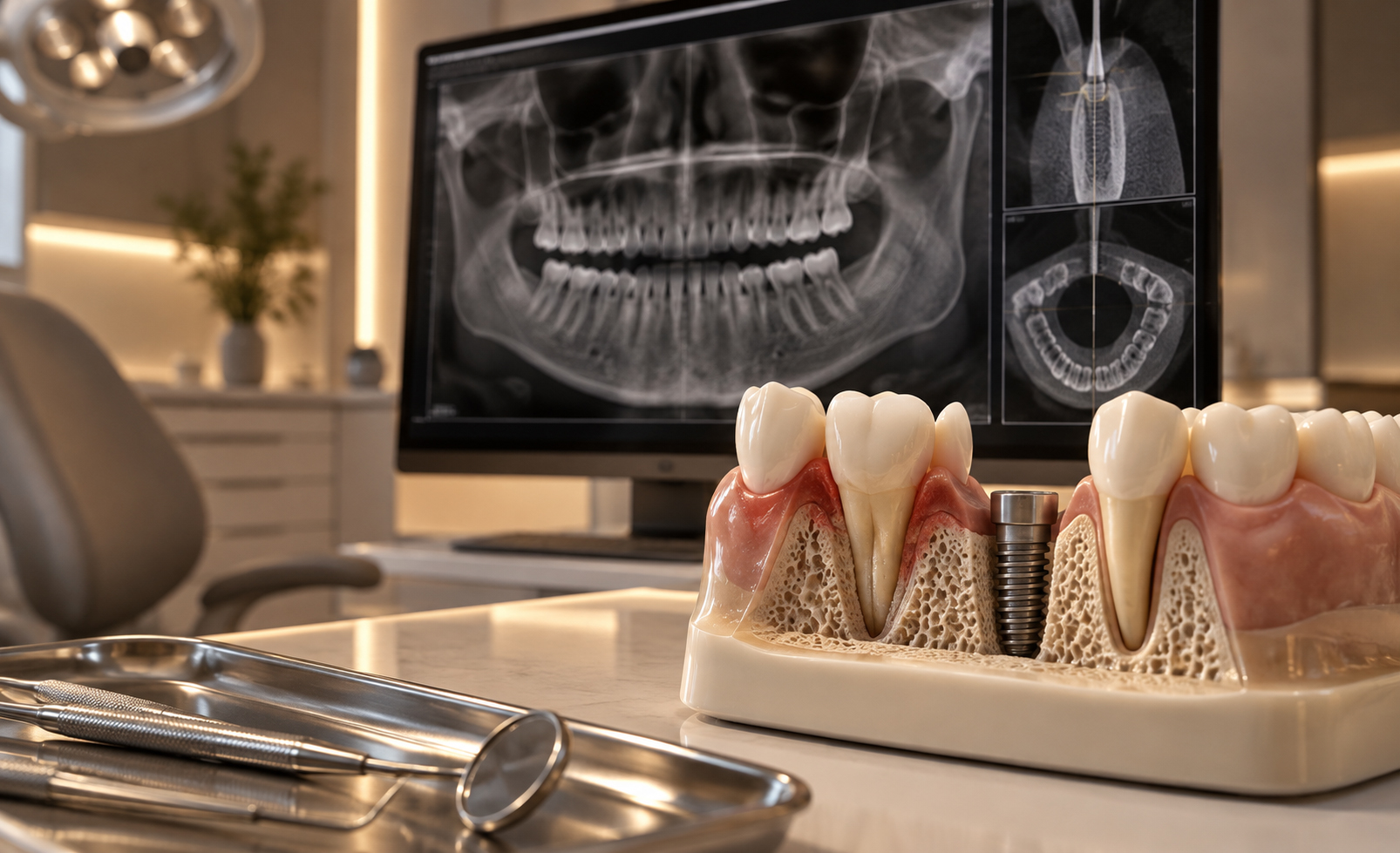
Gum disease does not automatically rule out dental implant treatment. What matters is whether periodontal inflammation is active, whether periodontitis has been treated and stabilised, and whether the mouth can be maintained with effective plaque control over the long term.
Active periodontitis generally needs periodontal assessment and treatment before elective implant placement. A history of periodontitis remains relevant after disease control because research associates it with a higher risk of peri-implantitis, marginal bone loss and implant loss compared with patients without that history.
This increased risk does not mean that every person who has had periodontitis will lose an implant. It means that candidacy, prosthetic design and long-term maintenance need careful assessment.
Why Periodontal Health Matters
Implants depend on healthy bone and soft tissues. Like natural teeth, they are surrounded by tissues that can become inflamed when plaque accumulates.
Poor plaque control, active periodontal disease and a restoration that is difficult to clean can create an unfavourable environment around implants. Implant planning therefore considers periodontal health across the whole mouth rather than focusing only on the missing-tooth space.
Gingivitis Before Implant Treatment
Gingivitis is inflammation limited to the gums and does not involve the attachment and bone loss that define periodontitis.
When gingival inflammation is present, the cause should be assessed and plaque control improved before implant surgery. Gingivitis does not automatically make someone unsuitable for implants, but active inflammation should not be ignored.
The aim is to establish a maintainable oral environment before elective surgical treatment.
Active Periodontitis
Active periodontitis is more significant because the tissues supporting the natural teeth are being lost.
Assessment may include periodontal probing, bleeding and inflammation, plaque levels, clinical attachment loss, tooth mobility, bone levels when imaging is indicated, smoking, diabetes and the patient’s ability to maintain oral hygiene.
Implant placement should not be planned as though the mouth is stable while active periodontal disease remains uncontrolled.
Implant Treatment After Periodontal Therapy
Patients with treated and clinically stable periodontitis can sometimes be considered for implants when the wider conditions are favourable.
Suitability also depends on available bone, soft-tissue conditions, medical history, smoking, diabetes control, implant position, prosthetic design and whether the restoration can be cleaned effectively.
Periodontal treatment does not reduce the patient’s risk to zero, but it can create a more stable environment for implant therapy.
A History of Periodontitis Remains Relevant
Prospective cohort reviews and meta-analyses report higher rates of implant loss, peri-implantitis and marginal bone loss in patients with a history of periodontitis than in those without such a history.
The size of the risk varies between studies because disease definitions, patient groups and follow-up periods differ. These findings should support informed risk assessment rather than be used to predict with certainty what will happen to one individual implant.
Gum Recession and Implant Suitability
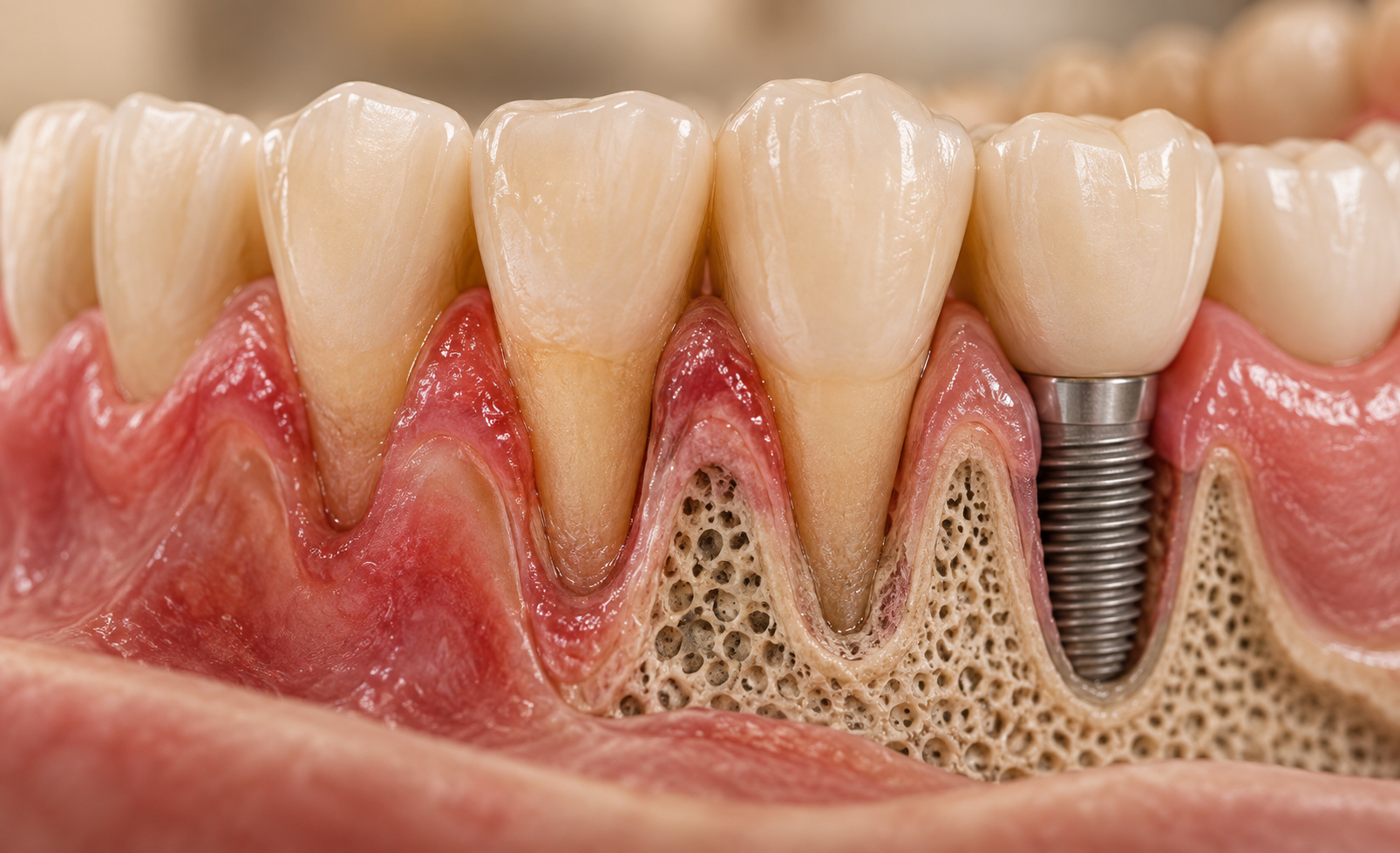
Gum recession has several possible causes and does not automatically mean that active periodontitis is present.
For implant planning, the clinician considers why recession has occurred, the condition of the supporting bone, soft-tissue thickness, periodontal stability and the anatomy of the implant site.
Recession around another tooth, by itself, does not determine whether an implant can be placed.
Plaque Control and Prosthesis Design
Implants cannot develop dental caries, but the tissues around them can develop inflammatory disease.
If a patient struggles to clean around natural teeth before treatment, a complex implant-supported prosthesis may be even harder to maintain. The final restoration should therefore be designed with hygiene access in mind.
Plaque control is not simply an aftercare instruction; it forms part of candidacy and prosthetic planning.
Smoking, Diabetes and Combined Risk
Smoking is a separate implant and periodontal risk factor. A history of periodontitis combined with smoking can increase concern about long-term tissue health.
Diabetes can also influence periodontal inflammation and healing, particularly when poorly controlled. What matters is how well the condition is managed and how it interacts with periodontal health, smoking, hygiene and other clinical factors.
These risks should be considered together rather than as isolated labels.
Periodontal Bone Loss and Implant-Site Bone Deficiency
Bone loss caused by periodontitis around natural teeth is not necessarily the same as local bone deficiency at a missing-tooth site. Extraction-related resorption and local anatomy can also leave an implant site with reduced bone.
The implant site therefore needs its own assessment. Bone grafting may be considered in selected cases, but it is not a universal solution and does not replace the need for periodontal stability.
Maintenance After Implant Placement
Periodontal care does not end when an implant is placed. Long-term maintenance remains particularly important for patients with a history of periodontitis.
Supportive care can include plaque-control review, professional cleaning when indicated, monitoring of natural teeth and peri-implant tissues, review of prosthesis cleanability and management of risk factors.
There is no single recall interval that is correct for every patient. Follow-up should be based on individual risk and clinical findings.
How This Topic Differs From General Implant Candidacy
General implant candidacy includes age, bone, medical history, medicines, smoking and wider oral health.
This topic is more specific: it focuses on how gingivitis, active periodontitis and a history of periodontal disease affect implant planning and long-term peri-implant risk.
Periodontal and Implant Assessment at Güler Dent
Dental Implant and Periodontology are main clinical service areas at Güler Dent in Samsun, Turkey.
Assessment can consider periodontal stability, oral hygiene, bone, soft tissues, medical history and the planned prosthetic restoration. Güler Dent also has in-clinic tomography technology for situations in which three-dimensional imaging is clinically indicated.
The availability of imaging technology does not mean every patient requires CBCT.