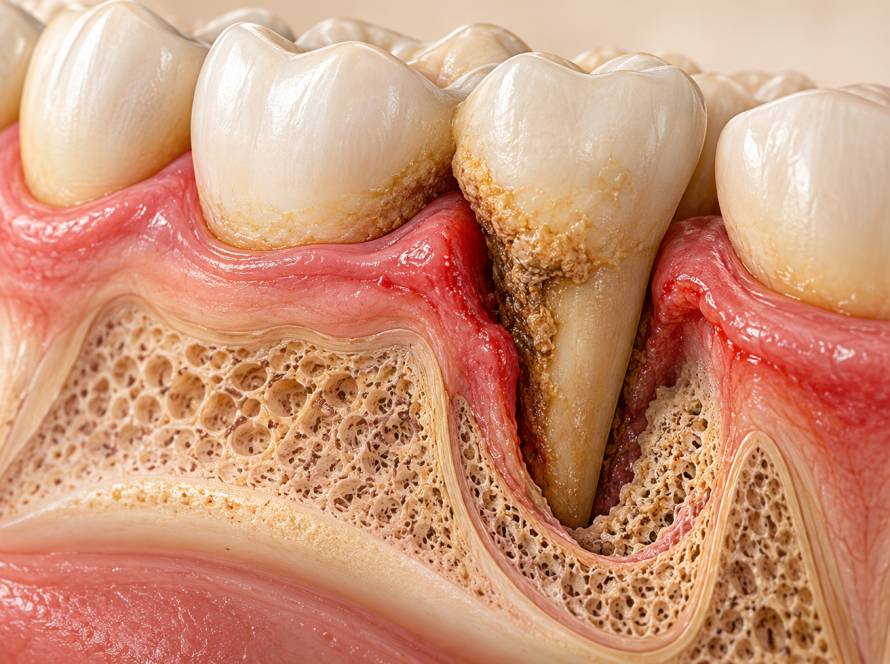
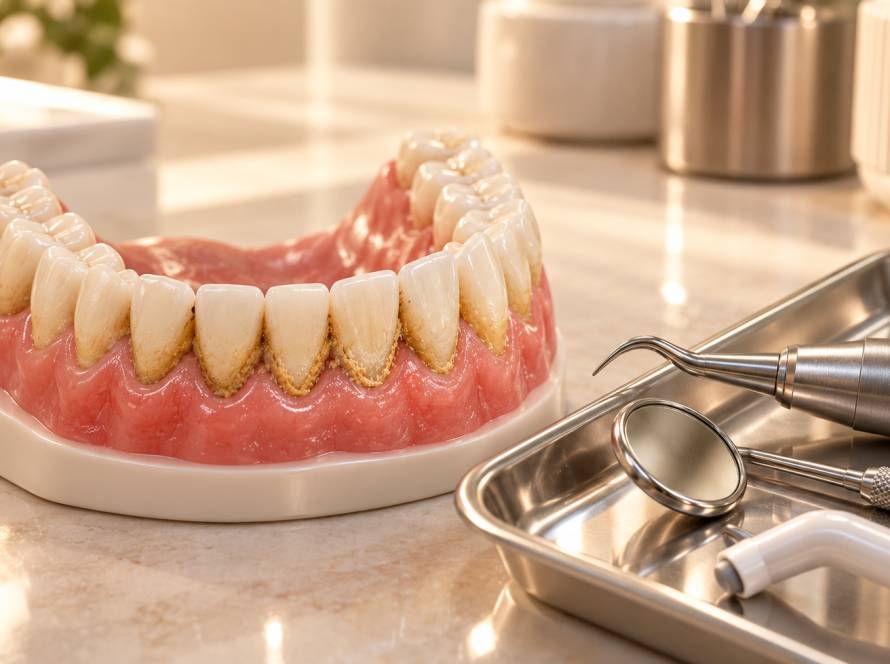
Receding gums occur when the gum margin moves away from its previous position and exposes part of the tooth root. You may first notice that a tooth looks longer, that the exposed root has a different colour or that the area has become sensitive to cold, heat or touch.
Gum recession is a clinical finding rather than a diagnosis. It can occur with periodontal disease, but it can also be linked to traumatic brushing, tooth position, thin or vulnerable gingival tissues, smoking and other local or anatomical factors.
Treatment depends on why the recession developed, whether it is progressing and what problems it is causing. Some cases are managed by controlling inflammation or trauma and monitoring the area. Sensitivity can be treated separately. Selected defects may be considered for periodontal surgery to increase tissue thickness or improve root coverage, but not every recession defect needs surgery and complete coverage cannot be guaranteed.
What Gum Recession Means Clinically
The gum margin normally covers the root surface to a particular level around each tooth. When that margin moves towards the root, more of the root surface becomes exposed to the mouth.
Recession may affect one tooth, several teeth or a broader area. Its importance is not judged by appearance alone. Dentists also consider whether it is progressing, whether the exposed root can be kept clean, whether sensitivity or root decay risk is present and whether there is underlying periodontal disease.
Why Gums Recede
Periodontitis can cause loss of the supporting tissues around teeth, and recession can form part of that process. Plaque control and periodontal stability are therefore important when recession is present. An exposed root, however, does not automatically mean that a patient has periodontitis; diagnosis requires assessment of the supporting tissues.
Repeated traumatic brushing can contribute to some recession patterns. The solution is not to stop cleaning the gumline, but to use a gentler and more effective technique. A soft toothbrush and controlled pressure can reduce repeated trauma while still removing plaque.
Anatomy also matters. Some teeth sit in positions where the covering bone or gum tissue is thin. Tooth alignment, tissue thickness, muscle or frenum attachments and the relationship of the root to surrounding bone can all influence the pattern of recession.
Tobacco use is an important periodontal risk factor and can affect gum health and healing. Previous dental treatment and other local mechanical factors may also contribute. No single risk factor should be assumed to explain every recession defect without examination.
Symptoms and Practical Problems
Some people notice recession only because a tooth appears longer. Others develop sensitivity to temperature or touch, discomfort during brushing, a visible yellowish root surface, difficulty cleaning the exposed area or concern about appearance. Root-surface decay can also develop in susceptible areas.
Bleeding, swelling or persistent bad breath may occur at the same time, but these findings point more towards active gingival or periodontal inflammation than recession itself.
Recession Is Not the Same as Periodontitis
Periodontitis can cause recession, but recession can develop for other reasons. The distinction matters because treatment is very different when active periodontal disease is present.
A periodontal assessment may include probing, plaque and bleeding findings, clinical attachment levels, tooth mobility and, when clinically indicated, dental imaging to assess bone levels. The visible position of the gum margin is only one part of that assessment.
Can Receding Gums Grow Back?
True gum recession should not be expected to regrow spontaneously and reliably over an exposed root. That does not mean every defect will continue to worsen. Once contributing factors such as traumatic brushing or active inflammation are controlled, some areas may remain stable.
When root coverage is an appropriate treatment goal, selected periodontal procedures can move or graft tissue to improve coverage. The amount of coverage that can be achieved depends on the anatomy of the defect and the surrounding tissues.
How Recession Is Assessed
Clinical assessment considers where the recession is present, how much root is exposed, whether the defect has changed over time, gum thickness and tissue quality, plaque and calculus, periodontal probing findings, tooth position, brushing habits, local trauma, exposed-root sensitivity or decay, smoking and other risk factors.
Dental imaging may be used when there is a clinical reason to assess supporting bone or another structure. The same type of X-ray is not required for every recession defect.
Non-Surgical Management
Treatment starts by addressing the cause. If traumatic brushing is contributing, technique and pressure can be modified. If plaque-related inflammation is present, daily plaque control and appropriate professional periodontal care become important.
Sensitivity from an exposed root can be managed with suitable desensitising or fluoride-containing products or other dental approaches, depending on the tooth. In selected situations, restorative material may be considered for an exposed or damaged root surface when sensitivity, wear or a structural defect is part of the problem.
The purpose of non-surgical management is not to promise that the gum will grow back. It is to reduce further damage, control inflammation, improve comfort and create a stable environment.
When Periodontal Surgery May Be Considered
Surgery can be considered when recession is progressing, when the exposed root causes persistent sensitivity or aesthetic concern, when tissue thickness is inadequate for the clinical situation, or when root coverage is expected to provide a meaningful benefit.
The procedure depends on the recession pattern, neighbouring tissues, tooth position, periodontal health and treatment goals. Connective-tissue grafting and other root-coverage techniques are established periodontal approaches, but the expected result is case-dependent and not every exposed root can be covered completely.
Surgery should follow diagnosis and treatment planning rather than being treated as the automatic next step for any receding gum.
When to See a Dentist
Arrange an assessment if you notice new root exposure, a tooth that appears progressively longer, increasing sensitivity, bleeding, swelling, bad breath or tooth mobility.
A previously known area of recession should also be reviewed if it seems to be changing or becoming harder to keep clean. Early assessment can help distinguish a stable local defect from an active periodontal problem.
Periodontal Assessment at Güler Dent
Periodontology is one of the main clinical service areas at Güler Dent in Samsun, Turkey. Evaluation of gum recession can include the periodontal tissues, plaque control, the distribution of recession, tooth position and other findings that may influence treatment.
Founder Dr. Dt. Şevki Güler graduated from Samsun 19 Mayıs University Faculty of Dentistry and previously served as Head of the Department of Periodontology at Bolu Abant İzzet Baysal University Faculty of Dentistry.
The appropriate plan may focus on controlling contributing factors, managing sensitivity, monitoring the area or considering periodontal surgery in selected cases.