Removable dentures need daily cleaning, and the mouth underneath them needs care as well. Food debris and plaque can collect on denture surfaces, around remaining natural teeth and on the gums, tongue and palate.
A denture that repeatedly rubs, becomes loose, cracks or no longer fits as it used to should be assessed professionally. It should not be ground down, bent or repaired with household glue.
Good denture care is therefore about both hygiene and fit.
Daily Cleaning
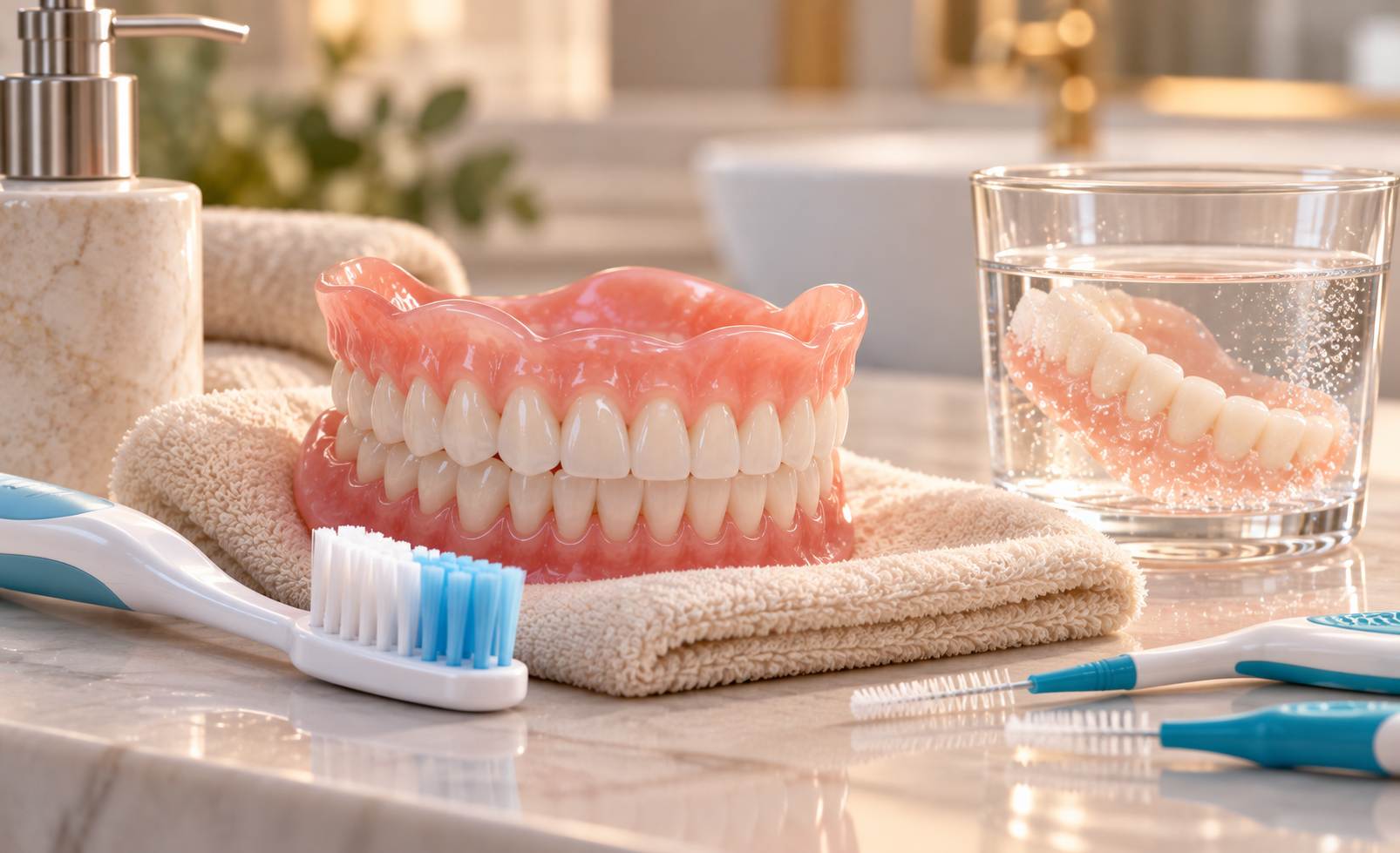
Remove the denture carefully and rinse away loose food debris. Use a soft denture brush or another suitable soft brush with a cleanser that is appropriate for the denture material.
All surfaces need attention, including the side that rests against the gums. Handling the denture over a sink containing water or over a soft towel can reduce the risk of breakage if it is dropped.
Very hot or boiling water should be avoided because it can distort some denture materials.
Toothpaste and Denture Cleansers
Regular toothpaste can be too abrasive for many dentures. Scratches make the surface rougher and can increase plaque and stain retention.
Products designed for removable dentures, including some soaking cleansers, can help loosen deposits and reduce biofilm when used according to the manufacturer’s instructions. The denture should be rinsed thoroughly before it is placed back in the mouth.
Denture cleanser should not be used inside the mouth, and products containing bleach or other strong chemicals may damage some materials, particularly dentures with metal components.
Patients who still have natural teeth should continue to use fluoride toothpaste on those teeth even if it is not the right cleanser for the removable prosthesis itself.
Cleaning the Mouth and Remaining Teeth
Even when no natural teeth remain, the oral tissues still need daily care. The gums, tongue, palate and denture-bearing tissues should be cleaned gently to remove plaque and debris and to make it easier to notice redness, ulceration or other changes.
When a partial denture is worn, the remaining teeth need particularly careful cleaning because clasps and other components can create plaque-retentive areas.
Removing Dentures at Night
Many patients are advised to remove removable dentures for a period each day, often overnight, so that the oral tissues can rest and the prosthesis can be cleaned and stored.
The exact wearing schedule should follow the dentist’s instructions for the specific denture and oral condition. When dentures are outside the mouth, they should be stored in a way that is appropriate for the material so that they do not dry out or distort.

Soreness and Pressure Areas
New dentures can create local pressure points while the tissues adapt. Soreness in one area may indicate that an adjustment is needed.
Patients should not file, grind or trim the denture themselves. Even a small home adjustment can change the way pressure is distributed and make the fit worse.
Persistent ulceration, significant pain or repeated rubbing should be assessed professionally.
Why Dentures Become Loose
The mouth changes over time. The residual jaw ridge and soft tissues can remodel, and changes in body weight, remaining teeth or oral health can also affect fit.
A denture that once felt stable may begin to move or rock. Looseness can cause sore spots, chewing difficulty, clicking, speech changes, food trapping or reduced confidence.
The cause should be evaluated rather than simply managed with increasing amounts of adhesive.
Adhesives and Fit
Denture adhesive can improve retention for some well-fitting dentures, but it is not a substitute for correcting an ill-fitting prosthesis.
If more adhesive is needed over time, the denture rocks or the mouth develops repeated sores, the fit should be checked.
Depending on the cause, options may include adjustment, relining, rebasing or replacement.
Broken or Cracked Dentures
A broken denture should not be repaired with household glue. Home glues may be unsuitable for oral use and can hold pieces in the wrong position, making professional repair more difficult.
Keep the broken parts and take them to a dentist. A crack may result from impact, wear, poor fit or changes in the supporting tissues, so the cause should be considered as well as the repair itself.
When a Denture May Need Replacement
There is no universal replacement interval for every denture. Age alone does not determine when a prosthesis should be replaced.
A review may be appropriate if the denture has become loose, the teeth are worn, fractures recur, the bite changes, tissue irritation persists, appearance or function changes or the supporting natural teeth have changed.
Denture-Related Inflammation
Poor denture hygiene and prolonged wear can contribute to inflammation and denture-related stomatitis. Redness, burning, soreness or persistent changes in the tissues beneath the denture should be assessed.
More aggressive cleaning is not always the answer. Fit, hygiene, wearing pattern and the health of the oral tissues can all be relevant.
Denture Care at Güler Dent
Prosthetic Dentistry is one of the main clinical service areas at Güler Dent in Samsun, Turkey. Güler Dent provides complete and partial removable dentures and has its own prosthesis laboratory as part of its prosthetic infrastructure.
When a denture becomes sore, loose or damaged, assessment can determine whether cleaning changes, adjustment, repair, relining or another prosthetic plan is appropriate.