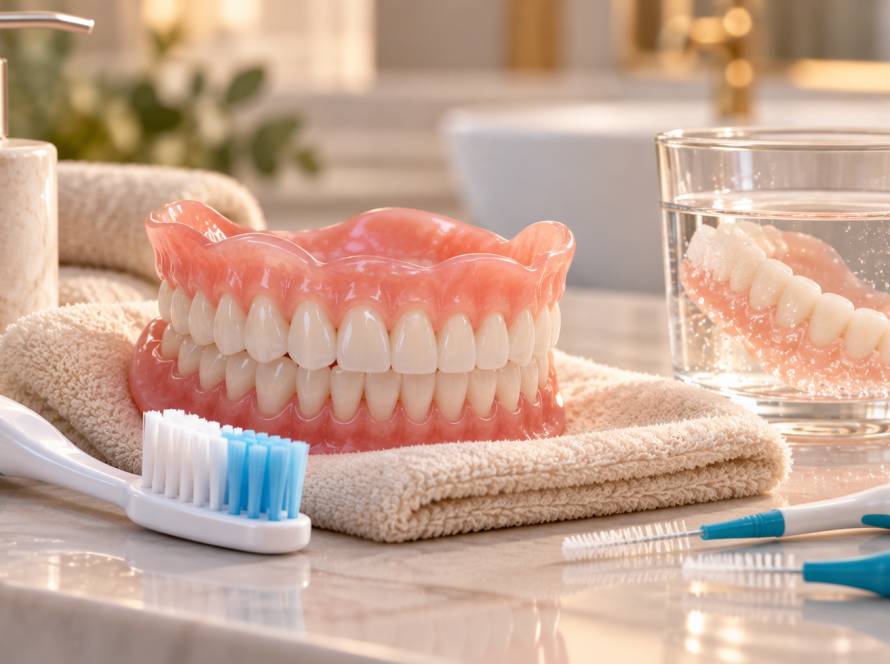
A full denture, also called a complete denture, is used when an entire upper or lower arch has no natural teeth remaining. A removable partial denture is used when some natural teeth remain and the prosthesis replaces only the missing teeth.
That basic distinction changes how the prosthesis is supported, retained and designed. A partial denture depends partly on the health, position and periodontal support of the remaining teeth, while a full denture relies more heavily on the shape of the edentulous ridge, soft tissues, jaw relationships, saliva, muscle control and prosthesis design.
Both are removable prostheses, meaning the patient can take them out for cleaning and care.
Full Dentures
A full or complete denture replaces all teeth in one dental arch. Artificial teeth are attached to a base designed to sit over the oral tissues.
An upper complete denture can gain support from the palate and residual ridge. A lower complete denture relies on the lower ridge and surrounding tissues and is influenced more strongly by tongue and muscle movement.
Retention and stability vary from person to person because ridge anatomy, saliva, muscle control and bite differ between mouths. A complete denture should therefore not be described as something that will feel or function exactly like natural teeth.
Partial Dentures
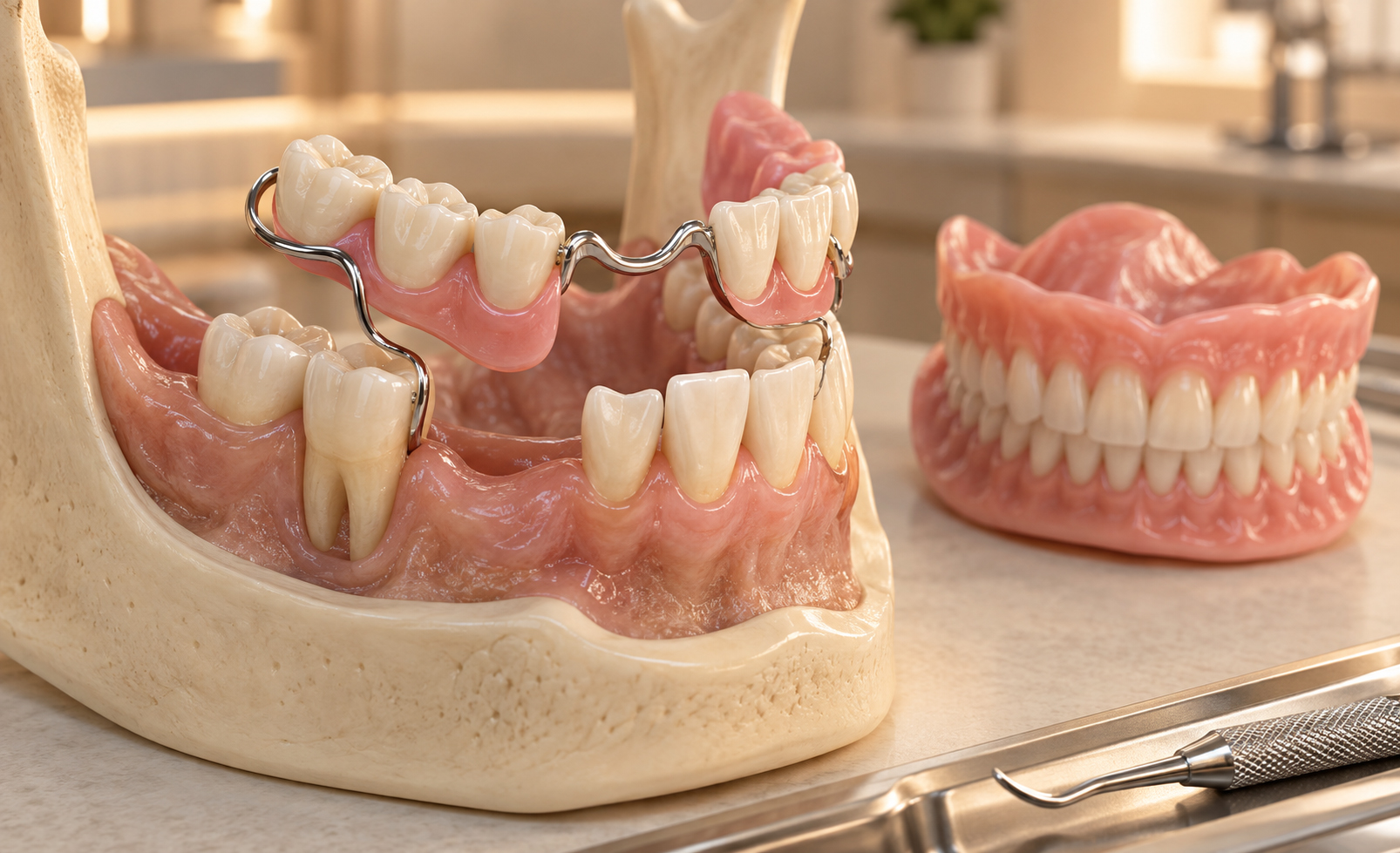
A removable partial denture replaces some missing teeth while natural teeth remain in the arch.
Depending on the design, the prosthesis can gain support and retention from selected natural teeth, the soft tissues over the ridge, clasps, precision attachments or other prosthetic components.
The exact design depends on which teeth remain, where the missing spaces are and whether the remaining teeth are healthy enough to contribute to support. A tooth that is still present is not automatically suitable as a long-term denture-support tooth.
Why Remaining Natural Teeth Matter
The prognosis of the remaining teeth is central to partial-denture planning. Active periodontal disease, extensive decay, mobility or poor structural prognosis can change the design or even whether a partial denture is the most appropriate option.
Distribution also matters. Several well-positioned teeth provide a different support pattern from a situation in which the remaining teeth are clustered in one area.
Planning therefore considers the quality and location of the remaining support, not simply the number of teeth still present.
Support and Retention
Full dentures rely on a combination of fit, tissue support, border seal and muscle control. In selected cases, denture adhesive may improve retention, but progressively increasing reliance on adhesive can indicate that the fit should be reassessed.
Partial dentures are designed around remaining teeth and edentulous spaces. Clasps or other components may engage selected teeth, and some designs use precision attachments or other prosthetic strategies.
For any design, the supporting teeth need to be assessed for periodontal support, decay, existing restorations, mobility, position and cleanability.
Partial-Denture Designs Are Not All the Same
Removable partial dentures can differ in framework material, base material, clasp design, support distribution, attachment systems and the number and position of replacement teeth.
A flexible-looking or metal-based design is not automatically better for every patient. The most appropriate option depends on anatomy, the remaining teeth, hygiene, bite and intended long-term use.
Removable Dentures and Fixed Bridges
A removable denture can be taken out by the patient. A fixed bridge is attached to supporting teeth or implants and is not routinely removed by the patient.
A bridge may be considered when suitable support exists and the missing-tooth pattern allows a fixed design. A removable partial denture can be more appropriate when there are multiple spaces, support limitations or other clinical factors that favour a removable approach.
The decision is not based on preference alone; supporting tissues, hygiene and biomechanics also matter.
Implant-Retained Dentures
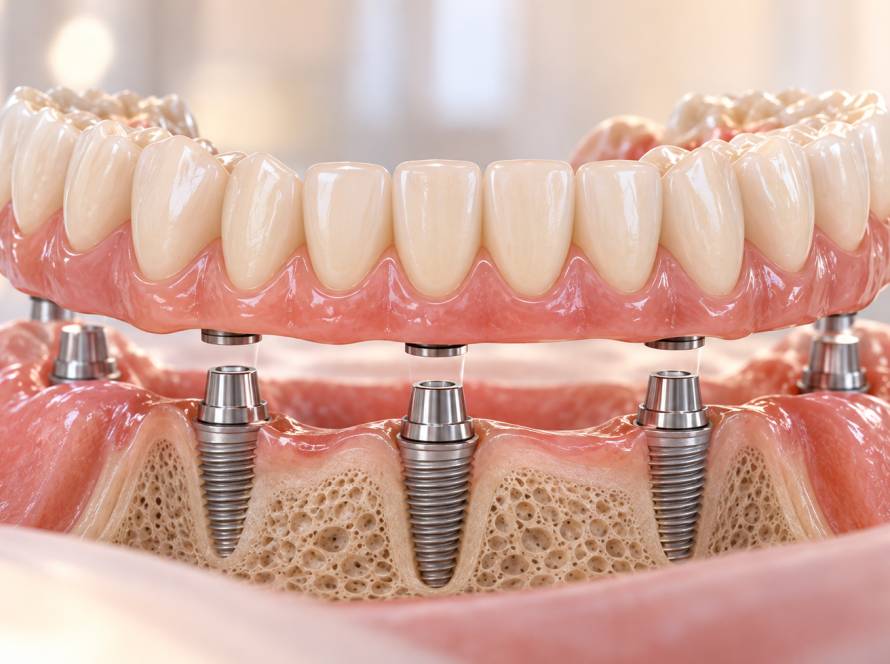
Implants can support or retain removable prostheses in selected patients. An implant-retained overdenture differs from a conventional complete denture because the implants provide additional retention or support.
Implant suitability is a separate clinical decision involving bone, soft tissues, general health, hygiene and prosthetic planning. A conventional denture that feels loose does not automatically mean that implants are necessary or suitable.
Adapting to a New Denture
A new removable denture can feel unfamiliar. Speech, chewing and the sensation of bulk in the mouth may require adaptation, and the experience varies widely between patients.
Soreness or local pressure areas can require adjustment. A denture that repeatedly rubs, rocks or becomes painful should be assessed rather than altered at home.
Patients should not grind, trim or glue a denture themselves.
Cleaning and Long-Term Maintenance
Removable dentures need daily cleaning, and the mouth also needs care. If natural teeth remain, they require normal brushing and interdental cleaning. Denture-bearing tissues should be kept clean and checked for irritation.
Partial dentures can create plaque-retentive areas around supporting teeth, making hygiene especially important. Fit can also change over time as oral tissues and ridges remodel, so a denture may eventually need adjustment, relining, repair or replacement.
Prosthetic Planning at Güler Dent
Prosthetic Dentistry is one of the main clinical service areas at Güler Dent in Samsun, Turkey. Güler Dent provides fixed and removable prostheses, complete and partial dentures, implant-supported prostheses, crowns and bridges.
The clinic also has its own prosthesis laboratory as part of its prosthetic infrastructure. This does not mean every denture follows the same production time, number of appointments or fitting process; design and treatment stages depend on the oral condition and prosthetic plan.