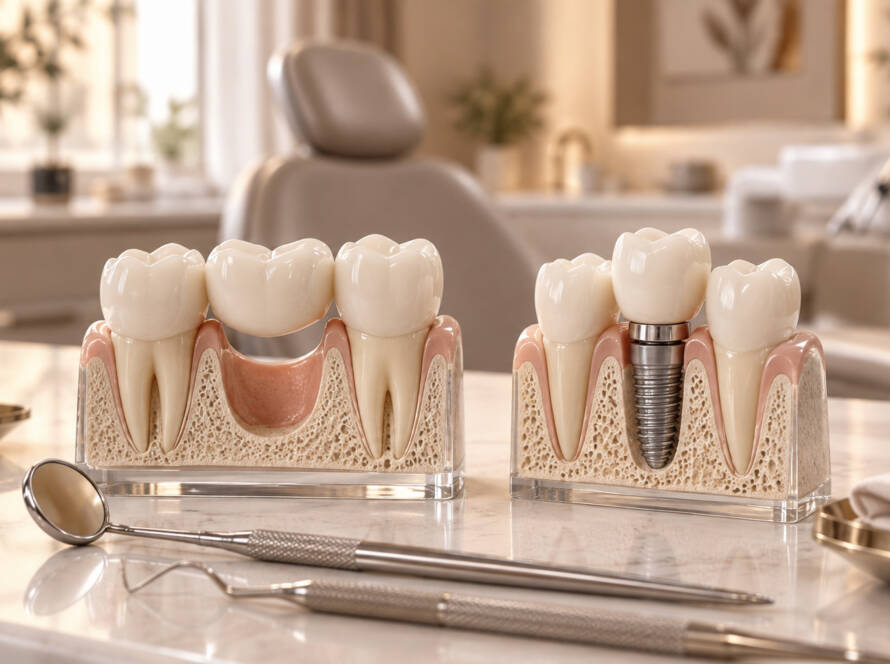
Dental implant aftercare has two broad phases. The first is early healing after surgery, when the wound and surrounding tissues need protection. The second is long-term maintenance, when daily plaque control and professional review help protect the peri-implant tissues and the implant-supported restoration.
Instructions vary according to the procedure. A single implant, several implants, immediate loading, bone grafting, sinus lifting or a temporary prosthesis can all change how the surgical area should be cleaned, what foods are suitable and when normal function can resume. Advice from the clinician who performed the procedure therefore takes priority over a generic online timetable.
Some discomfort, swelling or slight oozing can occur after surgery. Increasing swelling, uncontrolled bleeding, pus or persistent discharge, fever, worsening pain, difficulty breathing or swallowing, or unexpected mobility of an implant-supported component requires prompt professional assessment.
Early Healing After Implant Surgery
The priorities during early healing are to protect the surgical site, avoid unnecessary trauma, use prescribed medication correctly and maintain oral hygiene without disrupting the wound.
Depending on the procedure, the treating dentist or surgeon may advise temporary changes to brushing around the surgical area while normal cleaning continues elsewhere in the mouth. If sutures are present, the recommended method can differ from a procedure without sutures.
The site should not be repeatedly touched with fingers or the tongue to “check” the implant. Hard chewing directly over a fresh surgical area should also be avoided unless the clinician has confirmed that the temporary or definitive restoration is designed for that level of loading.
A temporary tooth or prosthesis may improve appearance during healing, but its presence does not mean that the implant is ready for unrestricted chewing.
Bleeding, Swelling and Pain
A small amount of oozing or blood-stained saliva can occur after oral surgery. Persistent or heavy bleeding that does not settle with the recommended measures should be assessed.
People taking anticoagulant or antiplatelet medication should not stop or alter prescribed medication because of post-operative bleeding unless the relevant clinician advises it.
Swelling and tenderness can also occur, particularly after more extensive surgery or grafting. There is no single day on which swelling must disappear. The trend is more useful than a rigid timetable: swelling that continues to increase, spreading redness or warmth, pus, fever, severe or escalating pain, or increasing difficulty opening the mouth all warrant assessment. Difficulty breathing or swallowing requires urgent medical attention.
Eating During Early Healing
Food choices should protect the surgical site and reflect the instructions given for the specific procedure. Softer foods that do not require heavy chewing over the surgical area may be easier to manage in the early phase, while very hard, sharp or sticky foods can place unnecessary stress on a fresh wound or temporary restoration.
The progression back to normal eating differs between patients. A single straightforward implant and a grafted or full-arch case do not necessarily have the same restrictions.
A fixed online “food calendar” should not replace individual surgical advice.
Oral Hygiene Around a New Implant
Oral hygiene should continue after implant surgery. Plaque control in the rest of the mouth remains important, while the new surgical area may temporarily need a modified approach.
The clinician can advise when and how to brush close to the wound and whether a particular rinse or other cleaning method is appropriate. As healing progresses, plaque control may include a toothbrush and interdental aids suited to the implant position and prosthesis design.
The aim is to keep the area clean without traumatising healing tissues.
Medicines and Mouth Rinses
Medication and rinse recommendations are not identical for every implant patient. Prescribed medicines should be taken exactly as directed.
Patients should not start leftover antibiotics, extend a course, double a dose or stop prescribed medication early on the basis of general online advice. Mouthwash should also not be treated as a substitute for mechanical plaque control once normal cleaning is appropriate.
A suspected adverse reaction or uncertainty about how to use prescribed medication should be discussed with the prescribing clinician or another appropriate medical professional.
Smoking and Healing
Smoking is an important risk factor in implant and periodontal care. It can adversely affect wound healing and is associated with poorer peri-implant tissue outcomes.
The relevant discussion is how smoking affects the individual risk profile and what cessation support may be appropriate. There is no universal point at which smoking can be described as risk-free during healing.

Long-Term Cleaning After the Restoration Is Fitted
Once the implant-supported restoration is in function, daily cleaning remains essential.
A single implant crown may be cleaned in a similar way to a natural tooth, with particular attention to the implant–gum interface. Implant bridges and full-arch prostheses can require additional access beneath the restoration.
Suitable tools may include a manual or powered toothbrush, interdental brushes, floss or other aids recommended for the design. The best method depends on restoration shape, available spaces, implant position and the patient’s dexterity.
There is no single cleaning device that is ideal for every implant-supported restoration.
Peri-Implant Inflammation
Peri-implant mucositis is inflammation in the soft tissues around an implant without the progressive supporting bone loss used to define peri-implantitis. Redness, swelling or bleeding can occur.
Peri-implantitis involves inflammation together with progressive loss of supporting bone beyond expected initial remodelling. Diagnosis requires clinical and radiographic assessment rather than self-diagnosis from symptoms alone.
Bleeding around an implant should not be ignored, but bleeding by itself does not diagnose peri-implantitis. Some people with peri-implant disease have little pain, which is one reason maintenance should continue even when the implant feels comfortable.
Risk can be influenced by previous periodontitis, poor plaque control, smoking, diabetes and the ability to clean the prosthesis effectively.
Professional Maintenance
There is no universal recall interval that is right for every implant patient. Professional maintenance is tailored according to peri-implant health, periodontal history, plaque control, smoking, diabetes, prosthesis type and previous inflammatory findings.
A patient with a history of periodontitis or a difficult-to-clean full-arch prosthesis may need a different maintenance approach from a lower-risk patient with a single implant and excellent plaque control.
The purpose is ongoing surveillance of the implant, surrounding tissues, prosthesis and remaining natural teeth.
Problems After Returning Home
If you have travelled for implant treatment and develop worsening pain, increasing swelling, uncontrolled bleeding, pus, fever, significant bite problems or movement of an implant-supported component after returning home, do not wait solely for a future overseas appointment.
Seek appropriate local dental or medical assessment according to the severity of the symptoms. The clinician may need information about the procedure performed and the restoration or implant components used, so keeping available treatment records and imaging can be helpful.
This is general clinical guidance and does not imply a specific Güler Dent international aftercare or remote-monitoring service.
Dental Implant Care at Güler Dent
Dental Implant is one of the main clinical service areas at Güler Dent in Samsun, Turkey.
Güler Dent has in-clinic tomography technology for cases in which three-dimensional imaging is clinically indicated and its own prosthesis laboratory as part of its prosthetic infrastructure.
Aftercare and maintenance requirements depend on the procedure, final restoration and clinical findings. These resources do not create a standard follow-up schedule for every patient.